Five hundred dollars.
Look at the kitchen counter right next to your toaster, picture a gleaming slab of brushed stainless steel and dark glass sitting there, and ask yourself what kind of miracle an appliance has to perform every single morning before 7:30 a.m. to justify costing as much as a decent used car payment or a weekend flight to Chicago.
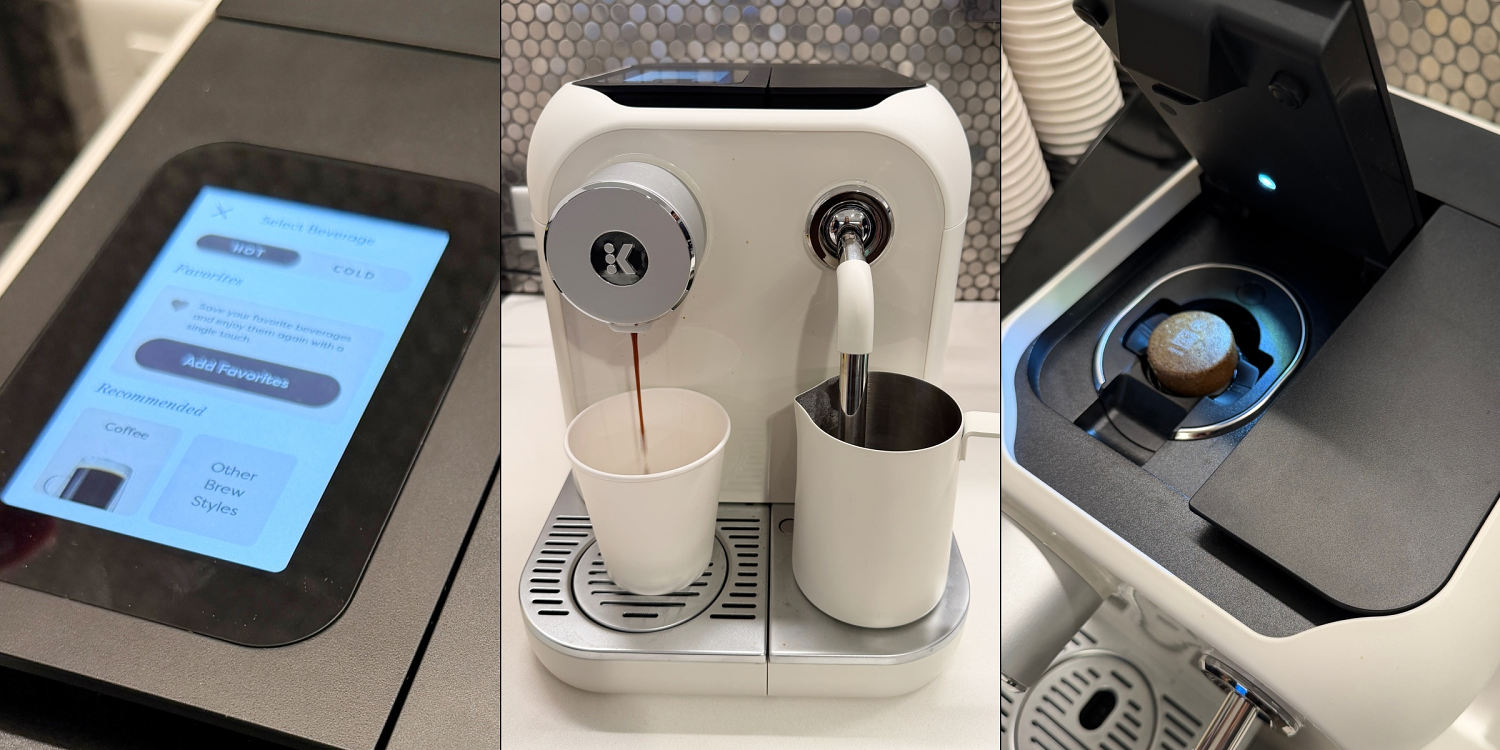
I stood in an appliance aisle last autumn staring at a price tag that made my chest tighten. It was attached to a Keurig—specifically, one of the new flagship high-end models, the K-Café SMART or its sleek, commercial-grade cousins designed to bridge the chasm between fast-food convenience and third-wave café snobbery. For twenty years, the cultural contract of the single-serve pod machine was simple, unspoken, and entirely democratic. You bought a cheap plastic box for eighty dollars. You dropped in a tiny foil-sealed cup of mediocre dark roast. You pressed a button, and sixty seconds later, you had hot brown liquid that kept you from snapping at your coworkers during the morning stand-up. Nobody pretended it was art. It was fuel.
Now, suddenly, the fuel pump wants five hundred dollars of your money and twelve inches of your most valuable granite real estate.
The Anatomy of a Morning Compromise
To understand why anyone would even consider this transaction, you have to look at the quiet civil war happening in millions of kitchens right now. Let us invent a hypothetical household—we will call them Maya and David—because their kitchen counter tells the exact story of modern coffee fatigue.
David wakes up at 5:45 a.m. He has twenty minutes to shower, pack a lunch, find his keys, and get on the highway before traffic turns into a parking lot. For David, a manual pour-over setup with a gooseneck kettle, a precision burr grinder, and a digital scale is not a soothing Zen ritual. It is an obstacle course. He wants a button. He wants predictability. He wants heat in a ceramic mug while his eyes are still half-shut.
Maya, on the other hand, works from home starting at 8:30 a.m., and she hates the taste of traditional pod coffee. She knows what good espresso tastes like. She notices when beans are scorched, she wants textured microfoam on her oat milk latte, and she refuses to spend seven dollars a day at the corner café just to avoid drinking what she calls "hot cardboard water." On their counter sit three separate machines: a battered ten-year-old pod brewer for David, a bulky espresso machine Maya barely has time to clean on Tuesdays, and a standalone milk frother whose tiny whisk constantly vanishes into the abyss of the dishwasher silverware basket.
Their counter is cluttered. Their mornings are fragmented. And their compromise pleases neither of them.
This is the exact emotional nerve that a five-hundred-dollar single-serve brewer is engineered to press. It is not selling you coffee beans. It is selling you a truce.
What Happens Inside the Machine When the Price Tag Quadruples
When I finally brought one of these high-end brewers home to test it against my own deeply ingrained skepticism, the first thing I noticed was the weight. Cheap coffee makers rattle when you close the lid; they slide across the counter when you press the brew button unless you hold them down with your other hand. A five-hundred-dollar unit sits like an anvil. The water reservoir is massive, often holding sixty to seventy ounces, meaning you are not refilling it every forty-eight hours like a hamster water bottle.
But weight does not make coffee taste better. Physics does.
If you cut open a standard bargain-bin pod brewer—and think of this as an analogy for how most quick-drip machines operate—you are essentially looking at a rudimentary water heater attached to a single hollow needle. It blasts water at a roughly uniform, often inconsistent temperature straight through the center of the coffee grounds. The water takes the path of least resistance, drilling a narrow tunnel straight down, over-extracting the bitter compounds in the middle while leaving the outer edges of the coffee dry and untouched. That is why cheap pod coffee tastes simultaneously watery and burnt.
Step up to the flagship tier, and the internal architecture changes dramatically. Instead of one needle punching a single hole, high-end brewers utilize multi-stream extraction technology—typically five separate needles saturating the entire bed of grounds evenly from edge to edge. More importantly, they introduce programmable temperature control and pressure profiling.
Consider what happens next when you drop a pod into the chamber. Optical sensors inside the head read a specialized barcode or rim pattern on the cup itself. Before a single drop of water hits the grounds, the machine adjusts its brewing temperature—dropping slightly for delicate light roasts so they do not scald, climbing higher for dense dark roasts that need heat to unlock their oils—and alters the flow rate. If you are brewing over ice, it slows the extraction down to produce a concentrated, syrupy shot that will not turn into dishwater the second it hits frozen cubes.
Then there is the milk. On models equipped with integrated hot and cold frothing systems, you are no longer dealing with a sad little vibrating spring. You are getting induction-heated, variable-speed whisking chambers capable of producing dense, velvety cold foam for iced macchiatos or silky steamed milk for a flat white, all calibrated to the specific pod you just inserted.
The Invisible Math Nobody Does in the Store
Still, five hundred dollars is a lot of money. Even if the coffee tastes noticeably richer, smoother, and closer to a neighborhood café than anything that ever came out of an entry-level machine, the financial math of the pod ecosystem remains ruthless.
Let us look at the real numbers, because this is where excitement usually collides with cold reality.
A standard K-Cup, especially the specialty barista blends, single-origin roasts, or branded café collaborations required to take advantage of a high-end machine’s smart features, routinely costs between sixty-five cents and one dollar per pod. If you drink two cups a day, that is roughly five hundred to seven hundred dollars a year just in pods. Over three years, your five-hundred-dollar machine has quietly consumed two thousand dollars of your household budget.
Compare that to buying whole-bean specialty coffee from a local roaster at eighteen dollars a bag. A twelve-ounce bag yields roughly twenty to twenty-two generous cups of coffee, putting your cost per cup right around eighty-five cents—nearly identical to the pod, except the freshly ground coffee will still outperform the pod in aroma, crema, and complexity nine times out of ten. And if you buy good supermarket whole beans in bulk, your cost drops to thirty cents a cup.
I had to sit with that contradiction for weeks. Why would anyone pay five hundred dollars upfront to lock themselves into an expensive consumable format when the exact same five hundred dollars could buy a genuinely remarkable semi-automatic espresso machine—like a Breville Bambino Plus paired with a capable burr grinder—that uses fresh whole beans and produces real, pressurized nine-bar espresso?
The answer has nothing to do with coffee chemistry and everything to do with human friction.
The Tyranny of Cleanup
Walk into any thrift store in America and look at the small appliance shelf. You will find bread makers, juicers, waffle irons, and dozens of gleaming, barely used manual espresso machines. They were not donated because they made bad coffee. They were donated because at 6:30 a.m. on a rainy Wednesday, nobody wanted to purge a steam wand, knock out a wet puck of spent grounds, rinse a portafilter, wipe down a drip tray, and dial in grind coarseness because the humidity changed overnight.
We chronically overestimate our future patience when we are shopping on a Saturday afternoon. On Saturday, weighing eighteen grams of beans feels romantic. On Tuesday, when your toddler has spilled yogurt on the dog and your inbox already has fourteen unread messages, weighing beans feels like an insult.
A pod machine reduces the entire cleanup sequence to lifting a plastic handle, dropping a self-contained cup into the recycling or trash, and walking away. There are no loose grounds in the sink. There is no portafilter to scrub. When you buy a five-hundred-dollar Keurig, you are not paying five hundred dollars for the brewer. You are paying one hundred and fifty dollars for the brewing hardware, one hundred dollars for the built-in milk frother and smart sensors, and two hundred and fifty dollars as a permanent insurance policy against morning mess.
Where the Illusion Breaks Down
I want to be completely honest about where this machine stumbles, because at this price point, every flaw feels personal.
First, even with five needles, optical pod recognition, and precision temperature algorithms, a plastic cup holding ten to twelve grams of pre-ground coffee cannot replicate true espresso. True espresso requires roughly nine bars of atmospheric pressure forcing hot water through a tightly tamped puck of finely ground fresh coffee. Pod machines operate at a fraction of that pressure. What they produce when you select the "shot" button is a strong, concentrated, deliciously dark coffee base. When topped with frothed milk, it fools ninety percent of casual drinkers into believing they are holding a genuine latte. If you are a purist who drinks straight double espressos and judges crema thickness by the millimeter, you will taste the ceiling of the format immediately.
Second, smart features on kitchen appliances have a habit of aging like milk. Many flagship models rely on Wi-Fi connectivity and companion smartphone apps to unlock custom temperature tweaks, strength adjustments, and automated pod reordering. Pairing a coffee maker to your home router works fine until your internet hiccups, an app update breaks the Bluetooth handshake, or the manufacturer decides three years from now to sunset support for that specific firmware generation. A great kitchen tool should still work effortlessly twenty years from now without asking for your Wi-Fi password. Fortunately, the physical buttons on the machine handle all the core functions without needing your phone, which saves the hardware from becoming an expensive paperweight if the software ever stumbles.
Third, there is the question of counter real estate. Counter space in a modern kitchen is not measured in square inches; it is measured in workflow. A flagship brewer with an attached milk frother and a large side-mounted reservoir has a substantial footprint. It demands clearance underneath your upper cabinets so you can actually lift the lid to insert a pod without dragging the machine forward every single morning. Before you ever hand over a credit card, you have to take a tape measure to the gap between your countertop and your cabinets. If it does not fit cleanly under the overhang, it will become an annoyance within forty-eight hours, no matter how good the latte tastes.
The Verdict Written in Everyday Life
So, can a five-hundred-dollar Keurig actually earn its counter space?
If you live alone, drink one mug of black medium-roast coffee a day, and just want something hot before you walk the dog, buying this machine is financial theater. A basic brewer will give you eighty-five percent of the experience for a quarter of the price, leaving three hundred and fifty dollars in your pocket for things that actually move the needle in your life.
If you are a passionate home barista who genuinely enjoys the tactile craft of grinding fresh beans, tamping steel portafilters, and steaming milk with a manual wand, this machine will frustrate you. You will miss the control, and you will resent the ongoing cost of pods.
The people for whom this machine becomes indispensable are the households caught in the middle—the Mayas and Davids of the world. It earns its keep in kitchens where two or three people wake up on staggered schedules with completely different tastes, where one person wants a tall iced vanilla latte, another wants a scorching-hot dark roast to go, and a third wants decaf herbal tea at nine o'clock at night, and nobody has the bandwidth to play short-order barista or scrub coffee equipment before work.
In those kitchens, the machine replaces three separate gadgets, eliminates the daily coffee-shop run that quietly bleeds two hundred dollars a month from a checking account, and removes the tiny, compounding frictions that turn peaceful mornings into stressful ones.
Stand in your kitchen tomorrow morning right after your alarm goes off, before the caffeine hits your bloodstream, and look at the empty spot next to your toaster. The real question is never whether a piece of stainless steel and circuitry is worth five hundred dollars. The real question is how much your quietest twenty minutes of the day are worth to you when the rest of the world starts demanding your attention.