The rhythm of a Friday night at the Lok Ma Chau control point is an exhausting dance of concrete and friction. For years, anyone trying to cross from Hong Kong into the neon-lit sprawl of Shenzhen knew the routine by heart. You line up. You show your card to a Hong Kong officer. You walk across a long, humid pedestrian bridge over the Sham Chun River. Then, you line up all over again under the harsh fluorescent lights of the mainland Chinese checkpoint.
Thirty minutes on a good day. Ninety minutes on a holiday weekend. It is a grueling tax paid in human time, a physical manifestation of an invisible wall separating two interconnected economic engines.
But legal ink drying on a newly published government document in Hong Kong is about to alter that reality entirely.
On Tuesday, July 14, 2026, the Hong Kong Special Administrative Region government officially published the Huanggang Port Hong Kong Port Area Bill in its Government Gazette. Behind that dry, bureaucratic title lies a dramatic structural shift. The bill transforms a sweeping authorization from Beijing into domestic law, effectively ceding a slice of mainland territory to Hong Kong's legal jurisdiction so both cities can sit at the exact same desk.
The goal? To compress a grueling, multi-step border crossing into a single, seamless five-minute interaction.
The Geography of a Frictionless Border
To understand why this matters, look at the map. Consider a hypothetical commuter, let’s call her Ming. She lives in New Territories but runs a tech startup in Shenzhen’s Futian district. Under the old system, Ming’s daily commute was a war against clockwork delays. She had to pack her life around the closing times of various ports, or resign herself to the slow, late-night crawl through the existing, aging 24-hour land channels.
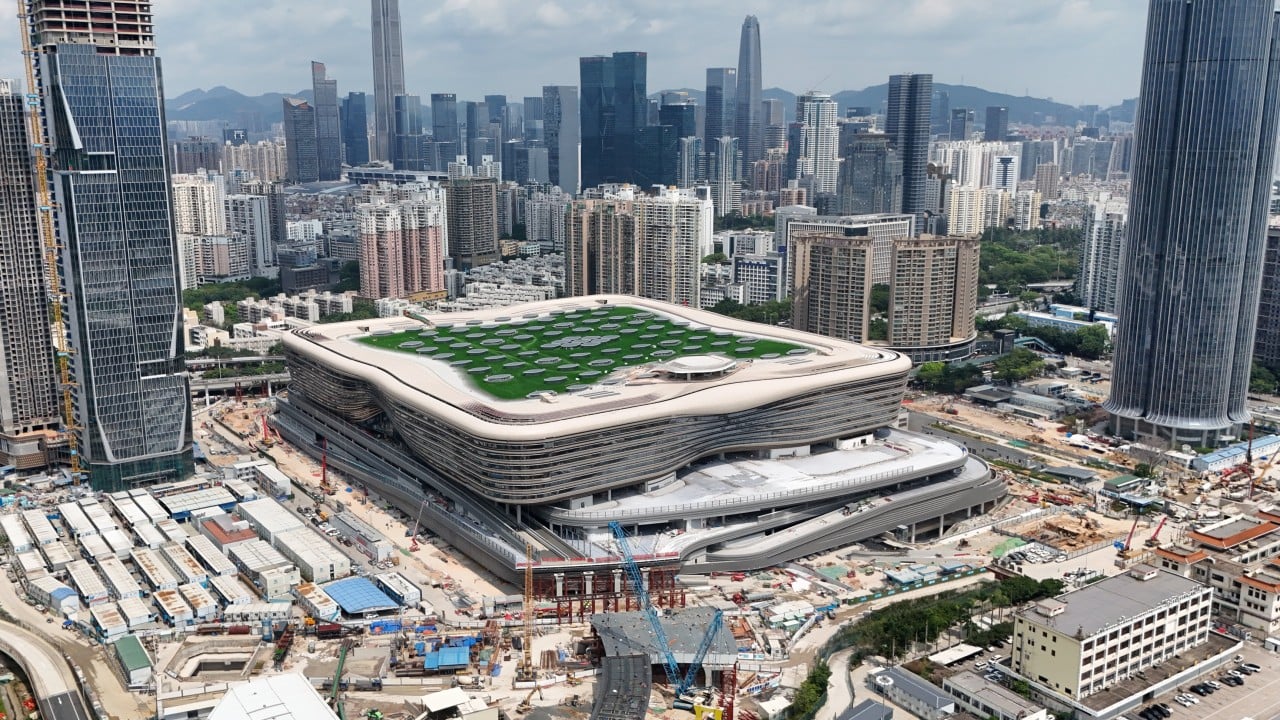
The redeveloped Huanggang Port changes the geography of her life. Located right in the heart of Futian, it will become the first and only fully modern, 24-hour passenger land checkpoint operating under what officials call a "co-location arrangement".
The physical mechanics of this arrangement are shockingly simple, even if the legal architecture underneath is dizzyingly complex.
Instead of two separate border facilities miles apart, the new Huanggang Port building houses both Hong Kong and mainland authorities under one massive roof. Automated gates will sit side-by-side, perfectly straddling the administrative boundary line.
When Ming walks up to the gate, she will slide her document into a single slot. The machine will scan her face and verify her fingerprint. In one swift motion, her departure from one jurisdiction and her arrival into the next are processed simultaneously.
Queue once. Scan once. Pass through.
By eliminating the shuttle buses and the double-queuing that have defined the border for a generation, the average clearance time is projected to plummet from 30 minutes down to just five.
The Sovereign Paradox
If this sounds incredibly practical, it is because it is. But making a border vanish requires a massive amount of legal gymnastics.
Under the basic tenets of the region's legal framework, mainland law enforcement cannot simply operate inside Hong Kong, and Hong Kong courts have no power on the mainland. To make a joint checkpoint work, one side has to legally extend its reach into the other's territory.
For the Huanggang project, the solution is a mirror image of the arrangement used at the West Kowloon high-speed rail terminus years ago, but inverted. This time, the physical facility sits on the Shenzhen side of the river. To make it functional for Hong Kong immigration officers, the National People’s Congress in Beijing had to formally authorize Hong Kong to exercise absolute legal jurisdiction over a specific zone inside the mainland building.
Inside this designated "Hong Kong Port Area," mainland law falls silent. Hong Kong laws apply, and Hong Kong courts hold sway.
It is a legal fiction that creates a practical reality. The newly gazetted bill is the final local gear turning to lock this mechanism into place. The legislation faces its first and second readings in the Legislative Council immediately, with a hard deadline to be fully enacted by July 31, 2026—the official date the new port area is commissioned to Hong Kong control.
A Mega-City's New Pulse
The speed of this legislative push underscores the sheer scale of humanity waiting to use it. The concrete superstructure of the new Huanggang Port building is already completed, with contractors frantically installing interior fittings and custom clearance terminals on both sides of the boundary.
The facility is built to absorb a staggering human tide: an average of 200,000 passenger trips every single day.
When future rail extensions link up in the next decade, that capacity can scale up to 300,000 daily travelers. These are not just tourists looking for cheap shopping or weekend dining. These are researchers, engineers, lawyers, and families whose lives are spread across two sides of an artificial line.
By scrubbing the friction out of the border, the law is quietly turning a psychological barrier into a simple neighborhood transit stop.
Consider what happens next: as the paper bills pass into law and the automated scanners click on, the old, exhausting Friday night crawl will fade into memory. Millions of hours previously wasted in sweaty immigration queues will be returned to the people who live here. The city across the river is no longer an international journey; it is just a five-minute walk away.

