The media machine is doing what it does best. It is hyperventilating over a headline. Forbes and the rest of the mainstream press spent the last twenty-four hours treating Donald Trump’s promise of a five-thousand-dollar adult citizen payout as either a brilliant populist stroke or an impossible campaign bribe tied to the midterms. They are missing the entire point because they refuse to look past the shiny object of free cash.
Let us get something straight right out of the gate. This proposal is not a corporate dividend. Corporations generate net profits through operational efficiency, return capital on equity, and distribute actual free cash flow to shareholders. A sovereign nation running a thirty-five-trillion-dollar debt clock does not have net profits. It has tax receipts, borrowed capital, and deferred liabilities. Calling a federal check a dividend is financial illiteracy wrapped in flag-waving rhetoric.
If you believe printing or redirecting another trillion-plus dollars into the consumer economy will solve structural inflation, you failed basic arithmetic. Economists love to talk about aggregate demand like it is a magic valve. Open the valve, prosperity flows. But every time the government hands out helicopter money, structural supply chains do not magically expand to match the sudden liquidity surge. Prices adjust. Landlords raise rents. Grocers hike margins. Within six months, that five-thousand-dollar check is eaten alive by asset inflation, leaving the middle class right back where they started, only with a devalued dollar and a higher national debt burden.
Imagine a scenario where every single adult citizen wakes up tomorrow with five grand deposited into their checking account. Sounds great on paper. Now look at what happens when two hundred and fifty million people rush out to spend it locally, per the strict domestic spending mandate attached to the speech. Domestic manufacturing capacity is already tight. Services are constrained by labor shortages. Injecting a massive wave of artificial demand into a constrained market does not stimulate real growth; it creates temporary sugar-high activity followed by a brutal hangover.
The lazy consensus is that this is simply a crass bid to save the Republican majority in Congress from a tough midterm cycle. That analysis assumes voters are simple-minded creatures who can be bought off with a round figure. While retail politics certainly relies on transactional promises, reducing this speech to a mere bribe misses the deeper structural shift happening in modern political economy. We are moving into an era of sovereign direct-to-consumer monetization. Governments are no longer pretending to balance budgets. They are competing directly for consumer loyalty using balance-sheet expansion as a loyalty program.
Let us address the funding mechanism touted by the administration: tariffs. The pitch relies on the idea that foreign trade levies are generating a mountain of cash sitting in a vault somewhere, waiting to be redistributed. Here is the dirty secret about tariffs that neither protectionists nor free-traders like to admit in plain English. Tariffs are paid by domestic importers and downstream consumers, not foreign exporting nations. When you slap broad tariffs on goods, American companies pass those costs straight to households. Re-routing that collected revenue back as a dividend is essentially a rebate on a tax you already paid at the cash register. You are essentially getting a refund on your own money after the government takes a hefty administrative cut for the trouble.
Critics scream about legality and execution. They point out that no funding bill exists, no legislative text has cleared the House Ways and Means Committee, and congressional approval is a heavy lift. True. But focusing on the lack of a current legislative vehicle is missing the psychological strategy. This is not policy design; this is a framing exercise. Trump has successfully forced the political opposition into a corner. To argue against the payout, Democrats and fiscal hawks have to explain to working-class voters why giving them five thousand dollars is a terrible idea. Try running that campaign ad in a working-class district and see how many votes it wins.
This brings us to the real takeaway. The debate over the so-called Trump dividend is a distraction from the broader systemic reality of our economic moment. We are transitioning toward a neo-mercantilist state where fiscal policy is weaponized as a populist tool, and monetary debasement is treated as a permanent background condition.
Stop asking whether the check will clear or whether Congress will pass the enabling legislation. Start asking what happens to asset prices, housing costs, and interest rates when the baseline expectation of the American electorate becomes direct federal cash transfers tied to electoral outcomes. When politics becomes a direct bidding war for citizen compliance, the currency is the first casualty.
You do not need more government handouts to fix a broken economy. You need an economy that stops breaking the currency in the first place. Until our leaders confront that reality, every multi-billion-dollar promise is just a down payment on the next inflation spike.
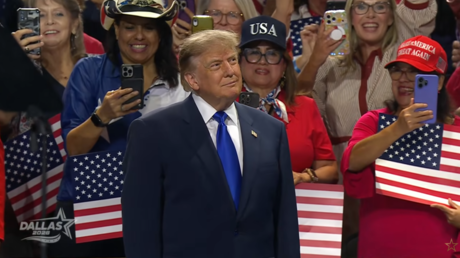
Trump promises $5,000 dividend to American adults if Republicans win 2026 midterm elections
This video provides the original context of the announcement made during the convention speech in Dallas.
http://googleusercontent.com/youtube_content/1