Five thousand.
Say the number out loud in a quiet room and watch how quickly your tongue trips over the weight of it, because five thousand is too big to picture as faces and too small to stop headlines from shrinking it into a ticker line at the bottom of a screen. In the Democratic Republic of the Congo, Ebola deaths have crossed that threshold. Cases have turned up in neighboring African nations. Somewhere right now, a thermometer is pressing against a child's forehead while a bus driver wonders whether the headache behind his eyes is malaria, exhaustion, or something that turns hospitals into glass boxes.
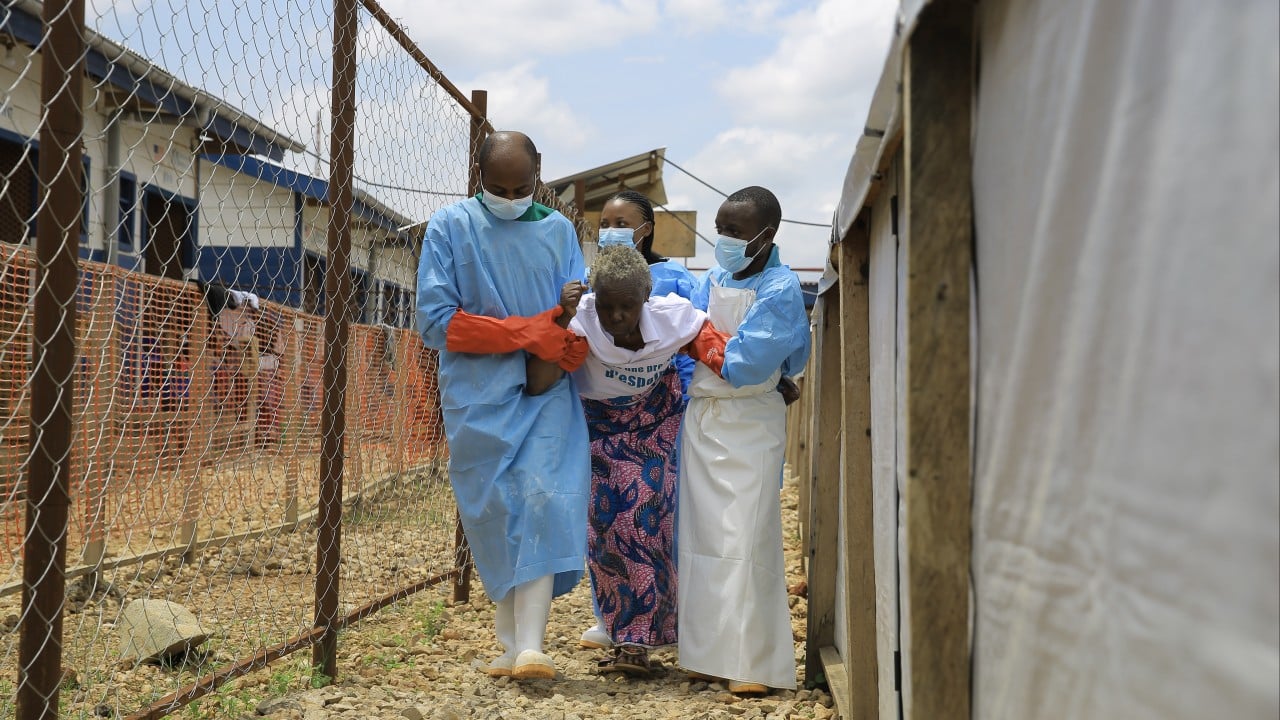
I have stood inside outbreaks long enough to know what a number does to people who are actually holding the clipboard. Numbers calm the distant reader. They frighten the person on the ground. When an epidemiological report reads "5,000 deaths," I do not see a clean statistic. I smell chlorine bleach burning the back of my throat at noon. I hear the wet slap of rubber boots on red clay. I remember how heavy a protective hood feels when the humidity climbs past eighty percent and your own breath fogs the visor until the world turns milky gray.
You do not fight a filovirus with press releases alone. You fight it in doorways, on unpaved roads, in conversations between a terrified daughter and a nurse who has not slept twenty hours straight.
The Math That Breaks Hearts
To understand how an outbreak in the Democratic Republic of the Congo reaches five thousand deaths and spills across borders, you have to look at two forces moving in opposite directions. The virus moves fast through contact, grief, and fear. Response teams move through geography, distrust, and exhausted supply chains.
Let us step back and look at this through a metaphor. Picture a wildfire starting inside a dry forest crossed by dirt tracks. A spark catches on a low branch. If you catch it early, a bucket of water puts it out. If the wind picks up and dry brush stretches for miles without firebreaks, embers leap across roads and start new blazes miles away. That is a metaphor for how a contagious pathogen behaves when early containment meets dense human movement and fragile health infrastructure. Embers do not care where a surveyor drew a national border in the nineteenth century. People travel for markets, funerals, harvests, and refuge, and a virus travels inside the bloodstream of whoever is moving.
In the DR Congo, vast forested regions, active security instability in parts of the country, and communities separated by hours of rough travel make rapid contact tracing extraordinarily difficult. When someone falls ill far from a clinic, days can pass before health workers even learn there is a fever in the village. During those days, family members care for the sick person at home. That instinct is love, pure and unvarnished. You wipe a parent's brow. You hold a child who is shivering. You wash sheets by hand. Yet in an Ebola outbreak, those exact acts of devotion carry the highest risk of transmission because the virus spreads through direct contact with bodily fluids of symptomatic patients or contaminated surfaces and remains.
Consider what happens next: a person dies in a community where burial customs involve washing and embracing the body. If trust between local families and outside responders is thin—or frayed by years of conflict and broken promises—a safe and dignified burial team arriving in white suits can look like an intrusion rather than help. Fear turns a public health measure into a flashpoint. Every missed contact is another ember carried toward the edge of the forest.
A Hypothetical Morning on the Line
To make the stakes concrete, let us trace a hypothetical scenario grounded in real outbreak dynamics. This story is invented, though every detail reflects patterns documented by frontline clinicians and public health teams.
Call the nurse Claire, working at a triage tent near a regional transit hub in eastern DR Congo. Call the young man sitting on the wooden bench Samuel, twenty-four years old, who crossed from a neighboring country three days earlier looking for work hauling sacks of produce.
At six in the morning, the air already feels thick. Claire checks Samuel's temperature. High fever. He mentions body aches and nausea that started yesterday evening. Malaria is common in the region, and typhoid and cholera also circulate, so early symptoms look painfully familiar. In the first days of Ebola, the body whispers before it screams. A headache here, a wave of weakness there, a stomach that refuses food. By the time unmistakable warning signs like severe vomiting, diarrhea, or unexplained bleeding appear, the illness has already progressed and the risk to caregivers is acute.
Claire asks where Samuel slept on Monday night. He names a small guesthouse near the lorry park. She asks who rode with him on the minibus. He remembers three faces clearly and blurs the rest.
Right there, in the quiet space between Samuel's answers and Claire's notebook, lives the reason cases appear in other African nations. Modern African economies are deeply interconnected. Cross-border trade is not an exception; it is daily survival for millions of families. Markets straddle frontiers. Cousins live on opposite sides of a river. When a single traveler with early symptoms boards a shared taxi or crosses an informal border path, the geography of the outbreak shifts overnight.
What makes cross-border spread so nerve-wracking for public health officials is not that neighboring governments are careless. Many countries bordering the DR Congo run screening posts, alert district hospitals, and train rapid-response teams whenever news of a surge breaks. The challenge is volume and timing. A screening post can check temperature and ask about travel history, yet fever checks miss people in the incubation period—which typically spans two to twenty-one days before symptoms emerge—or travelers whose fever has not spiked at the exact moment they walk past a checkpoint.
I am not ashamed to admit how unsettling that uncertainty feels even to people who study infectious disease for a living. You can do everything by the book—set up handwashing stations, brief border guards, pre-position isolation supplies—and still wake up to a confirmed case in a town two hundred miles from the original epicenter. Biology does not ask permission before crossing a line on a map.
Why Five Thousand Is Never Just a Peak
When headlines announce that Ebola deaths in the DR Congo have topped five thousand, casual readers often assume the worst is already in the past or that a single massive spike explains the entire toll. Reality is messier and more relentless.
Cumulative death tolls in the DR Congo reflect recurring flare-ups, prolonged transmission in hard-to-reach zones, and the sheer compounding weight of outbreaks over time. Even when health workers bring one chain of transmission down in one district, another cluster can smolder elsewhere or re-emerge. Each new case demands a fresh ring of contact tracing—identifying everyone who had close contact with an infected person over the past three weeks and monitoring them daily for symptoms.
Think about the labor behind a single case. If one patient has twenty contacts, twenty people need daily check-ins for twenty-one days. That is four hundred and twenty daily interactions for just one person's network. Multiply that across hundreds or thousands of cases, often in areas where roads wash out in heavy rain or armed groups restrict movement, and you begin to see why containment is a marathon fought in mud.
And there is another invisible cost that rarely makes the headline: the collapse of routine care. When clinics become tense or overwhelmed during an outbreak, pregnant women skip antenatal visits, children miss routine vaccinations against measles, and people with diabetes or asthma stay home out of fear of catching something fatal at the hospital. More lives are lost in the shadow of the virus than the death count alone captures.
What Actually Stops a Virus Like This
If the picture sounds grim, it is because the stakes are genuinely high. Yet history also shows that Ebola is not unstoppable. Unlike airborne respiratory viruses that ride invisible aerosols across a crowded room in seconds, Ebola requires direct contact with infectious fluids or materials. That biological constraint gives humans a real fighting chance—provided the response reaches people fast enough and earns their trust.
Vaccines and targeted therapeutics have transformed outbreak response in recent years. Ring vaccination—immunizing contacts of confirmed cases and contacts of those contacts, along with frontline health workers—creates a protective firewall around known chains of transmission. Early supportive care and monoclonal antibody treatments have also improved survival rates dramatically when patients reach treatment centers promptly rather than hiding until late-stage illness.
Still, technology alone cannot carry the load. A vial kept cold in a generator-powered freezer saves nobody if a sick farmer is too frightened to walk through the gate.
What changes outcomes on the ground is unglamorous, human work:
- Local leadership: Community elders, religious leaders, and local health workers who explain risks in familiar idioms and help shape safe burial practices that honor family traditions without exposing mourners.
- Fast, honest communication: Telling communities plainly what is known, what is uncertain, and why isolation and contact monitoring exist—without blaming families for falling sick.
- Cross-border coordination: Sharing lab data, alert lists, and supply lines across neighboring African nations in real time so a case detected across the border triggers immediate joint action rather than finger-pointing.
Notice how simple those three pillars sound on paper and how demanding they are in practice. Trust takes months or years to build and seconds to break. A rumor spreading on a phone or in a market square can undo a week of outreach if responders arrive speaking only clinical jargon or acting with heavy-handed secrecy.
The Border Inside Our Own Attention
There is one more border worth examining, and it is not drawn on any map of Central or East Africa. It is the distance between a reader scrolling on a phone and a family sitting beside a feverish loved one three thousand miles away.
When a crisis stretches across years and crosses five thousand fatalities, fatigue sets in. We get used to big numbers. Five thousand starts to sound like background noise, the way traffic outside a high-rise window fades into a low hum until you open the sash.
Yet infectious diseases do not stay neatly inside the news cycle. A regional outbreak in the DR Congo with confirmed spillover into neighboring nations is a test of global vigilance, supply chains, diagnostic speed, and solidarity. Investing in outbreak readiness and health systems in vulnerable regions is not charity dressed up in policy language; it is basic self-preservation in a world where people and pathogens move at the speed of travel.
I think back to the quiet moments that stay with me long after a shift ends. Not the sirens or the press briefings, if there even were any, but the look on a mother's face when she is told her son tested negative—or the heavy silence when a family stands six feet apart watching a loved one's coffin lowered into red earth while wearing gloves and masks. Grief does not become smaller because the cause is viral. Grief is just grief, raw and heavy in any language.
Five thousand graves in the DR Congo. Cases reaching other African nations. A thermometer clicking softly in the dark while someone waits for morning.
The numbers will keep climbing if we treat the story as finished when the headline fades—or they can bend downward when fear gives way to speed, solidarity, and care that reaches every last village before the next spark catches.