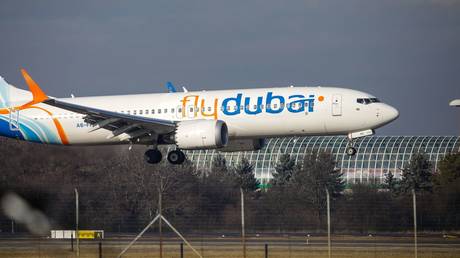
Commercial aviation relies on a fragile presumption of absolute emotional control. When a Flydubai flight bound for Tel Aviv from Dubai was forced to divert following an explosive physical altercation inside the cockpit, that presumption shattered in real time. Passengers waiting at Ben Gurion Airport anticipated a routine arrival, unaware that thirty-seven thousand feet above the earth, the men responsible for their survival had descended into a brutal physical brawl.
This was not a minor disagreement over airspace routing or altitude targets. It was a catastrophic failure of human factors management inside a sealed aluminum tube, exposing deep vulnerabilities in how commercial aviation addresses crew psychological strain, geopolitical stressors, and the extreme isolation of the flight deck.
To understand how an aircraft cockpit transforms into a battlefield, one must examine the modern flight deck culture. Decades ago, cockpit hierarchy resembled an absolute monarchy. The captain’s word was law, and junior officers rarely questioned directives, even when those directives violated safety margins. In response to a string of historic accidents caused by unchecked captain authority, the industry pioneered Crew Resource Management (CRM). CRM trained crews to share authority, encouraging first officers to speak up, challenge errors, and maintain open communication.
Yet CRM assumes a baseline of professional stability. When external pressures mount, the system strains. Regional geopolitical tensions, relentless scheduling pressures, fatigue, and cultural frictions inside multinational flight crews create an invisible undercurrent of volatility. Modern airlines hire globally, placing individuals from vastly different professional and cultural backgrounds into confined spaces for grueling long-haul rotations. When communication protocols fail, minor friction points can metastasize into open hostility.
The mechanics of aviation safety are built on redundancy. Every critical system on a modern airliner has a backup, often a triple backup. Dual hydraulic actuators, redundant flight management computers, and multiple electrical generators ensure that a single component failure never spells disaster. But aviation regulatory bodies have historically treated the human element as a constant rather than a variable subject to structural failure.
When two pilots engage in physical combat at cruising altitude, the primary redundancy of the flight deck vanishes. The danger is not merely that control inputs might be mishandled during the struggle; it is that the cognitive bandwidth required to fly the aircraft is entirely consumed by interpersonal violence. In this specific incident, reports indicated that off-duty relief pilots—including crew members of differing nationalities traveling as passengers—had to intervene to restore order and land the aircraft safely in Saudi Arabia. Without that spontaneous human redundancy, the trajectory could have crossed from operational disruption into tragedy.
Airlines market themselves on the illusion of serene perfection. Passengers step onto an aircraft, sink into molded seats, and surrender absolute control to two anonymous figures behind a locked reinforced door. That door, designed after security mandates following historical hijack threats, has inadvertently created an unintended consequence: total operational isolation.
What happens behind that reinforced bulkhead remains entirely hidden from the cabin crew until a physical breach or an emergency diversion forces transparency. Cabin managers cannot intervene early when brewing tensions manifest as silent treatments, passive-aggressive control grabs, or escalating verbal hostility. The cockpit becomes a pressure cooker with no safety valve.
Regulatory agencies such as the Federal Aviation Administration and the European Union Aviation Safety Agency mandate rigorous psychological screenings upon initial hiring, but periodic mental health checks remain inconsistent across international carriers. Pilots are notoriously disincentivized from reporting acute psychological distress, exhaustion, or interpersonal conflicts out of fear that grounding themselves will trigger career-ending medical reviews or financial penalties. This systemic penalty on honesty forces stressed individuals to suppress friction until it erupts.
Preventing future cockpit breakdowns requires dismantling the culture of silence that surrounds flight crew well-being. Anonymous reporting channels for interpersonal friction, mandatory fatigue management reforms, and dynamic psychological check-ins must replace the archaic assumption that professional pilots are immune to breaking points.
The incident over the Middle East serves as an urgent wake-up call for an industry that obsesses over mechanical airworthiness while neglecting the psychological mechanics of the humans holding the yoke. Until airlines treat crew behavioral health with the same rigorous scrutiny applied to turbine blades and avionics suites, the safety of millions of travelers remains vulnerable to the unpredictable fragility of human temper.