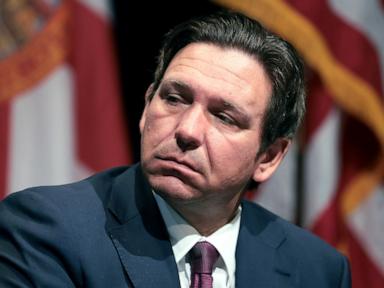
Governor Ron DeSantis just got exactly what he wanted from the Florida legislature. After a messy standoff that saw the governor vetoing previous attempts by his own party, Florida lawmakers finally pushed through a new congressional map that fundamentally reshapes the state's political soul. This isn't just about moving a few lines on a map to keep things tidy. It’s a calculated play that likely hands the GOP four additional seats in the U.S. House of Representatives. If you think this is just standard procedure, you're missing the bigger picture.
The new map passed through the House and Senate along strictly partisan lines. It didn't happen without a fight. Black lawmakers staged a literal sit-in on the House floor, praying and chanting to protest what they call the blatant "erasure" of Black representation. They’re right to be angry. The most aggressive change involves the dismantling of Congressman Al Lawson’s 5th District, which currently stretches from Jacksonville to Tallahassee to link Black communities. That district is gone. In its place? A series of Republican-leaning seats that scatter those voters like dust. Discover more on a similar topic: this related article.
The Death of District Five
You can't talk about this map without talking about the 5th District. For years, this seat served as a cornerstone for Black political power in North Florida. DeSantis argued the district was an unconstitutional "racial gerrymander" because it was drawn specifically to ensure a Black representative could win. He wants a "colorblind" approach. Critics call that a convenient excuse to wipe out a Democratic stronghold.
The logic from the Governor’s office is that the Florida Supreme Court’s previous mandates on "benchmark" districts—districts that protect the ability of minorities to elect candidates of their choice—actually violate the U.S. Constitution. It’s a bold, risky legal theory. By splitting Jacksonville into two separate districts, the new map ensures that the heavy Democratic lean of the city's core is diluted by deep-red rural neighbors. It’s a textbook example of "cracking" a voting bloc. More journalism by BBC News highlights comparable perspectives on the subject.
Numbers Don't Lie
Let's look at the math because that’s where the real impact hides. Florida gained a 28th congressional seat because of population growth. Under the previous map, the state’s delegation was split 16-11 in favor of Republicans. This new version creates 20 seats that Donald Trump would have won in 2020 and only 8 that Joe Biden would have carried.
That is a massive swing. We're talking about a 71% Republican advantage in a state that, while leaning right, usually sees statewide elections decided by a few percentage points. It’s an aggressive play for a state that used to be the ultimate purple battleground. The GOP didn't just get their extra seat from the census; they manufactured three more by carving up existing Democratic territory in Orlando and Tampa as well.
Why the Courts Might Actually Allow This
Usually, Florida’s "Fair Districts" amendments—passed by voters in 2010—would stop this kind of thing. These amendments explicitly forbid drawing maps to favor a political party or incumbent. But there’s a new reality in the judicial branch. DeSantis has spent his tenure stacking the Florida Supreme Court with conservative jurists who are much more likely to look at his "colorblind" interpretation of the law with a friendly eye.
The legal battle is already moving. Groups like the League of Women Voters and individual Florida citizens filed lawsuits almost before the ink was dry on the vote. They argue the map violates the state constitution’s protections for minority voters. But here’s the kicker: timing is everything. With the 2026 midterms approaching, the GOP strategy is often to run out the clock. If the courts don't stay the map immediately, these districts will be used in the next election. Once a map is used once, it’s much harder to undo the results.
National Implications for House Control
Don't think for a second this is just a Florida story. The path to the majority in the U.S. House of Representatives runs directly through the Sunshine State. With a razor-thin margin currently holding the House together, a four-seat pickup in a single state is essentially a gold mine for National Republicans.
Democrats in other states like New York tried similar aggressive maneuvers, but their own state courts struck them down. In Florida, the executive and legislative branches are in total lockstep. That gives the GOP a structural advantage that Democrats simply can't match right now. While people argue about policy on TV, the real power is being consolidated in these map-drawing sessions that most voters find too boring to follow.
Impact on the Ground in Orlando and Tampa
It’s not just North Florida getting the axe. In the Orlando area, the 10th District—formerly held by Val Demings—has been reworked to make it less of a Democratic slam dunk. In the Tampa Bay region, the map crosses the water to pull Democratic voters from St. Petersburg into a Tampa-based district. This effectively eliminates a competitive seat and turns it into a safe Republican win.
If you live in these areas, your representative might change regardless of how you voted. The communities of interest that used to be grouped together are being severed. When you split a city like St. Petersburg down the middle, you're essentially telling those residents that their local issues matter less than the national party’s quest for a 218-seat majority.
How to Check Your New District
The reality is that these lines are likely sticking for the immediate future. You need to know where you stand before the next primary season kicks off.
- Visit the Florida Department of State’s division of elections website to see the finalized boundary files.
- Use third-party tools like Dave’s Redistricting or the Princeton Gerrymandering Project to see how your specific neighborhood shifted.
- Pay attention to the candidates. Many incumbents are now finding themselves in districts that don't include their home addresses. This leads to "musical chairs" where politicians jump to different regions just to stay in power.
- Don't skip the primaries. In these new "safe" districts, the real election happens in the primary. If a district is drawn to be +20 Republican or +20 Democrat, the general election is just a formality. The person who wins the primary is your next representative.
The maps are a done deal in the legislature, but the fallout is just starting. This moves the needle for the entire country, and Florida is once again the center of the political storm. Keep your eyes on the court dockets, but prepare to vote in these new boundaries.