FIFA just broke its own tournament playbook to hand the United States national team an unprecedented lifeline.
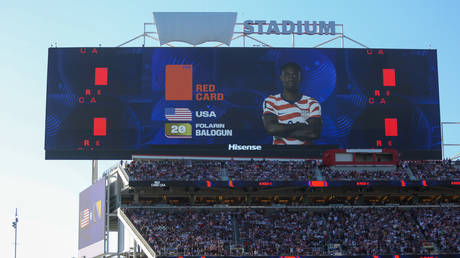
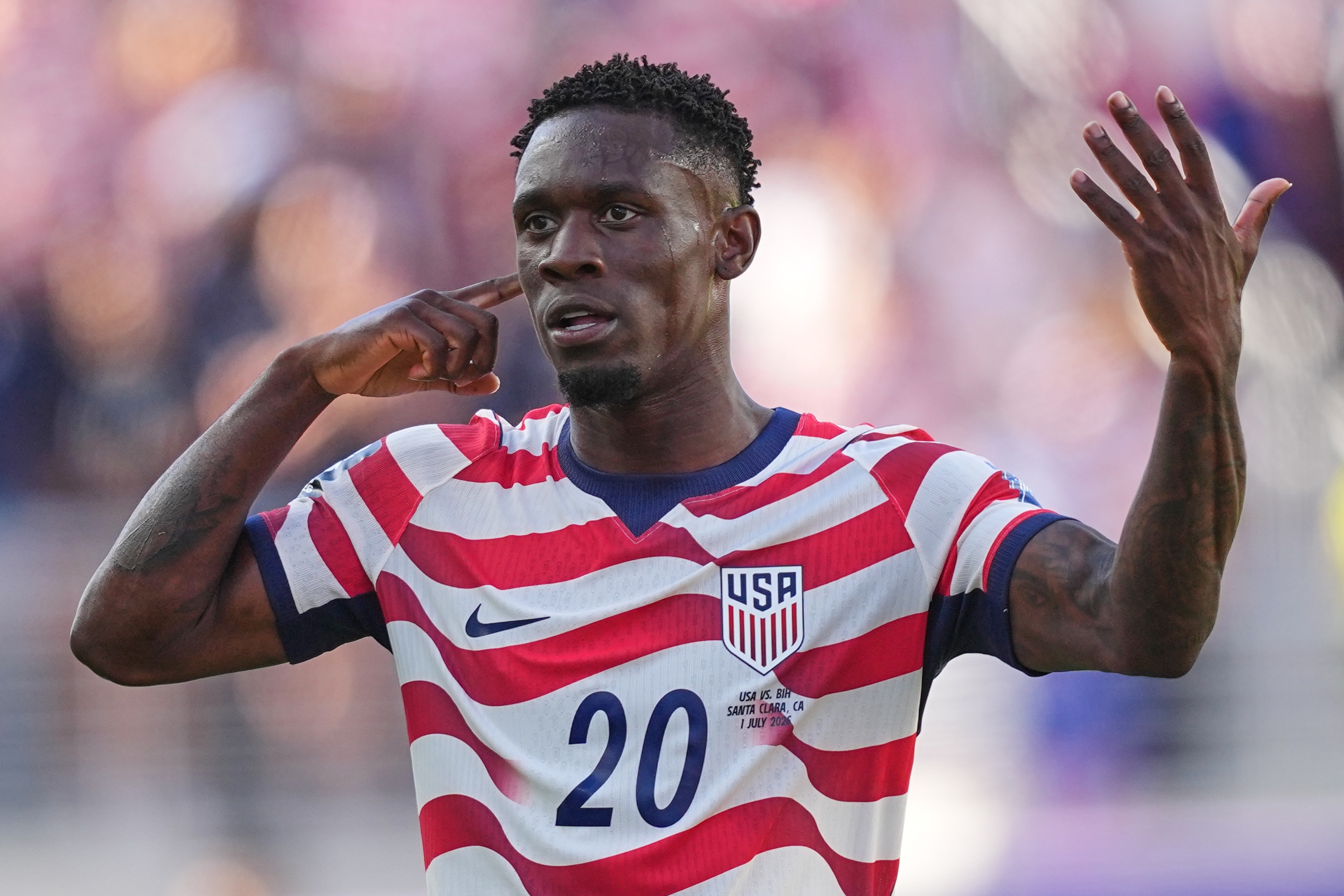
Folarin Balogun is free to play against Belgium. On Sunday morning, soccer's global governing body dropped a bombshell by suspending the automatic one-game ban resulting from Balogun's red card against Bosnia and Herzegovina. The 25-year-old Monaco forward, who leads the Americans with three goals during this home World Cup run, was staring down a mandatory seat on the sidelines for Monday night's massive round-of-16 clash in Seattle. Instead, he will lead the line.
This isn't just a standard appeal victory. U.S. Soccer didn't even file a formal appeal. This is a highly irregular, politically charged intervention that has left the Belgian camp furious and historical precedents completely shattered.
The Shocking Turnaround of Folarin Balogun's Ban
To understand how wild this is, you have to look at the history. A red card at a World Cup means you sit out the next match. Period. It's an automatic rule built into Article 66.4 of the tournament regulations. The last time a player avoided a suspension following a World Cup dismissal was all the way back in 1962.
FIFA bypassed that standard rule by digging up Article 27 of its broader disciplinary code. This allows the judicial body to put a sanction on hold during a probationary period. Balogun is now on a one-year probation. The red card stays on his record, but the actual match suspension is paused. If he gets another card of similar gravity over the next 12 months, the one-game ban instantly triggers alongside whatever new punishment he earns.
It's a loophole, plain and simple. The American players didn't even find out through official channels first. They were on a short 10-minute bus ride from their hotel to training at the University of Washington's Husky Soccer Stadium when social media posts started blowing up their phones. By the time they stepped off the bus, the news was official. Balogun celebrated by posting a photo of himself in front of U.S. fans on social media, set to Michael Jackson's song "Bad."
Political Pressure and the Belgian Backlash
You can't talk about this ruling without talking about the political machinery behind it. White House officials confirmed that President Donald Trump actively lobbied FIFA president Gianni Infantino. Trump made three separate phone calls starting on Wednesday night, demanding a review of the red card and offering what administration officials called additional evidence.
As soon as the decision went public, Trump took to Truth Social to claim credit, writing, "Thank you to FIFA for doing what was right, and reversing a great injustice!"
The Royal Belgian Football Association didn't hide its disgust. They released a blistering statement saying they were completely astonished by the decision, arguing it directly violates tournament rules applied to every other team. Belgian head coach Rudi Garcia went further, using his pre-match press conference to humiliate the governing body.
"I didn't know that at the FIFA World Cup, the 5th of July is now the 1st of April, April Fool's Day," Garcia said through an interpreter. "We're not defending the national team or the federation — we are defending football and its integrity."
U.S. coach Mauricio Pochettino tried his best to push the politics aside during his own media availability, stating that sports and politics shouldn't mix. But honestly, it's way too late for that. The optics look messy, even if the Americans are quietly celebrating.
Was It Actually a Red Card
The entire saga started in the 64th minute of Wednesday's 2-0 win over Bosnia and Herzegovina in the round of 32. Balogun chased down a ball and ended up coming down hard on the right ankle of Bosnian defender Tarik Muharemović. The defender crumpled in pain, and while Brazilian referee Raphael Claus didn't give a card initially, the video assistant referee pulled him over to the monitor. Claus looked at the slow-motion replay and flashed the red.
In real-time, it looked like an unfortunate, clumsy football accident. Balogun was trying to shield the ball, lost his footing slightly, and stepped awkwardly. Christian Pulisic didn't hold back when defending his teammate.
"If you look at the foul, it was just zero intent at all," Pulisic said. "I felt like there was much worse ones that went on this tournament."
Balogun himself noted on Friday that a yellow card would have been the fair outcome, mentioning that players know when a scenario is simply unavoidable on the pitch. FIFA evidently agreed that the lack of malicious intent warranted a reprieve, even if their methods bypassed standard tournament protocol.
What This Means for Monday Night in Seattle
Strip away the political drama and the institutional hypocrisy, and you're left with a massive tactical shift for the United States. Without Balogun, Pochettino was looking at a heavily compromised front line against a disciplined Belgian defense.
The U.S. attack looks completely different when Balogun plays. He offers vertical stretching that opens up space for Pulisic and Timothy Weah to cut inside. His two-goal performance in the 4-1 group stage win over Paraguay showed exactly how dangerous he is when he gets service in the box. He also scored in the 3-2 friendly win over Senegal back in May, showing a sustained run of international form coming off a 13-goal season with Monaco in Ligue 1.
If you look at the history of the U.S. men's national team at the World Cup, the round of 16 has been a brick wall. They haven't reached a quarterfinal since 2002. They fell at this exact stage in 2010 against Ghana, in 2022 against the Netherlands, and most famously, in 2014 against this exact Belgian team in an extra-time heartbreaker.
Now, they have their elite goalscorer on the field in front of a home crowd at Lumen Field. The pressure on Balogun is immense. He isn't just carrying the hopes of the fans anymore; he's playing under the microscope of a global controversy. If he scores the winner on Monday night, it will go down as one of the most legendary, debated moments in American soccer history. If he struggles, the distraction of the last 24 hours will bear the blame.
The talking is over. Expect an incredibly hostile, high-intensity match from a Belgian side that feels genuinely cheated before the whistle has even blown.