The crayon mark was blue. It was not a malicious stroke, nor was it an act of calculated defiance against the state. It was simply the impulsive extension of a four-year-old hand that had not yet learned the infinite patience required by a linoleum floor.
Maya sat on the rug, her fingers smudged with wax, looking up at a world that had suddenly decided she was a threat.
In federal policy circles, abstract nouns collide with bureaucratic armor. We talk about behavioral frameworks, developmental milestones, regulatory modernization, and administrative streamlining. We discuss federal oversight and statutory compliance as if children were lines on a ledger. But policy never lands in a vacuum. It lands on a rug. It lands in a classroom where a teacher is breathing through her teeth, counting down the minutes until naptime, stretched too thin by a system that expects miracles from underpaid adults and offers almost nothing in return.
Under recent proposals from the Trump administration concerning Head Start programs, the mechanisms governing how schools can suspend or expel young children are shifting. The core of the debate centers on whether federal guidelines should make it easier, or at least less procedurally encumbered, for early childhood education programs to remove children who exhibit severe behavioral disruptions. To understand why this proposal ignites fires across school boards and kitchen tables alike, we have to look past the dense language of the Federal Register and step directly into the chaotic, beautiful, heartbreaking reality of an early childhood classroom.
Consider what happens when a four-year-old throws a chair.
It is terrifying. It is dangerous. It puts other children at risk, and it shatters the fragile equilibrium of a room containing twenty other toddlers who are themselves just learning how to keep their hands to themselves. Teachers are bruised. Assistants are overwhelmed. Parents of the other children demand safety, and they have every right to do so.
This is the tension at the heart of Head Start. Created during the War on Poverty in 1965, the program was designed as a sanctuary. It was built on the radical premise that if you feed, nurture, and educate children from low-income families before they enter kindergarten, you can break the intergenerational cycles of disadvantage. Head Start is not merely daycare. It is an intervention, a safety net, and a promise.
When that safety net starts looking for ways to tie knots that let children slip through, the ground trembles.
Proponents of clearer, more streamlined removal processes argue that teachers’ hands are currently tied. They point out that keeping a child who poses a persistent danger to themselves and others creates an untenable environment, burning out educators who are already scarce. They argue that suspension or expulsion, while heavy words for small humans, can serve as a pressure valve or a catalyst that forces families to seek specialized psychological or behavioral evaluations that local programs cannot provide.
There is a cold logic to this. Resources are finite. A single classroom often lacks the behavioral specialists, therapists, and low student-to-teacher ratios required to handle profound trauma or neurodivergence. When a system lacks the tools to heal, it naturally looks for doors to exit.
But here is where the logic breaks against human skin.
Expelling a four-year-old does not cure the behavior. It relocates it. It takes a child who is likely acting out because of hunger, housing instability, chaotic domestic environments, or undiagnosed developmental challenges, and it hands them a suitcase. It tells them they are too much. It teaches them, before they can tie their shoes, that institutions are places that reject you when you are difficult.
We know what happens to children pushed out of early education. The data is not ambiguous; it is a straight, cruel line. Preschool expulsion is strongly correlated with future school failure, grade retention, special education misplacement, and eventually, dropout rates. A child labeled disruptive at age four is structurally primed to be the student handcuffed at fourteen.
The administrative debate over suspension rules in Head Start is therefore not an argument about paperwork. It is an argument about our national tolerance for human friction.
Think about Maya again. Let us give her a bit more history, because children do not arrive in classrooms as blank slates. Maya lives in a cramped apartment where the ceiling leaks whenever it rains. Her father works the night shift at a warehouse, and her mother is working two jobs to keep the electricity on. Last week, Maya woke up at three in the morning to screaming in the hallway. She did not sleep. By eleven the next morning, when the teacher asked her to sit quietly on the blue rug, Maya’s nervous system was not operating from a place of reason. It was operating from a primal, exhausted survival instinct.
When
The Smallest Chair in the Room
news, lifestyle
The room smells of diluted bleach, warm construction paper, and the sharp, coppery tang of a spilled juice box drying on a linoleum floor.
At seven o’clock on a Tuesday morning, the air is thick with the high-stakes theater of four-year-olds negotiating the trade of a blue crayon for a pink one. To anyone standing outside the door, it sounds like ordinary chaos. Inside, it is something much more fragile. It is an ecosystem built entirely on trust.
Maya knows this room. She knows it the way a sailor knows the shifting undertow of a familiar reef. For fourteen years, she has spent her mornings coaxing children out of their coats and into the circle time rug. She has wiped tears over scraped knees, taught stubborn zippers how to slide, and mastered the art of spotting a meltdown three seconds before it detonates.
Head Start was never just a school. For the families who walk through these battered, child-height doors, it is a lifeline. It is where safety nets are woven out of routine, warm meals, and the radical, unyielding belief that a child’s zip code should not dictate their destiny.
Then came the proposal.
It arrived not with a thunderclap, but in the sterile, administrative prose of federal policy updates. The Trump administration floated a shift that would alter the legal underpinnings of federal guidelines regarding behavioral disciplinary actions in Head Start programs. The core of the change? Making it procedurally simpler for administrators to suspend or expel children for behavioral disruptions.
On paper, it sounds like order. It sounds like giving teachers the tools to manage unruly classrooms.
On the floor of room four, it sounds like terror.
Consider Leo.
(Note: Leo is a hypothetical composite character, built from the aggregated behavioral profiles of children documented in early childhood intervention studies, designed to illustrate the real-world friction of disciplinary policy.)
Leo is four. Leo has eyes the color of stagnant pond water and an internal engine that runs exclusively on high gear. When Leo gets overwhelmed—by the roar of the blender in the cafeteria, by the sudden, sharp screech of a chair scraping across the floor, or by a morning that began with shouting in his apartment building—his body does not freeze. It fights.
Leo screams. Leo throws a wooden block. Leo becomes, in the clinical language of a policy brief, a disruption.
Under existing federal frameworks, expelling a child from Head Start has always been treated as a catastrophic failure of the system—a measure of last resort, nearly impossible to execute without jumping through rigorous hoops designed to protect the child. Federal rules have long leaned heavily toward intervention, assessment, and keeping the child in the room.
Why? Because early childhood educators know something that bureaucrats sitting in fluorescent-lit offices often forget. Behavior is communication. When a four-year-old throws a block, they are not staging a revolution. They are drowning.
Make it easier to show them the door, and you change the entire physics of the classroom.
The policy shift whispers a dangerous promise to tired educators: You don't have to carry this anymore. If it's too hard, send them away.
And that is precisely where the system breaks.
Because Maya is tired. Every early childhood educator in America is tired. They are underpaid, under-resourced, and navigating classrooms where trauma arrives before the alphabet does. When a child is screaming, biting, or climbing the bookshelves, the temptation to clear the air is intoxicating.
But expulsion in preschool is not a reset. It is a sentence.
Data from the U.S. Department of Education’s Office for Civil Rights has long revealed a grim, recurring pattern: preschoolers are suspended and expelled at rates that defy common sense, and those suspensions do not fall evenly. They skew heavily toward boys, and overwhelmingly toward children of color. A Black boy in a preschool classroom is statistically far more likely to be labeled defiant where a white child might be labeled curious or overwhelmed.
When you grease the tracks for suspension in a program designed specifically to catch kids who are falling through the cracks, you don't solve the behavior. You simply banish the child who needs you most.
Where does Leo go when he is suspended?
Does his single mother, working two shifts at a distribution warehouse, take an emergency day off and risk her job? Does she find a private daycare that costs more than her monthly rent? Or does Leo stay home, staring at a screen, slipping further behind before he has even learned how to hold a pencil correctly?
The architects of these policy proposals argue that teachers deserve safe classrooms. They argue that one child’s violent outbursts should not hold hostage the education of the nineteen other children sitting quietly on the rug.
It is an argument built on a kernel of fierce, undeniable truth. A teacher cannot teach if they are dodging flying toys. A room cannot heal if it is constantly bracing for impact.
Yet, the solution to a broken ankle is not amputation.
When a program like Head Start—born out of the War on Poverty in 1965 as an intentional tool to level the playing field—begins lowering the barrier to exclusion, it betrays its own founding premise. Head Start was never meant to be a finishing school for easy children. It was built for the rough edges. It was built for the kids whose lives are messy, chaotic, and loud.
If you remove the kids who struggle with regulation, you haven't fixed the classroom. You've simply curated it.
Step back and look at the broader architecture of how we treat children in America. We underfund the mental health supports that could help a child like Leo learn to breathe through his panic. We underpay the staff who manage the front lines of emotional development. Then, when the pressure cooker finally pops, we blame the steam.
Making it easier to suspend a four-year-old is a symptom of a society that loves the idea of early education, but hates the reality of early human development. Human development is loud. It is sticky. It involves bodily fluids, emotional dysregulation, and a complete lack of impulse control. That is not a malfunction of childhood. That is childhood.
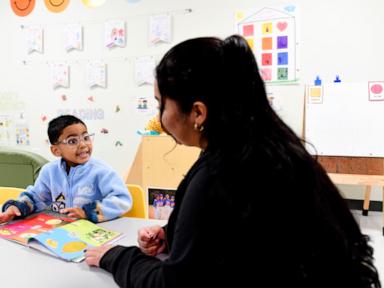
Maya looks across her room. Leo is sitting in the book corner now, curled into a tight ball behind a beanbag chair, clutching a dog-eared copy of Make Way for Ducklings. His breathing is finally slowing down.
No one called an administrator. No papers were filed. No suspension notice was sent home to a mother who is already living on the edge of a financial cliff.
Instead, Maya walked over, sat silently on the floor two feet away, and waited. She didn't lecture. She didn't threaten. She just stayed. After ten minutes, Leo unfolded his legs, crawled into her lap, and pointed a sticky finger at a duck.
That is what is at stake. Not just a statistic on a federal register, or a procedural shortcut for a stressed school board.
The smallest chair in the room holds the entire weight of our collective future. If we make it easy to pull that chair away, we aren't protecting the classroom.
We are locking the door before the child has even had a chance to walk inside.