The chandeliered ballroom of a private coastal club is a long way from the concrete bunkers of Tel Aviv, but global stability has a strange habit of being negotiated over shrimp cocktail.
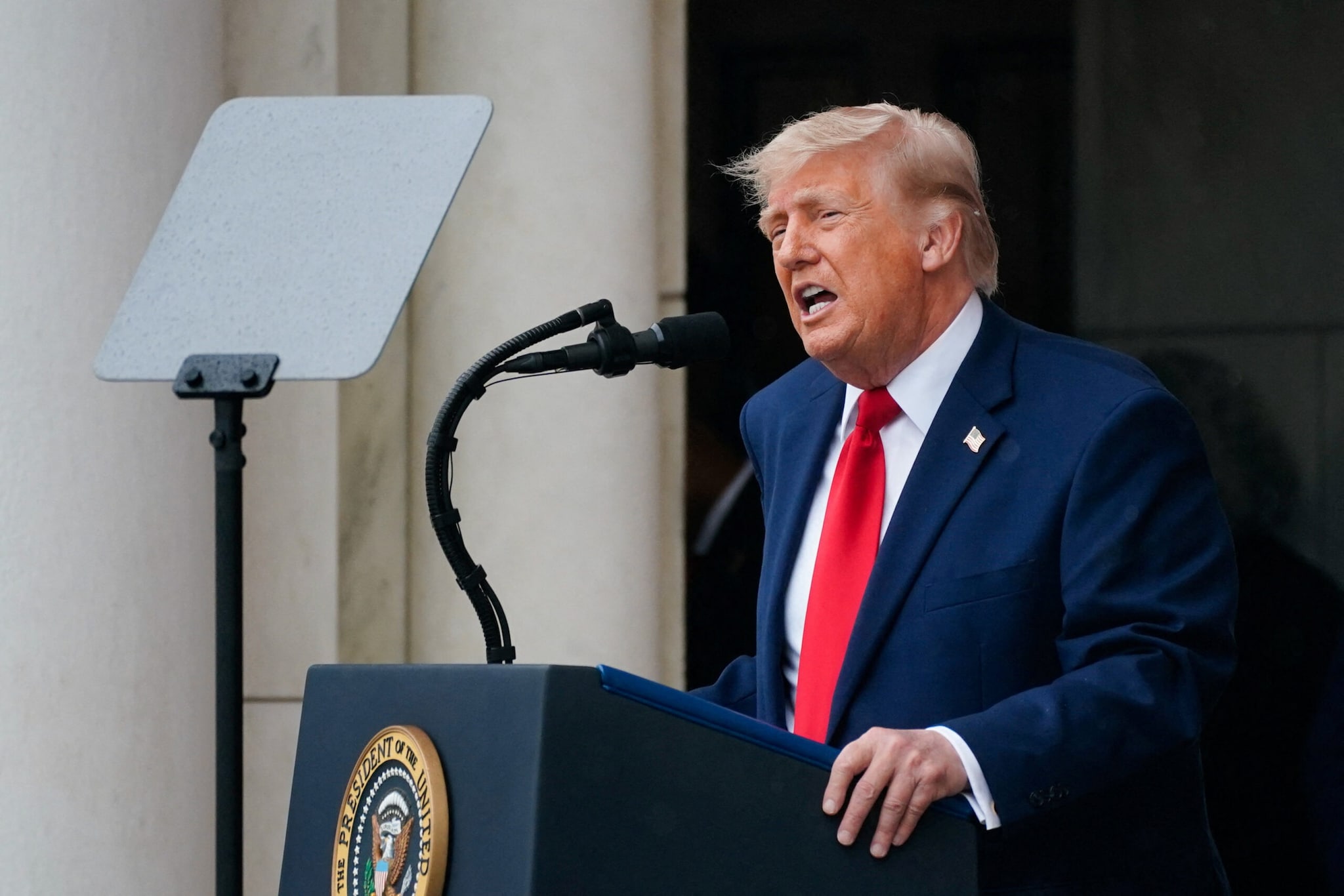
Donald Trump stood before a crowd of donors and guests, a microphone gripped tightly in his hand. The room was filled with the soft clinking of silver and the low hum of wealthy patrons, the kind of atmosphere where political theater usually stays polite. But polite is rarely the objective. Trump began to speak about Benjamin Netanyahu, a man with whom he had shared a stage, a doctrine, and a deeply complicated alliance for years.
Then came the word. Crazy.
He didn't whisper it. He said it out loud, acknowledging a private frustration that had finally breached the surface of public discourse. He told the room that Netanyahu’s volatile approach was actively complicating any chance of peace talks with Iran.
To understand why a single adjective uttered at a Florida resort matters, you have to step away from the podium and look at the invisible threads connecting Washington, Jerusalem, and Tehran. For years, the public narrative was one of unbreakable synergy between the two leaders. We saw the handshakes. We saw the joint press conferences. But beneath the surface, a structural fracture had been widening, driven by two fiercely stubborn egos with entirely different maps of the future.
The Illusion of the Monolith
Geopolitics is often covered like a chess match played by computers. We read the headlines and assume that nations move with a single, calculating mind. They don’t. They move on the whims, grudges, and anxieties of flawed human beings.
For a long time, the alliance between the Trump administration and Netanyahu’s government looked like a monolithic wall against Iran. Trump tore up the Joint Comprehensive Plan of Action (JCPOA)—the Iran nuclear deal—and implemented a "maximum pressure" campaign. Netanyahu cheered. It felt like a shared mission.
But consider what happens when the goals of two allies are fundamentally mismatched from the start.
Trump’s worldview has always been transactional. He views foreign policy through the lens of a New York real estate developer. Everything is a negotiation; every adversary is someone you eventually sit down with to cut a deal. His ultimate prize was not an endless war with Iran, but a grand, sweeping theater of diplomacy where he could sign a new, comprehensive pact that made his predecessors look weak.
Netanyahu’s worldview is existential. For him, Iran is not a rogue state to be brought to the negotiating table. It is an existential threat to the survival of his nation. You do not negotiate with an existential threat. You contain it, you isolate it, and if necessary, you break it.
When Trump signaled a willingness to talk to Iranian officials toward the end of his term, the ideological floor fell out from beneath the relationship. The ally who was supposed to be a battering ram suddenly looked like a man looking for an exit strategy.
The Friction of Ego
Think of a partnership where both individuals are used to being the most powerful person in any room they enter. It works beautifully as long as their interests run parallel. The moment those lines cross, the friction generates immense heat.
The cracks first showed publicly after the 2020 American election. Netanyahu did what any seasoned world leader must do to preserve his country’s vital alliance: he congratulated the incoming president. To Trump, whose political identity relies heavily on absolute loyalty, that calculation felt like a betrayal. The resentment simmered in private dinners and off-the-record complaints for years before bursting into the open.
When Trump called Netanyahu "crazy" in front of his supporters, it wasn't just a casual insult. It was a recognition that Netanyahu’s hardline posture—his refusal to bend, his insistence on a total military and diplomatic squeeze on Tehran—had disrupted Trump's own vision of a grand Middle Eastern peace deal.
The tragedy of modern diplomacy is that the civilian population bears the weight of these interpersonal fractures. While leaders debate character and loyalty from secure rooms, families in Israel live with the constant echo of air-raid sirens, and ordinary citizens in Iran watch their currency collapse under the weight of sanctions. The human cost of a stalled negotiation isn't measured in political points; it is measured in the quiet, daily anxiety of millions of people who just want to know if tomorrow will be stable.
The Long Shadow over Tehran
Meanwhile, officials in Tehran watch this public falling-out with keen interest.
A divided adversary is an opportunity. For Iran's leadership, the public spat between Trump and Netanyahu confirms what they have long suspected: the Western coalition against them is not as unified as it appears. It is a fragile coalition held together by temporary political alignment, easily fractured by internal dissent and personal grievances.
When a potential future American president openly states that Israel is complicating peace talks, it changes the leverage on the global stage. It suggests to Iran that if they can hold out, if they can survive the immediate economic pain, the political will of their opponents might crumble from within.
It leaves the global community in a dangerous limbo. Without a unified strategy between the United States and Israel, the path forward becomes a fog of miscalculation. One country pushes for a deal; the other prepares for conflict.
The Empty Stage
The real problem lies in the vacuum left behind when personal grievances replace strategic clarity.
We are left watching a high-stakes drama where the script is being rewritten on the fly. The grand strategies mapped out by state departments and intelligence agencies are suddenly subject to the unpredictable currents of personal resentment and shifting political fortunes.
The applause in the Mar-a-Lago ballroom eventually faded, the guests returned to their drinks, and the news cycle moved on to the next provocative quote. But the reality on the ground remains unchanged. The centrifuges in Iran continue to spin, the defense systems in Israel remain on high alert, and the prospect of a lasting peace moves a little further out of reach.
A microphone can start a conversation, but it rarely settles a conflict. The world is left waiting to see if anyone can bridge the gap between a developer's desire for a deal and a premier's fight for survival, or if the region will continue to be defined by the chaotic friction of its leaders.