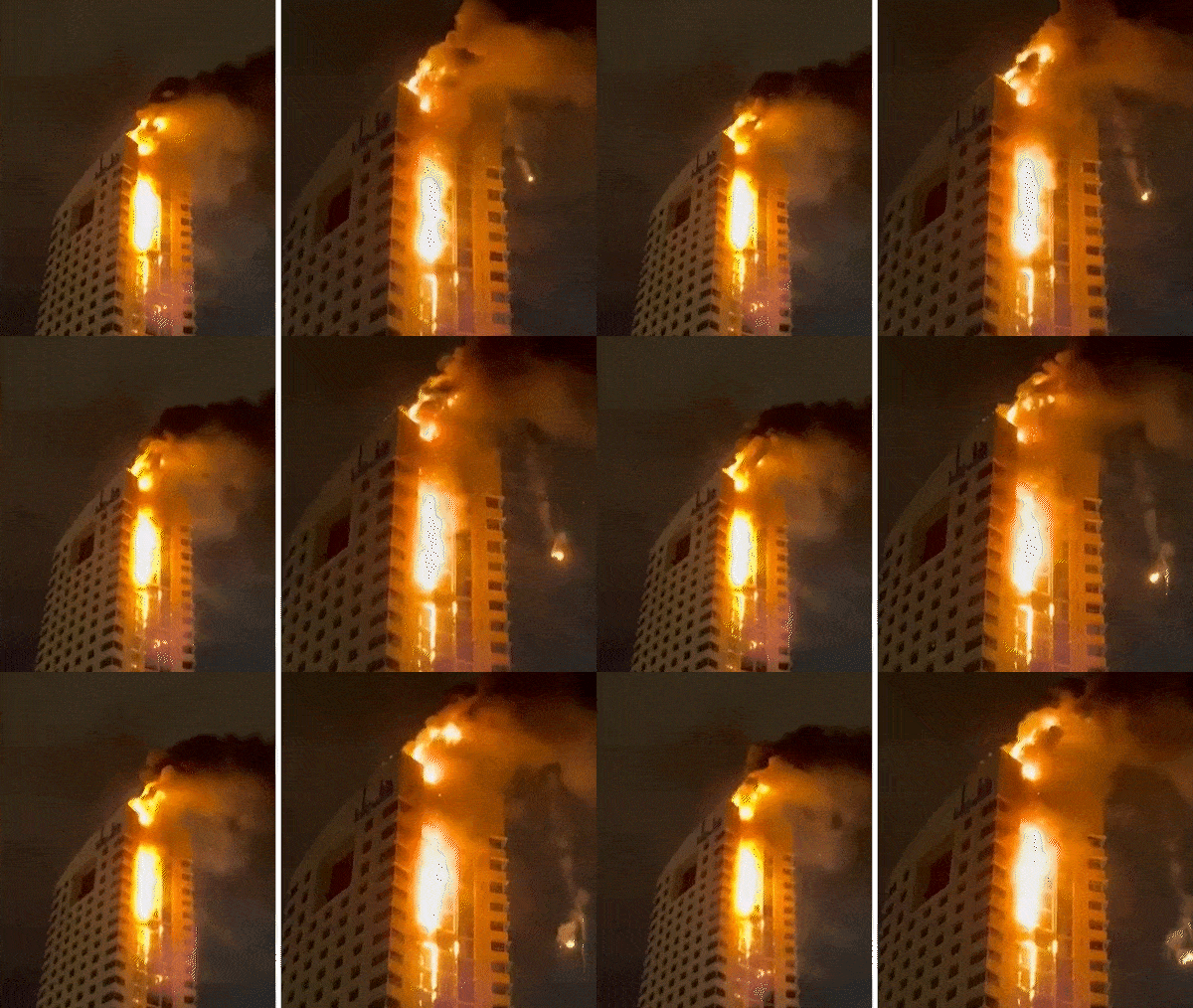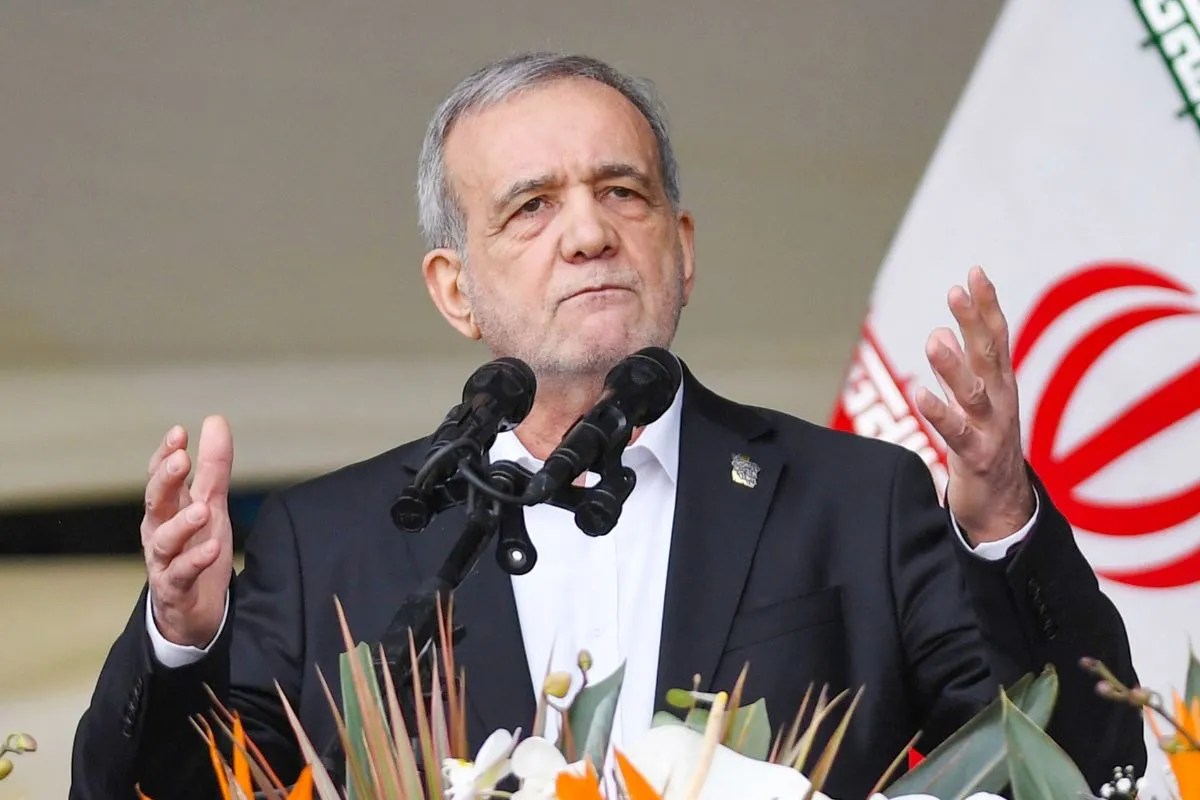
Masoud Pezeshkian inherited a house on fire. The Iranian President, often labeled a "reformist" by a Western media hungry for a protagonist, is currently trapped between the uncompromising ideology of the Islamic Revolutionary Guard Corps (IRGC) and the cold reality of a collapsing regional strategy. His recent attempts to mend fences with Gulf neighbors—reportedly including quiet apologies for past aggressions—are not signs of a new era of peace. They are desperate survival tactics. Pezeshkian is trying to decouple Iran’s economic survival from its military’s thirst for a direct confrontation with the United States and Israel. This internal friction is no longer a secret kept behind the closed doors of the Supreme National Security Council; it is playing out through contradictory state statements and a presidency that seems to be operating on a different frequency than its own generals.
The Myth of the Unified Iranian State
The outside world often views Tehran as a monolith guided by the steady, if iron-fisted, hand of the Supreme Leader. This is a mistake. The Iranian power structure is a chaotic ecosystem of competing centers of influence. On one side stands the elected government, tasked with managing a crumbling economy and a population that has largely lost faith in the 1979 project. On the other sits the IRGC, a parallel state with its own banks, construction companies, and a foreign policy dictated by ballistic trajectories rather than diplomatic cables.
Pezeshkian’s reported outreach to Gulf states signifies a radical departure from the "Resistance Axis" rhetoric that defined the Ebrahim Raisi years. By seeking a detente with the likes of Saudi Arabia and the UAE, Pezeshkian is attempting to insulate Iran from the fallout of the ongoing conflict in the Levant. He knows that if the IRGC pulls Iran into a direct, sustained war with Israel and the US, the Iranian economy—already suffocating under sanctions and mismanagement—will disintegrate. The "apology" mentioned in regional reports reflects a realization that Iran cannot afford to be an island.
The High Stakes of the Gulf Apology
Why would a sitting Iranian president apologize to monarchies that Tehran has spent decades trying to subvert? The answer lies in the geography of energy and the mechanics of sanctions evasion. Iran relies on regional hubs to bypass global financial restrictions. If the Gulf states decide to fully align with the US-Israeli security architecture, Iran’s last remaining economic lungs will be punctured.
Pezeshkian’s diplomacy is an admission of weakness. It suggests that the "Strategic Patience" policy has reached its limit. However, every time the President extends an olive branch, the IRGC seems determined to snap it. We see this in the timing of missile tests, the rhetoric of "harsh revenge," and the continued funneling of high-grade hardware to proxies even as the President talks about regional cooperation. This isn't just a "good cop, bad cop" routine. It is a genuine struggle for the soul of the state's foreign policy.
The IRGC Shadow Cabinet
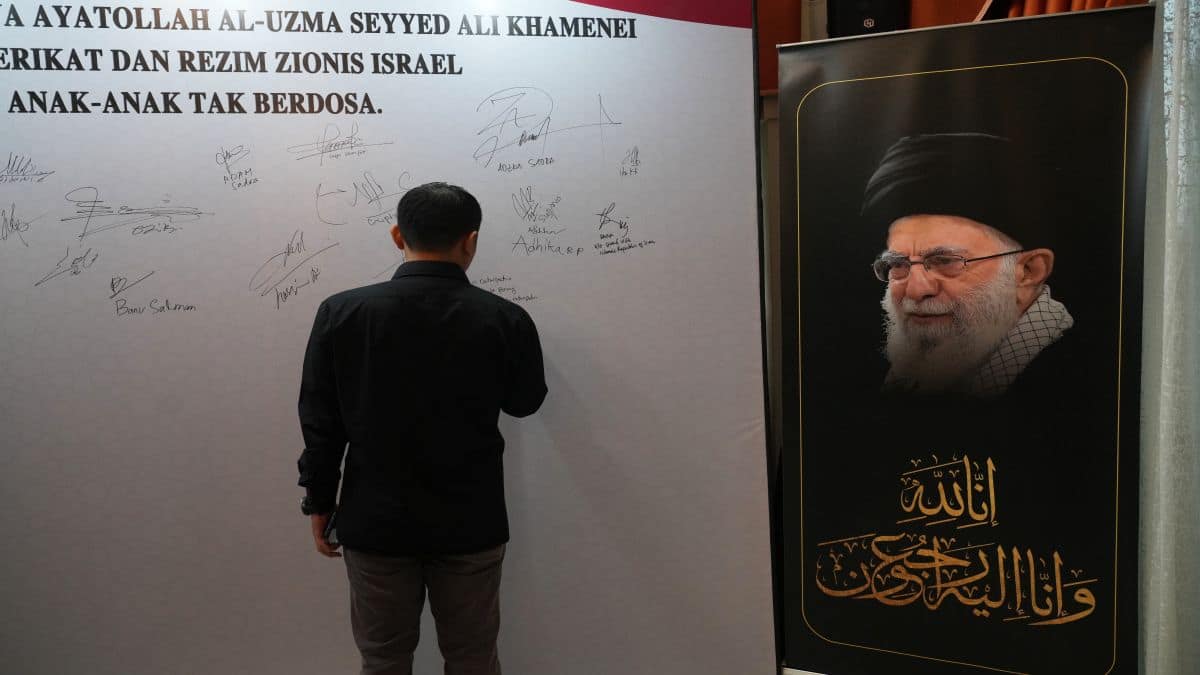
The IRGC does not answer to Pezeshkian. They answer to Ali Khamenei, and even then, the bureaucracy of the Guard has become so entrenched that it often drives policy through the sheer momentum of its operations. For the generals, any apology to a Gulf neighbor is a betrayal of the revolutionary mandate. They view Pezeshkian’s pragmatism as a virus that could weaken the ideological resolve of the rank and file.
Consider the recent escalations. While the foreign ministry attempts to use backchannels in Oman to signal a desire for de-escalation, the military wing is busy coordinating with the "Ring of Fire" surrounding Israel. This creates a schizophrenic international presence. Diplomatic partners don't know who they are talking to: the man in the suit who wants to trade oil, or the man in the olive-drab fatigues who wants to reorganize the Middle East.
Economic Collapse as a National Security Threat
Inflation in Iran is not just a statistic; it is a ticking bomb. When the price of basic goods like eggs and bread triples in a year, the threat to the regime doesn't come from a carrier strike group in the Persian Gulf. It comes from the streets of Mashhad and Tehran. Pezeshkian was brought in specifically to manage this discontent. His "reformist" credentials were a tool used by the establishment to lower the social temperature.
The President understands that without some form of sanctions relief—or at least a cessation of new, more crippling measures—he cannot fulfill his promises. The US and Israel are well aware of this vulnerability. Their strategy has shifted from mere containment to a deliberate tightening of the noose, forcing Tehran to choose between its regional ambitions and its domestic stability.
The Intelligence Breach Paranoia
The assassination of high-level figures within Iranian soil has done more than just remove key assets. It has shattered the aura of invincibility surrounding the Iranian intelligence apparatus. There is a growing suspicion within the halls of power that the system is compromised at the highest levels. This paranoia feeds the internal rift. Hardliners blame the "pro-Western" elements within the civilian government for being soft on security, while pragmatists argue that the military’s aggressive posturing has made Iran a magnet for sophisticated intelligence operations.
When a state cannot protect its guests or its scientists in its own capital, the finger-pointing becomes existential. Pezeshkian finds himself in the crosshairs of this blame game. If he moves too close to a deal with the West or regional rivals, he is labeled a puppet. If he fails to fix the economy, he is labeled a failure. It is a narrow path with no clear exit.
The Proxy Dilemma
For decades, Iran’s primary defense was its "Forward Defense" doctrine. By fighting in Lebanon, Syria, Iraq, and Yemen, they kept the war away from Iranian borders. That buffer is disappearing. Israel’s direct strikes on Iranian interests, and the subsequent Iranian retaliations, have removed the veil of proxy war.
This shift changes the math for Pezeshkian. He can no longer hide behind the actions of the Houthis or Hezbollah. Every rocket fired by a proxy now carries a return address in Tehran. This direct accountability is exactly what the President’s diplomatic push was designed to avoid. He is trying to return to a world where Iran could influence the region without bearing the direct costs of the conflict, but that world no longer exists.
The Succession Factor
Hovering over every decision made by Pezeshkian and the IRGC is the inevitable question of who follows the Supreme Leader. The internal rift is intensified by the jockeying for position among various factions. The IRGC wants a successor who will maintain the military’s dominance and ideological purity. The more moderate elements—or what passes for them in Tehran—hope for a transition that prioritizes state survival over revolutionary expansion.
Pezeshkian is a placeholder in this grander struggle. His successes or failures will be used as ammunition by the factions competing for the ultimate prize. If his outreach to the Gulf succeeds, it proves that pragmatism works. If it is met with more sanctions and isolation, it provides the hardliners with the perfect excuse to fully militarize the state and perhaps even cross the nuclear threshold.
The Illusion of Choice
The US-Israel alliance is betting that the internal pressure will eventually force a systemic change or a massive strategic retreat. However, they must be careful not to mistake Pezeshkian’s willingness to talk for a willingness to surrender. Even the most "liberal" Iranian politician is still a product of the system. Pezeshkian’s goal is to save the Islamic Republic, not to dismantle it.
The real danger lies in a miscalculation by either side. If the IRGC believes that Pezeshkian is truly "selling out" the revolution, they might take unilateral action to sabotage his diplomacy. Conversely, if the West assumes Pezeshkian has the power to change Iran’s trajectory and ignores the generals, they will be caught off guard when the next escalation occurs.
Iran is currently a country with two heads, and they are starting to bite each other. The presidency is fighting for the wallet, while the Guard is fighting for the sword. In a landscape where the currency is failing and the drones are flying, the sword usually wins, but it often leaves the wielder with nothing left to defend.
Watch the skies over the Gulf and the balance sheets in Tehran. The next few months will determine if Pezeshkian’s apologies were the start of a genuine pivot or merely the final, ignored warnings of a man who knew the storm was coming.