The Sound of Waiting
A spoon clinks against a ceramic cup in a quiet kitchen in Tel Aviv. Hundreds of miles away, in a residential neighborhood of Tehran, a father gently pulls a blanket over his sleeping daughter's shoulders. These are ordinary, quiet human moments. They happen every single morning.
Yet, beneath this quiet layer of daily life lies a heavy, suffocating weight. It is the weight of waiting for a sky to fall.
Geopolitics often sounds like a chess match played with cold, wooden pieces. We read the headlines, look at the maps, and analyze the military budgets. But the chess pieces are not made of wood. They are made of flesh, bone, and collective anxiety.
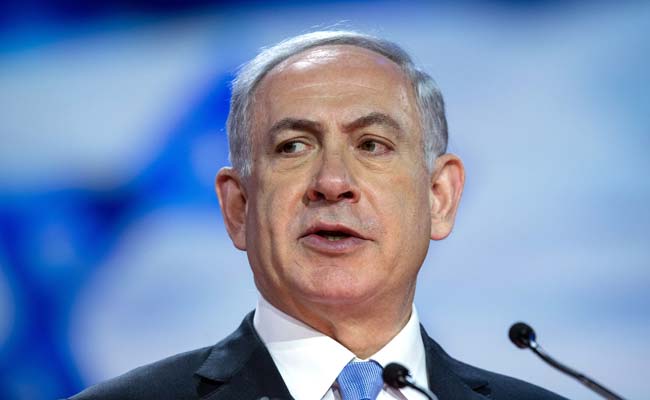
Recently, Israeli Prime Minister Benjamin Netanyahu issued a stark, public warning to the leadership in Iran. His message was direct: if attacked again, Israel’s retaliatory strikes would be vastly more powerful than anything witnessed before. The statement was designed to project absolute strength, to draw a hard line in the sand, and to establish a psychological wall of deterrence.
But when the language of statecraft turns to promises of unprecedented fire, the sound waves travel far beyond the war rooms. They echo in grocery stores, schoolyards, and living rooms where normal people simply try to figure out how to live through the next twenty-four hours.
The Calculus of the Heavy Hand
To understand the current tension, we have to look at the theory that governs this dangerous standoff. It is a concept known in military strategy as deterrence through disproportionate response.
Imagine two people standing on a narrow ledge. One pushes the other gently. The standard rule of a schoolyard fight suggests a gentle push back. But in the theater of modern warfare, the rulebook is rewritten. The strategy relies on a different logic: if you push me, I will hit you with a sledgehammer. The goal is to make the cost of the initial push so terrifyingly high that the opponent never lifts a hand in the first place.
When Israel carried out its previous strikes against Iranian military targets, the operations were precise, calculated, and aimed at specific infrastructure. It was a demonstration of capability. Now, the rhetoric has shifted from demonstration to existential threat. The warning of "much more powerful" actions signals a departure from measured reciprocity. It suggests that the next phase of conflict would not just be an escalation, but a transformation of the war itself.
For the military strategist, this is a rational calculation. It is a mathematical equation where fear is used as a stabilizing force.
But equations do not have heartbeats.
Consider what happens when the equation fails. Deterrence only works if the other side believes the threat, fears the consequence, and acts with perfect rationality. History, however, is rarely a story of perfect rationality. It is a messy chronicle of miscalculations, pride, misread signals, and the sudden, unpredictable sparks that fly when two massive military machines sit on high alert.
The View from the Balcony
Step away from the podiums and the official press releases. Think instead about a hypothetical graphic designer named Talia living in central Israel. She knows exactly where the nearest bomb shelter is. She keeps her phone charged to one hundred percent every night. She has learned to distinguish the sound of a motorcycle backfiring from the distant thud of an interception system.
Now think about Arash, a fictional university student in Tehran. He worries about his exams, his rent, and his future. He also watches the skies. He looks at his aging parents and wonders if he could get them out of the city if the infrastructure failed, if the power grids went dark, if the warnings turned into reality.
Talia and Arash have never met. They likely never will. They are separated by geography, ideology, and governments that view each other as mortal enemies. Yet, they are bound together by the exact same human vulnerability. They are both captive audiences to a grand, dangerous performance of political will.
This is the true cost of prolonged brinkmanship. It erodes the foundational sense of safety that allows human beings to build, create, and look forward to tomorrow. When the air is constantly thick with the promise of more powerful strikes, the present moment feels fragile, temporary, and cheap.
The Mechanism of Escalation
How did the region arrive at a point where the language of total destruction becomes standard diplomatic currency?
The answer lies in the cyclical nature of retaliation. Every action is viewed by the actor as a justified defense, and by the receiver as an unprovoked assault. When Iran launched missiles toward Israel, it was framed by Tehran as a necessary response to previous provocations. When Israel struck back, Jerusalem framed it as a vital defense of its sovereignty.
Each turn of the wheel requires more force to achieve the same level of impact.
If a nation responds to a strike with an identical strike, it signals status quo. To break the cycle or to force a retreat, the response must be amplified. This amplification is precisely what Netanyahu articulated. It is an acknowledgment that the old boundaries of the conflict have faded. The new boundary is undefined, vast, and terrifying.
The technical reality of modern warfare means that a "much more powerful" strike is no longer a matter of sending more soldiers across a border. It means cyber warfare that can silence a city's water supply in a second. It means hypersonic weapons that outrun the speed of sound, leaving zero time for sirens to wail. It means targeting the very arteries of a nation’s economy and survival.
It is easy to get lost in the technological sophistication of these weapons. We talk about precision guidance, payload capacities, and defensive umbrellas. We use clean words to describe violent things. But no matter how smart a missile is, the dirt it throws into the air settles on real neighborhoods. The shockwaves break real windows. The grief it causes is deeply, permanently analog.
The Limits of the Threat
There is a profound irony at the heart of absolute deterrence. The louder a leader must shout the warning, the more apparent it becomes that the previous warnings did not entirely achieve their purpose. If the threat of force were an absolute shield, the need to promise even greater devastation would disappear.
We are witnessing a moment where the language of strength is reaching its upper limits. When you have already promised maximum force, there are few words left to say. The danger then shifts from the spoken word to the physical action. When rhetoric can go no higher, the only remaining move is execution.
This is why the current atmosphere feels fundamentally different. The margin for error has shrunk to a razor's edge. A single radar glitch, an overanxious commander on a missile battery, or a misunderstood diplomatic transmission could trigger the very avalanche both sides claim they want to avoid.
The human mind is not built to sustain this level of tension indefinitely. Communities adapt, but adaptation looks like numbness. People go back to cafes. They go to work. They buy groceries. But beneath the routine, the nervous system remains dialed to high alert. It is a collective exhaustion that drains the vitality out of a society, leaving people weary, cynical, and waiting for the other shoe to drop.
The Quiet Reality
True strength is rarely loud.
The real tragedy of this ongoing escalation is that it obscures the shared reality of the people living under the flight paths of these missiles. Strip away the flags, the anthems, and the fiery speeches from high-level officials, and you are left with millions of individuals who want the exact same basic things: a stable job, a safe home, and a future where their children can grow up without learning the specific cadence of an air-defense siren.
The world watches the headlines, tracking the movements of aircraft carriers and diplomatic envoys. We analyze the statements for clues about what happens next. But the true story of this conflict isn't found in the promises of much more powerful strikes.
The true story is found in the quiet, terrified resilience of the people who, despite the looming shadow of an unpredictable tomorrow, still choose to wake up, brew their coffee, and hold onto their humanity in the face of the storm.