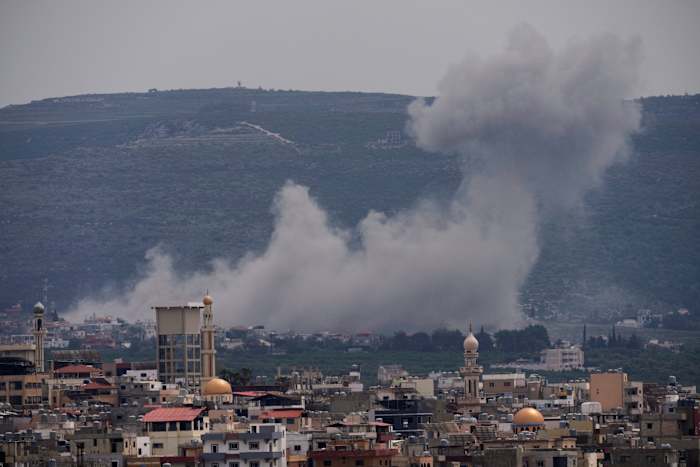
The ten-day mark of the Lebanon ceasefire has arrived, and against the expectations of many seasoned regional observers, the guns remain mostly silent. However, this period of calm is not a resolution. It is a tactical pause that masks a deepening crisis involving European energy security and the vital maritime arteries of the Middle East. While world leaders prepare to gather to discuss the stability of the Strait, the reality on the ground suggests that the diplomatic victory being touted in Western capitals is built on shifting sand.
The immediate cessation of hostilities between Israel and Hezbollah has provided a much-needed reprieve for civilians on both sides of the Blue Line. It has also reopened a narrow window for diplomacy. Yet, beneath the surface of this tenuous peace, a more complex struggle is unfolding. European powers are shifting their focus from the mountains of Southern Lebanon to the narrow waters of the Strait of Hormuz and the Bab el-Mandeb, recognizing that a failure to secure these passages could trigger a systemic economic shock that makes the current inflationary pressures look mild.
The Mechanics of a Temporary Peace
Ceasefires in this region are rarely about peace. They are about exhaustion. After months of high-intensity conflict, both the Israeli Defense Forces and Hezbollah have reached a point where the costs of continued kinetic operations outweigh the immediate strategic gains. For Israel, the objective has been to push Hezbollah forces north of the Litani River and dismantle the infrastructure used for cross-border raids. For Hezbollah, the goal is survival and the preservation of its political standing within a fractured Lebanese state.
The current ten-day window has held because it serves the immediate needs of both actors. Israel is recalibrating its domestic political landscape, while Hezbollah is assessing the damage to its leadership hierarchy. But the "how" of this ceasefire is more interesting than the "what." It is being maintained not by a formal signed document with ironclad guarantees, but by a series of back-channel communications and a mutual understanding of "red lines" that neither side is currently prepared to cross.
The role of the United Nations Interim Force in Lebanon (UNIFIL) remains a point of contention. For decades, the mission has been criticized for its inability to prevent the militarization of the south. Now, European leaders are considering a significant expansion of UNIFIL’s mandate, or perhaps more accurately, its enforcement capabilities. This is a tall order. Adding more boots on the ground without a fundamental change in the rules of engagement will likely result in the same paralysis that has defined the mission since 2006.
The European Pivot to the Strait
As the Lebanon front cools, the diplomatic heat is transferring to the maritime corridors. European leaders are not meeting just to pat themselves on the back for the Lebanon truce. They are meeting because they are terrified. The vulnerability of the Strait of Hormuz and the Red Sea to asymmetrical attacks has become the primary threat to the Eurozone’s economic stability.
If the Lebanon ceasefire fails, the conflict will not stay localized. It will spill back into the shipping lanes. We have already seen how relatively inexpensive drones and missiles can disrupt global supply chains, forcing shipping giants to reroute around the Cape of Good Hope. This adds weeks to transit times and millions to fuel costs. For a Europe already struggling with high energy prices and sluggish growth, a prolonged disruption is unsustainable.
The upcoming summit regarding the Strait will likely focus on "maritime security initiatives," which is diplomatic shorthand for increased naval patrols and intelligence sharing. But there is a fundamental flaw in this approach. You cannot secure a waterway through naval presence alone if the source of the instability is land-based and politically motivated. The naval assets are a bandage on a sucking chest wound.
The Economic Stakes of Middle Eastern Instability
Investors often treat the Middle East as a monolithic risk factor. That is a mistake. The current situation requires a more granular analysis of how local conflicts intersect with global commodities.
- Energy Volatility: Lebanon produces no oil, but it sits adjacent to the Eastern Mediterranean gas fields. Any escalation threatens the infrastructure that Europe hopes will eventually replace its reliance on Russian energy.
- Shipping Premiums: Insurance rates for vessels traversing the Middle East have seen massive spikes. These costs are never absorbed by the shipping companies; they are passed directly to the consumer.
- Supply Chain Resilience: The "just-in-time" manufacturing model is dead in an era of unpredictable maritime blockades. Companies are being forced to hold more inventory, which ties up capital and reduces efficiency.
The Lebanon ceasefire is the variable that determines whether these economic pressures stay manageable or become catastrophic. If the truce holds for another thirty days, we might see a softening of shipping rates. If it breaks tomorrow, expect an immediate and violent reaction in the Brent Crude markets.
The Forgotten Lebanese State
In the rush to manage the security situation, the international community continues to ignore the hollowed-out shell of the Lebanese government. A ceasefire between two armed entities—one a state, one a non-state actor—effectively bypasses the official Lebanese authorities. This marginalization is dangerous.
Lebanon is currently a country with a paralyzed presidency, a caretaker cabinet, and a central bank that has overseen one of the worst economic collapses in modern history. Without a functioning state to oversee the reconstruction of the south and the reintegration of displaced populations, the vacuum will simply be filled by the same militias the ceasefire is meant to contain.
The European plan to "stabilize" the region must include more than just naval drills and border monitors. It requires a hard-nosed approach to Lebanese political reform that the West has historically been unwilling to enforce. Providing aid without strict accountability has only served to entrench the sectarian elites who profit from instability.
Asymmetrical Warfare and the Limits of Conventional Power
One of the most significant takeaways from the last few months of conflict is the declining effectiveness of conventional military superiority in the face of asymmetrical tactics. Israel possesses one of the most advanced air forces in the world, yet it could not fully stop the persistent rain of short-range rockets.
This reality is now being applied to the maritime theater. A billion-dollar destroyer is a formidable asset, but it is a target-rich environment for a swarm of five-thousand-dollar suicide drones. European leaders are beginning to realize that their traditional naval doctrines are ill-equipped for this type of friction. The discussions over the Strait will have to address the "cost-exchange ratio" of modern defense. If it costs two million dollars to intercept a drone that costs less than a used car, the defender loses the war of attrition by default.
The Intelligence Gap
There is a glaring lack of clarity regarding the internal dynamics of the groups involved. Much of the reporting relies on official statements that are essentially propaganda. The reality is that the decision-making processes within Hezbollah and its regional patrons are becoming increasingly opaque.
The ten-day ceasefire has likely been used as much for internal purging and restructuring as it has for humanitarian relief. This makes the "holding" of the ceasefire even more deceptive. It may look like peace, but it is actually the sound of a machine being repaired and reloaded. Intelligence agencies are currently scrambling to determine if the command structure of these groups has been permanently degraded or if they are simply waiting for the right moment to pivot back to a strategy of managed escalation.
The Strait as a Geopolitical Lever
The Strait of Hormuz is the world's most important oil chokepoint. Approximately one-fifth of the world's total oil consumption passes through it daily. By linking the Lebanon ceasefire to the security of the Strait, regional actors have created a powerful lever against the West.
They know that Europe cannot afford a total shutdown of the Strait. Therefore, the threat of maritime disruption is used to extract concessions on the Levant front. It is a sophisticated form of geopolitical blackmail. The European leaders meeting this week are well aware of this dynamic, even if they won't admit it publicly. Their goal is to decouple the two issues, but in the modern Middle East, everything is connected.
The Logistics of Reconstruction
Even if the ceasefire turns into a long-term armistice, the logistics of rebuilding Southern Lebanon are staggering. Thousands of buildings have been leveled, and the infrastructure for water and electricity is in shambles. Who pays for this?
The Gulf states, traditionally the bankrollers of Lebanese reconstruction, are no longer willing to write blank checks to a country they view as being under the thumb of their rivals. Europe is strapped for cash and dealing with its own internal populist pressures against foreign aid. This leaves a massive funding gap. Without a clear plan for reconstruction, the "peace" will be characterized by a desperate, displaced population—a perfect breeding ground for the next cycle of radicalization.
The Failure of "Managed Escalation"
For the past year, the prevailing strategy among Western diplomats has been "managed escalation"—the idea that you can allow a certain level of conflict to occur without it spiraling into a regional war. The events leading up to the current ceasefire prove that this is a fantasy. Conflict is not a thermostat you can dial up and down at will. It has its own momentum, driven by individual commanders on the ground, technical failures, and the unpredictable nature of human emotion.
The Lebanon ceasefire held for ten days because both sides reached a temporary equilibrium of pain. It did not hold because of clever diplomatic maneuvering. If we want to understand the future of the Strait and the wider region, we have to look at the underlying drivers of the conflict, not just the temporary pauses. The drivers—land disputes, ideological fervor, and the fight for regional hegemony—remain entirely unaddressed.
The meetings in Europe will likely produce a communique full of platitudes about "stability," "maritime freedom," and "sovereignty." These words mean very little to the people living in the rubble of Bint Jbeil or the sailors navigating the narrow waters of the Red Sea. The hard truth is that the international community is reacting to events rather than shaping them.
The focus on the ten-day mark is a distraction. The real story is the preparation for what happens on day eleven, or day fifty, or day one hundred. Every day the ceasefire holds is a day that the various factions use to prepare for the next inevitable flare-up. The "hold" is not a stop; it is a pause in a much longer, much more dangerous game.
The maritime security of the Strait is now inextricably linked to the rubble of Lebanon. Until the root causes of the Levant’s instability are addressed with something more substantial than temporary truces and naval patrols, the global economy will remain a hostage to the next rocket launch or drone strike. The window for a meaningful, long-term settlement is closing, and no amount of high-level meetings can change the facts on the ground if the will for a real political solution does not exist among the combatants themselves.
Stop looking at the ceasefire as a victory and start looking at it as a countdown.