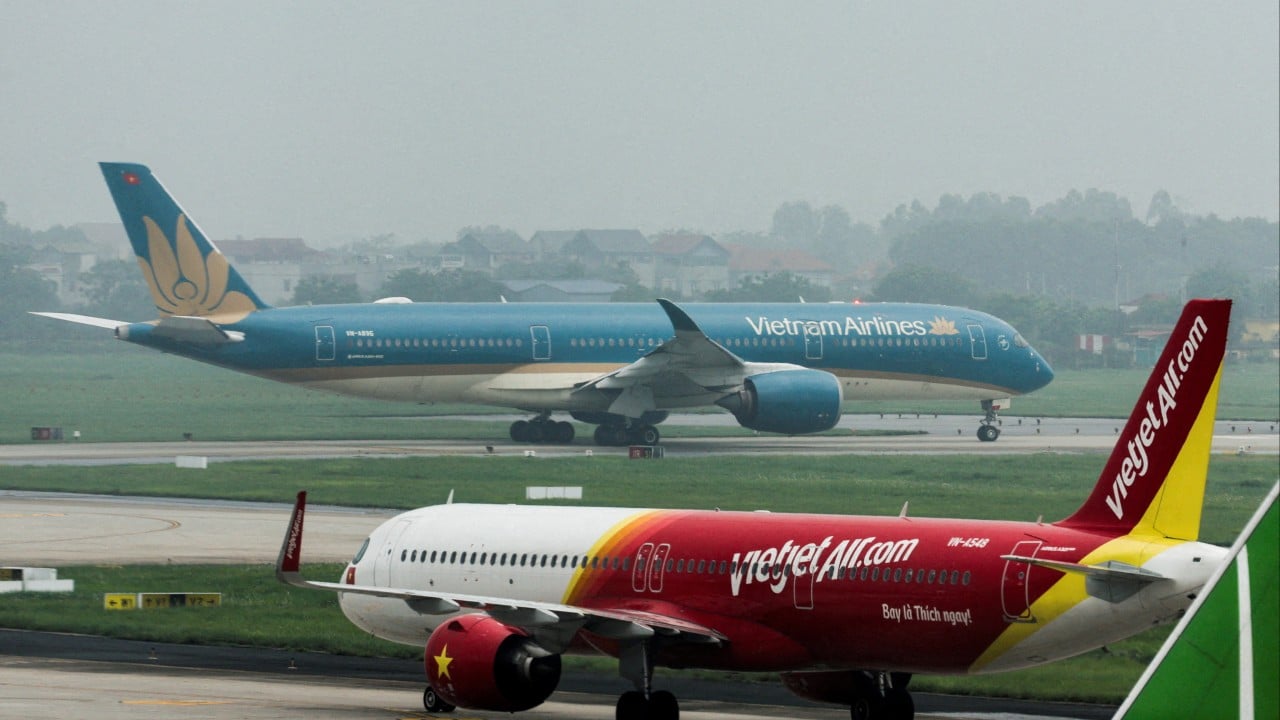
The cabin lights dim over the South China Sea.
A flight attendant moves down the aisle, her footsteps muffled by the carpet. She is checking seatbelts, offering water, and maintaining that rehearsed mask of professional calm. Most passengers are asleep, their heads lolling against window panes or tucked into travel pillows. They are blissfully unaware that the metal tube carrying them at five hundred miles per hour is a miracle of logistics—and a hostage to geography.
Consider a hypothetical traveler named Elias. He is flying from Singapore to London. He is thinking about his daughter’s graduation, his tight connection at Heathrow, or perhaps the quality of the gin in his plastic cup. He is not thinking about the Strait of Hormuz. He is not thinking about the refining capacity of Singapore’s Jurong Island or the price of jet fuel in a market gripped by the fever of war.
But the pilots are.
Up in the cockpit, the conversation is different. They are looking at the fuel gauges and the flight path. The map on their screens used to be a straight line. Now, it looks like a jagged zig-zag. The war in the Middle East has turned the sky into a series of "no-go" zones. To avoid the possibility of a missile or a stray drone, planes must fly longer, looping routes that add hours to the journey.
Hours mean fuel. Fuel means weight. Weight means even more fuel.
The High Cost of the Long Way Around
A jet engine is a hungry beast. It does not care about geopolitics; it only cares about the chemical energy stored in kerosene. When a conflict between Iran and its neighbors escalates, the ripples travel faster than the planes themselves.
The first thing that happens is the closure of airspace. For years, the routes over Iran and Iraq were the primary "superhighways" for traffic moving between Asia and Europe. They were efficient. They were predictable. Today, those highways are effectively blocked by a wall of fire and uncertainty.
When an airline has to divert a flight from a direct path to a circuitous one, the math becomes brutal. Adding sixty minutes to a long-haul flight isn't just a minor inconvenience for the passengers. It requires several extra tons of fuel. On a Boeing 777 or an Airbus A350, that extra weight forces the plane to burn more fuel just to carry the extra fuel. It is a vicious, expensive cycle.
The immediate result? The "fuel surcharge" reappears on your ticket like a ghost that refuses to be exorcised.
A Supply Chain Made of Glass
The problem isn't just where the planes fly. It’s what we put in them.
Asia is the world's engine room, but its aviation industry has a peculiar vulnerability. While the United States has its own massive shale reserves and Europe has a complex (albeit strained) web of pipelines, much of Asia’s jet fuel is tied directly to the stability of the Persian Gulf.
Singapore serves as the pricing hub for the entire region. When news breaks of a drone strike on a refinery or a tanker being seized in the Gulf, the price of "Platts Jet Kero"—the industry benchmark—spikes instantly.
Think of it like a global nervous system. A pinch in the Middle East causes a scream in Tokyo, Seoul, and Bangkok.
Airlines usually try to protect themselves through "hedging." This is a financial gamble where they buy fuel at today’s prices to use months from now. It’s a shield, but it’s a thin one. If the war drags on, the hedges run out. When they do, the airline is forced to buy fuel at "spot" prices—the raw, bleeding edge of the market.
For a budget carrier operating on razor-thin margins, a 20% jump in fuel costs isn't a problem to be managed. It’s an existential threat. It’s the difference between staying in the air and grounding the fleet.
The Pilot’s Dilemma
Let’s go back to the cockpit.
The captain is looking at the weather over the Himalayas. Usually, if the weather is bad, they might choose to fly around it. But today, their options are limited. To the south, there is conflict. To the north, there is restricted airspace. They are squeezed into a narrow corridor of safety.
This is the hidden stress of modern aviation. We have spent forty years making air travel a commodity—something as routine as taking a bus. We forgot that the "bus" relies on a stable world order.
When the price of jet fuel climbs, airlines look for ways to save every drop. They use "single-engine taxiing," where the plane limps to the runway on one engine to save a few gallons. They use "continuous descent approaches" to glide into airports rather than using the engines to level off. They even look at the weight of the magazines in the seatback pockets.
But you cannot out-optimize a war.
If the conflict between Iran and Israel, or any of the surrounding factions, moves from a simmer to a boil, the physical supply of oil is at risk. It’s not just about the price anymore. It’s about whether the tanker can even leave the port.
The Empty Seat and the Global Slowdown
There is a psychological weight to this as well.
Air travel is the physical manifestation of globalization. It is how we conduct business, how we see our families, and how we discover that people on the other side of the planet aren't so different from us.
When the sky becomes expensive and dangerous, the world shrinks.
Companies that used to send executives to Shanghai or Singapore for a handshake now settle for a grainy Zoom call. Families decide that the "homecoming" trip is just too expensive this year. The tourist who was going to spend two weeks in Thailand decides to stay in a caravan closer to home.
The turbulence isn't just in the air. It’s in the global economy.
Aviation accounts for a massive chunk of global trade by value. High-end electronics, fresh flowers, life-saving medicines—these don't travel by ship. They travel in the belly of those same passenger planes that Elias is sleeping on. When the fuel price spikes, the cost of an iPhone or a heart stent spikes with it.
We are all connected by a thin, invisible thread of kerosene.
The Mirage of Alternatives
People often ask why we don't just use something else. Why not electric planes? Why not biofuels?
The reality is sobering.
A battery capable of powering a flight from Sydney to Los Angeles would be so heavy the plane could never leave the ground. Sustainable Aviation Fuel (SAF), made from cooking oil or plant waste, is a beautiful idea, but we currently produce less than 1% of what the global fleet requires.
For the foreseeable future, we are married to the oil well. And most of those wells are located in places where the sand is soaked in history and blood.
The aviation industry in Asia is currently in a race against time. They are trying to grow, trying to meet the demands of a rising middle class that wants to see the world, while the ground beneath them is shifting. They are buying newer, more efficient planes, but those planes still need the same fuel.
The View from Thirty Thousand Feet
Elias wakes up as the sun begins to bleed over the horizon. The sky is a bruised purple, fading into a pale, dusty blue. He looks out the window and sees the glint of sunlight on the wing.
He doesn't see the frantic phone calls in the trading houses of Singapore. He doesn't see the military analysts in Washington and Tehran staring at satellite imagery of oil terminals. He doesn't see the airline accountants staring at spreadsheets, wondering how much more the flying public can endure before they simply stop buying tickets.
He only sees the clouds.
We have built a civilization that depends on the ability to defy gravity. It is a magnificent achievement. But that achievement sits on a foundation of fossil fuels and fragile peace.
The turbulence we feel today isn't caused by the wind. It’s the shaking of the foundation. As long as the fires in the Middle East burn, the sky will remain a place of unease. The pilots will keep checking their gauges. The accountants will keep sharpening their pencils. And the rest of us will keep staring out the window, hoping the line on the map stays clear, even as the cost of the journey climbs higher than the plane itself.
The engines hum a steady, rhythmic song, burning through the lifeblood of the earth, carrying us across a world that feels smaller and more fractured with every passing mile.