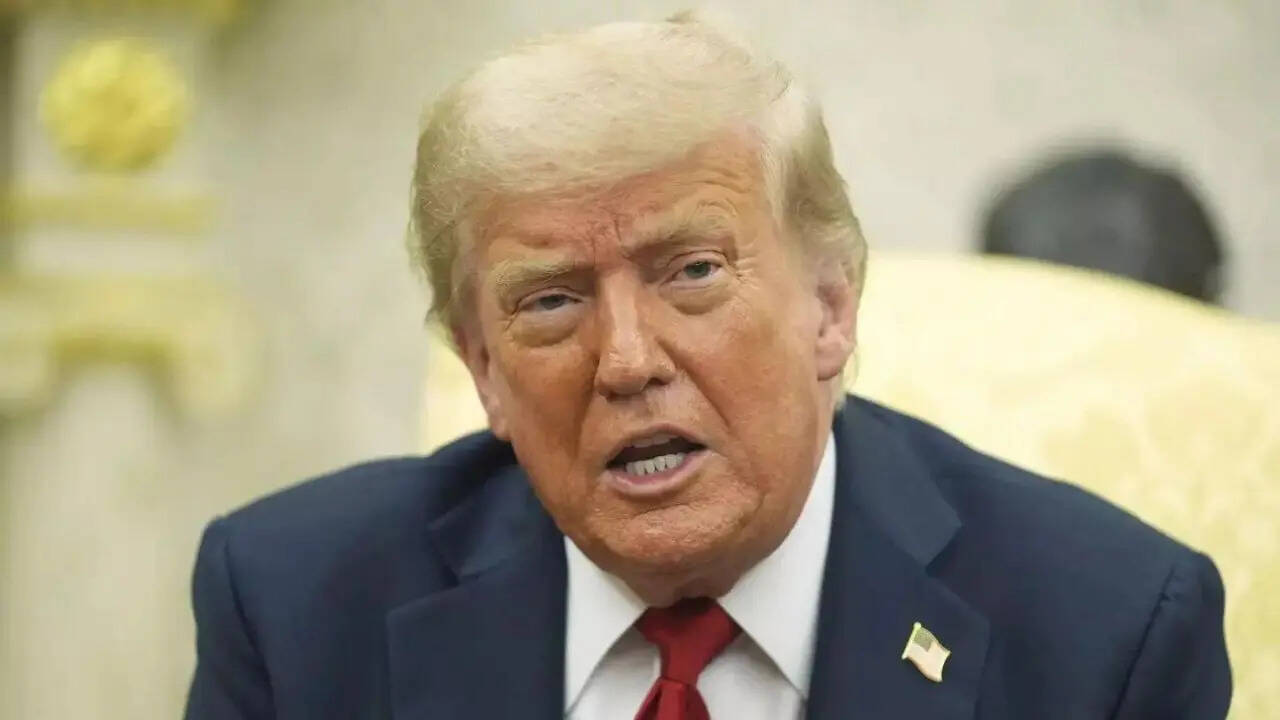
The air inside Mar-a-Lago always carries a heavy, specific weight. It smells of expensive floral arrangements, salt air drifting off the Palm Beach coast, and the invisible, intoxicating static of raw power. When Donald Trump sits down to talk about the world, the room shrinks. The complex, tangled geometry of Middle Eastern geopolitics suddenly transforms into a story about personalities, debts, and the friction between alpha figures.
During a recent, sprawling conversation, the focus shifted to Jerusalem. Specifically, it shifted to Benjamin Netanyahu.
To the world, the bond between Trump and the Israeli Prime Minister—affectionately and sometimes contentiously known as "Bibi"—has long been portrayed as an unbreakable fortress of shared ambition. But relationships forged in the fires of high-stakes politics are rarely simple. They are loud. They are demanding.
Trump did not hold back. He called Netanyahu "a very difficult guy."
The words were not delivered with hatred, but with the weary familiarity of a man who has spent a lifetime negotiating across polished boardroom tables. It was a glimpse behind the curtain of global diplomacy, revealing that beneath the grand treaties and military alliances lies a volatile mix of human ego and transactional expectation.
In Trump’s view, the ledger of gratitude is heavily unbalanced. He believes Netanyahu should thank him. Frequently.
The Unspoken Price of Protection
Consider the weight of a promise. When the United States moves an embassy to Jerusalem or alters the trajectory of its foreign policy, the ripples are felt in every marketplace, every border checkpoint, and every family dinner table across the region. These are not abstract policy adjustments. They are tectonic shifts.
Trump’s grievance stems from a belief that these historic gestures were met with political calculation rather than genuine reciprocity. He pointed directly to the existential shadow that hangs over the entire region: Iran.
The phrase "If Iran had a nuclear weapon" is not just a talking point for a Sunday morning news show. For millions of people living within the reach of regional ballistic missiles, it represents a definitive line between existence and annihilation. It is the ultimate nightmare scenario, a piece of geopolitical dread that dictates military budgets, civil defense drills, and the psychological peace of an entire nation.
Trump positioned himself as the barrier that stood between Israel and that reality. By dismantling the nuclear deal and pursuing a campaign of maximum pressure, he viewed his actions as a shield held over Jerusalem. When that shield is taken for granted, the personal relationship fractures.
Political alliances are often sold to the public as sacred covenants based on shared democratic values. The reality is far more transactional. It is a world of "What have you done for me lately?" where past favors degrade quickly under the pressure of current crises.
Two Capitals, One Friction
The tension between Trump and Netanyahu highlights a fundamental truth about leadership on the world stage. Monoliths do not exist. Even the closest allies are driven by distinct, often competing, domestic pressures.
Netanyahu faces a fractured electorate, constant security threats, and the unrelenting demands of a nation perpetually on a wartime footing. His survival depends on looking entirely self-reliant. He cannot afford to appear as a subordinate to any foreign power, even the world's sole superpower. He must be the architect of Israel's destiny.
Trump operates on a different frequency. His worldview is deeply rooted in personal loyalty and visible appreciation. In his ecosystem, a benefit conferred demands a public acknowledgment of the debt. When the thank-you note never arrives, or when it feels half-hearted, it feels like a breach of contract.
This clash of styles creates a fascinating paradox. The policies implemented during the Trump presidency were arguably some of the most aligned with Netanyahu’s long-term goals in history. Yet, the personal chemistry between the two men remains highly volatile. It proves that even when two leaders are walking down the exact same path, they can still elbow each other for room along the way.
The Human Element in High Diplomacy
We often look at international relations through the lens of moving troops, fluctuating oil prices, and signed treaties. We treat nations as if they are monolithic chess pieces moved by cold, calculating logic.
But nations are run by human beings.
They are run by men who get tired, who feel slighted, who carry grudges, and who judge the fate of empires based on personal chemistry. The friction between Trump and Netanyahu is a reminder that history is often shaped by the temperament of its players as much as by its material conditions.
When Trump calls Netanyahu "difficult," he is pull back the veil on the immense stress of global management. It is a confession that behind the handshakes and the joint press conferences lies a constant, exhausting tug-of-war.
The stakes remain incredibly high. The shadow of a nuclear-ready adversary does not diminish just because the leaders of the allied world are experiencing a personal rift. If anything, the friction makes the future more unpredictable.
The music of global diplomacy continues to play, but the harmony is gone. Instead, there is a tense, syncopated rhythm, driven by two leaders who know they need each other, even if they can barely stand the noise the other makes.