The tea in Islamabad stays hot for a long time, but the silence between nations stays cold even longer. For fifteen days, the guns along the jagged borders have been uncharacteristically quiet. It is a fragile, artificial silence—the kind that feels less like peace and more like a collective intake of breath. This ceasefire was never meant to be a permanent solution. It was a window. And through that window, Pakistan’s leadership is now trying to pull the two most volatile forces in the region into a single room.
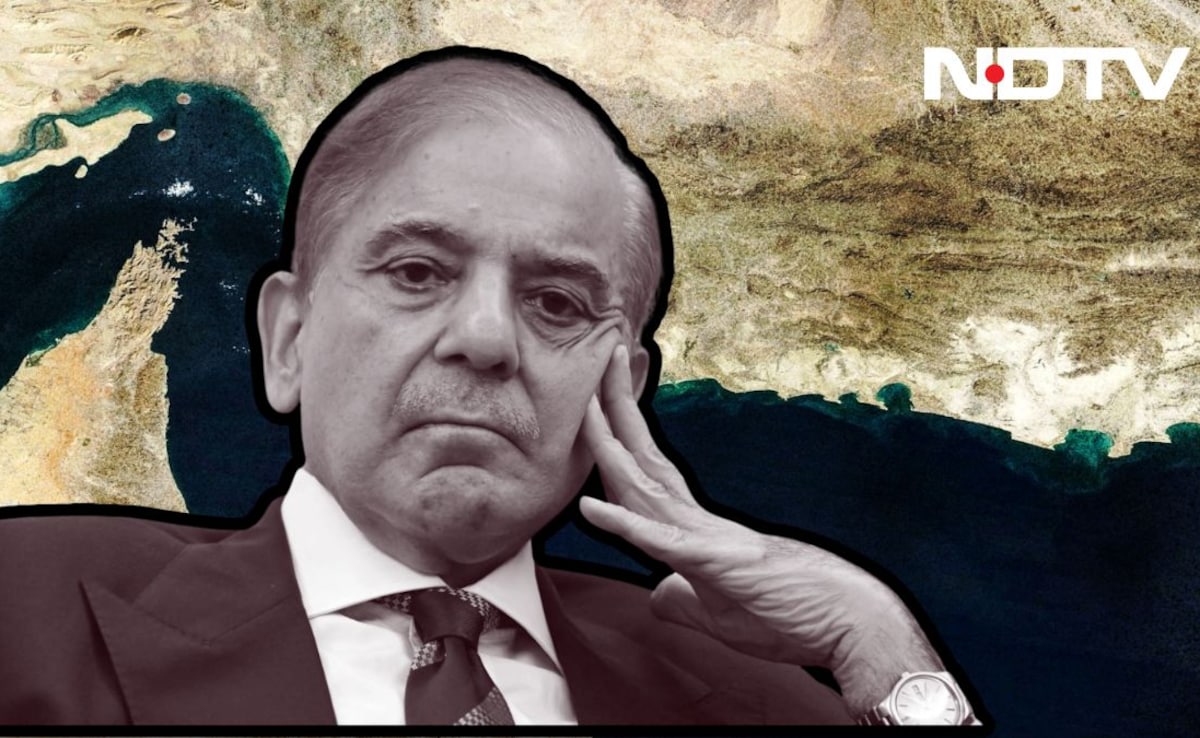
On Friday, the world's attention shifts to a set of invitations that seem, on their surface, like an impossibility. Prime Minister Shehbaz Sharif has signaled for the United States and Iran to join a dialogue that many experts thought died years ago.
Think about the border guard. Let’s call him Tariq. For years, Tariq has watched the horizon through heat haze and dust, knowing that a single miscalculation five hundred miles away in a high-walled office could mean a mortar landing in his trench. To Tariq, geopolitics isn't a theory. It is the weight of his rifle and the specific sound of a drone he cannot see. For fifteen days, Tariq has heard nothing but the wind. He represents millions of people who live in the shadow of the "Great Game," individuals whose lives are the collateral of grand strategy. The Friday talks aren't about white papers; they are about whether Tariq gets to keep listening to the silence or if the noise returns.
The invitation arrives at a moment of extreme friction. To the West, the United States remains locked in a rigid posture regarding nuclear ambitions and regional influence. To the West’s own shadow, Iran stands firm, weathered by sanctions but unyielding in its ideological and territorial sovereignty. In the middle sits Pakistan—a nation that has historically mastered the art of the tightrope walk.
The Geometry of the Impossible
Trying to bring Washington and Tehran to the same table is like trying to force two magnets with the same poles to touch. The closer they get, the more they push away. Pakistan is betting that the fifteen-day lull in hostilities has created enough of a vacuum that both parties might actually feel the need to fill it with words rather than ordnance.
The stakes are invisible until they aren't. We talk about "regional stability" as if it’s a weather pattern, but it’s actually a series of interconnected wires. Cut one in the Strait of Hormuz, and a light goes out in a village in Punjab. Disrupt the flow of diplomacy in Islamabad, and energy prices in a small town in Ohio begin to creep upward. The invitation for Friday is an attempt to keep those wires intact.
Why now? Because the ceasefire provides a rare commodity: a lack of immediate blood. In the brutal logic of international relations, it is significantly harder to talk when you are actively burying your dead. This fortnight of relative calm has acted as a cooling rod in a nuclear reactor. The heat is still there, pulsing beneath the surface, but the immediate threat of a meltdown has been momentarily stayed.
The Ghosts at the Table
When the delegates sit down on Friday, they won't be alone. They will be surrounded by the ghosts of forty years of grievance. There is the 1979 revolution, the "Axis of Evil" speech, the scrapped nuclear deals, and the shadow of countless proxy battles fought in the mountains of Afghanistan and the deserts of Iraq.
The United States enters this potential dialogue with a weary skepticism. Washington has seen "new beginnings" crumble before they reached the second paragraph. For the U.S., the interest lies in containment and the prevention of a broader regional conflagration that would force yet another generation of American sailors and pilots into the Gulf. It is a defensive maneuver dressed in the clothes of an olive branch.
Iran, meanwhile, approaches the table with the pride of a civilization that measures time in millennia, not election cycles. They are looking for more than just a ceasefire; they are looking for a path out of the economic strangulation that has defined their recent history. For Tehran, Friday isn’t just a meeting. It is a test of whether the West can see them as a partner in regional security rather than a problem to be solved.
The Pakistani Pivot
Pakistan’s role as the host is perhaps the most complex of all. This is not merely a gesture of goodwill. It is a survival tactic. A war between Iran and the West, or a total collapse of security on the western border, would be catastrophic for an economy already struggling to keep the lights on. By positioning itself as the mediator, Islamabad is attempting to prove its indispensability to both sides.
"We are the bridge," the rhetoric suggests. But bridges are meant to be walked on. They take the weight of everything that crosses them.
Consider the logistical reality of Friday. High-security zones, the frantic scrubbing of diplomatic protocols, the careful vetting of every word to ensure no one is offended before the water is even poured. It is a theatre of the highest order. But beneath the theatre is a desperate, human need for predictability.
Investors don't put money into regions where the sky might fall tomorrow. Parents don't plan for their children’s education in places where the borders are made of smoke. This Friday is an attempt to turn smoke back into stone.
The Fragility of Fifteen Days
The number fifteen is small. It’s a vacation. A pay cycle. A short illness. But in the context of a decades-old conflict, fifteen days without a major escalation is a lifetime. It has allowed for the movement of goods, the reopening of small markets, and a momentary reprieve for the diplomats who usually spend their hours drafting condemnations.
The ceasefire deal was the "how." Friday’s meeting is the "why."
If the talks fail, the ceasefire will likely evaporate as if it never existed. The silence Tariq hears on the border will be replaced by the familiar, low-frequency hum of tension. The invitations sent by Prime Minister Sharif are essentially a gamble on human exhaustion. He is counting on the fact that, eventually, everyone gets tired of looking through a crosshair.
There is a specific kind of bravery in asking two enemies to talk when you know they might both say no. It is the bravery of the person who stands between two fighters and reminds them that they both have homes to go to. Whether that reminder carries any weight in the cold reality of Friday remains to be seen.
The world doesn't change because of a single meeting. It changes because of the persistent, annoying refusal to give up on the idea that words are better than fire. As the sun sets on this fifteen-day experiment, the shadows in Islamabad are growing long. The chairs are being arranged. The tea is being prepared.
Somewhere on a ridge, Tariq is looking at his watch, wondering if the wind is the only thing he’ll have to listen to on Saturday morning.