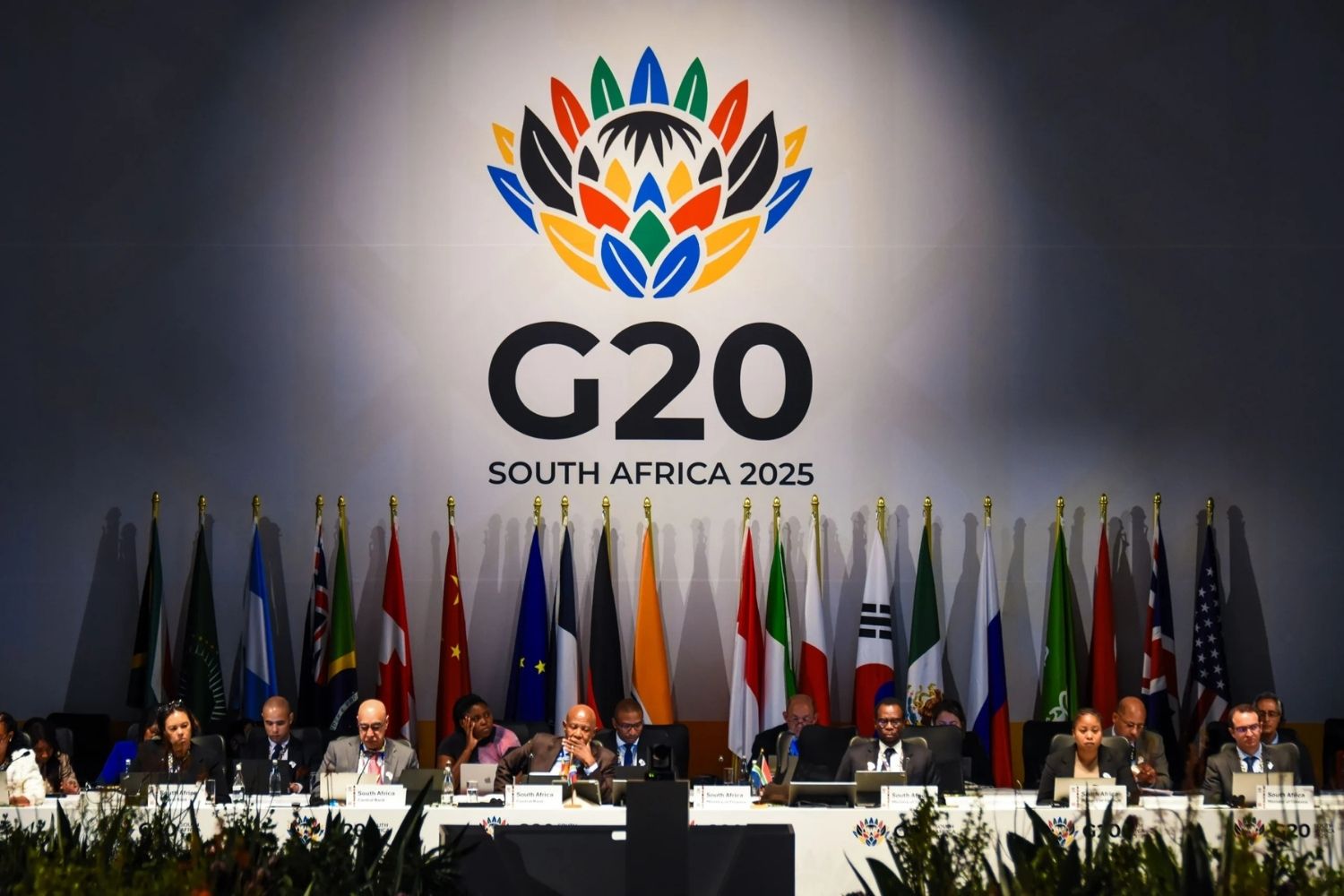
Diplomats love a comforting fairy tale. Every time the G20 meets, the script stays identical. Ministers step up to the podium, condemn the "politicisation of energy flows," and demand "diversified supply chains" as if global commodity markets operate like a neighborhood farmers' market.
S. Jaishankar’s recent G20 intervention hit all the expected notes. Keep energy out of geopolitics. Spread the risk. Build resilient networks. On paper, it sounds statesmanlike, rational, and safe.
In the real world of physical barrels, liquified natural gas terminals, and sovereign debt, it is pure fantasy.
Energy has never existed in a political vacuum, and pretending otherwise creates dangerous blind spots for emerging economies. Worse yet, blind allegiance to "diversification" often destroys capital efficiency while offering zero actual protection when a real crisis hits.
Energy Was Always a Weapon
The lazy consensus in international diplomacy treats the weaponization of oil and gas as a recent aberration—a temporary glitch caused by regional wars or aggressive sanctions regimes.
That view requires complete historical amnesia.
From the 1911 British Royal Navy conversion from coal to Persian oil, to the 1973 OPEC embargo, to the Cold War pipeline battles across Eurasia, energy infrastructure is geopolitical power. You cannot separate the molecule from the state that controls the wellhead, the chokepoint, or the refining capacity. When a diplomat calls for the "depoliticisation" of energy, they are asking nuclear-armed superpowers and resource-rich autocracies to voluntarily disarm their most effective non-kinetic leverage. They will not do it.
I have sat in boardrooms where multinational utilities burned tens of millions of dollars on geopolitical risk consultants who sold them the exact same comforting illusion. They mapped out "neutral" supply corridors that evaporated the moment a maritime insurer raised war-risk premiums by 400 percent overnight. Markets do not care about G20 communiqués. Underwriters care about missiles, sanctions lists, and sovereign guarantees.
The Hidden Tax of Supply Chain Diversification
Let us dismantle the second half of the diplomatic orthodoxy: the obsession with diversified supply chains.
In textbook portfolio theory, diversification reduces unsystematic risk without sacrificing expected returns. Physical energy infrastructure does not obey textbook finance. It obeys thermodynamics, geography, and massive upfront capital expenditure.
When a nation artificially forces diversification away from its lowest-cost, geographically logical supplier, it pays a permanent structural penalty. We call this the security premium, though in practice it functions as a regressive tax on domestic manufacturing.
Consider the mechanics of Liquefied Natural Gas (LNG) versus pipeline gas:
- Pipeline Infrastructure: High initial fixed cost, minimal marginal transport cost, locked-in bilateral dependency.
- Spot LNG Markets: Extreme capital intensity for liquefaction and regasification, high shipping losses, and brutal exposure to global price spikes whenever Europe or East Asia experiences a cold snap.
When countries abandon cheap, proximal energy in the name of "resilience," they trade predictable geopolitical friction for guaranteed economic stagnation. Europe learned this lesson the hard way after 2022. By replacing Russian pipeline gas with global LNG cargoes, European heavy industry did not achieve energy independence. It achieved deindustrialization. Chemical plants in Ludwigshafen did not close because of Russian politics; they closed because molecular physics makes seaborne gas structurally more expensive than piped gas over continental distances.
The Illusion of Optionality
Proponents of diversification argue that signing supply contracts with ten different producers protects you if one goes rogue.
They misunderstand how global commodity clearing works. Oil and LNG are fungible global markets. If a major supplier goes offline—whether due to war, sanctions, or domestic collapse—the price spike hits every buyer simultaneously. Having a contract with a producer in West Africa or the US Gulf Coast does not shield you from a Middle Eastern supply shock unless you have locked in fixed-price, long-term bilateral deals with strict force majeure protections. And those contracts are rarely offered without heavy political strings attached.
You do not escape politics by changing suppliers. You simply trade one set of political demands for another. Buy American LNG, and you navigate Washington's export permitting politics and ESG compliance regimes. Buy Middle Eastern crude, and you navigate OPEC+ quota discipline. Buy Russian barrels, and you navigate G7 price caps and shadow-fleet insurance risks.
There is no neutral barrel.
What Diplomats Miss About Refining and Processing
The standard G20 talking points obsess over upstream extraction—who pumps the oil, who mines the lithium. This misses the real chokepoint of the modern energy system: midstream processing and refining.
You can diversify your crude oil imports across fifteen countries, but if your domestic refineries are configured for heavy, sour crude and your new suppliers only pump light, sweet grades, your diversification strategy is useless. Refineries are billion-dollar chemical plants tuned to specific molecular assays. Reconfiguring them takes years and massive capital.
The exact same trap governs the clean energy transition. Politicians boast about diversifying raw mineral imports from Australia, Chile, and the Democratic Republic of Congo. Yet over 60 percent of global lithium refining and roughly 80 percent of battery-grade graphite processing remain concentrated inside China.
Calling for "diversified supply chains" at a summit does nothing to alter the midstream bottleneck. Unless a nation is willing to subsidize dirty, low-margin domestic refining and chemical processing—and endure the environmental lawsuits that follow—its diversification rhetoric is pure theater.
Dismantling the Common Energy Myths
If you listen to mainstream financial media or diplomatic readouts, you will hear the same flawed questions repeated endlessly. Let us look at what people actually ask—and why the premises are broken.
Does diversifying energy suppliers lower consumer prices?
No. It almost always raises them. Lowest-cost energy comes from economies of scale, dedicated infrastructure, and long-term bilateral certainty. Splitting your procurement across multiple fragmented suppliers destroys your bulk purchasing power and forces you to pay spot-market premiums, higher freight rates, and redundant terminal fees. You diversify for survival, never for savings.
Can international bodies like the G20 enforce energy neutrality?
They have zero enforcement mechanisms. The G20 is a consensus forum with no binding legal authority, no peacekeeping force, and no control over central bank clearing systems. When national security interests collide with G20 declarations, national security wins within milliseconds. Relying on multilateral statements to protect your energy imports is like relying on a gentlemen's agreement during a bank run.
Is renewable energy the ultimate escape from energy geopolitics?
It merely shifts the geopolitical dependency from operational fuel to upfront hardware. Instead of worrying about oil tankers passing through the Strait of Hormuz, you worry about polysilicon wafers, rare earth magnets, and high-voltage transformer supply chains. Furthermore, intermittent renewables require massive grid-scale battery storage or natural gas peaker plants to prevent blackouts, keeping you tethered to fossil fuel supply chains anyway.
The Contrarian Playbook for Real Energy Security
If diplomatic neutrality is a myth and broad diversification is a capital trap, how should sovereign states and major industrial buyers actually secure their energy?
You stop pretending you can depoliticize the market, and you start playing the game with ruthless pragmatism.
1. Embrace Asymmetric Bilateralism Over Multilateral Noise
Stop waiting for global consensus. Follow the exact playbook India actually used behind closed doors—ignoring the rhetoric and buying discounted Russian crude when Western sanctions distorted the market. Secure deep, direct, bilateral energy deals with distressed or sanction-pressured producers who need reliable buyers more than you need their specific barrels. Use sovereign balance sheets to lock in multi-decade price floors, not spot-market flexibility.
2. Build Strategic Storage, Not Redundant Routes
Spending billions on alternative pipelines that run at 30 percent capacity is a terrible use of capital. Instead, pour that money into massive domestic strategic reserves—salt caverns for crude and gas, colossal tank farms, and hardened grid storage. Six months of domestic inventory sitting inside your own borders gives you infinitely more geopolitical leverage than ten memoranda of understanding with foreign energy ministers.
3. Dominate the Midstream Chokepoint
If you cannot control the mine or the oilfield, control the refinery and the smelter. Daniel Yergin documented this exact dynamic in The Prize—historically, Rockefeller did not conquer the oil industry by owning every wildcat well in Pennsylvania; he conquered it by controlling the refineries and the rail transport. Modern energy buyers should import raw, unrefined, politically messy feedstocks from wherever they are cheapest, and capture all the value-add and security inside domestic processing facilities.
4. Weaponize Domestic Demand
Large importing nations hold massive leverage that they routinely squander by acting like anxious price-takers. If you represent a growing market of hundreds of millions of consumers, make suppliers compete for access to your grid. Force foreign producers to co-invest in your domestic infrastructure as a prerequisite for signing long-term offtake agreements.
The Uncomfortable Trade-Off
Every strategy has a cost, and ignoring the downsides of hard-nosed energy realism is just as foolish as believing diplomatic platitudes.
Pursuing aggressive bilateralism and hoarding strategic reserves carries severe risks. First, it invites direct secondary sanctions and diplomatic retaliation from major powers who view your neutrality as complicity. You must maintain a financial and maritime clearing architecture completely insulated from Western or Eastern banking chokepoints—which means building expensive parallel insurance, shipping, and currency settlement systems.
Second, massive domestic stockpiling ties up tens of billions of dollars in dead working capital. If commodity prices crash, your state-owned enterprises sit on catastrophic inventory losses while taxpayers foot the bill.
Finally, prioritizing domestic refining and heavy processing means accepting local environmental degradation and regulatory friction that modern political coalitions hate to defend.
Stop Asking for a Fair Market
The G20 will continue to issue communiqués begging for stable, depoliticized, diversified energy markets. Ministers will shake hands, pose for cameras, and fly home in jets fueled by crude pumped from some of the most politically volatile regions on earth.
Energy is power. Power is always political.
Smart nations and sharp operators do not waste their breath asking the world to take politics out of energy. They accept the brutal reality of the board, lock down their domestic storage, control the refining bottlenecks, and buy the cheapest molecules on earth while everyone else is busy writing speeches.


