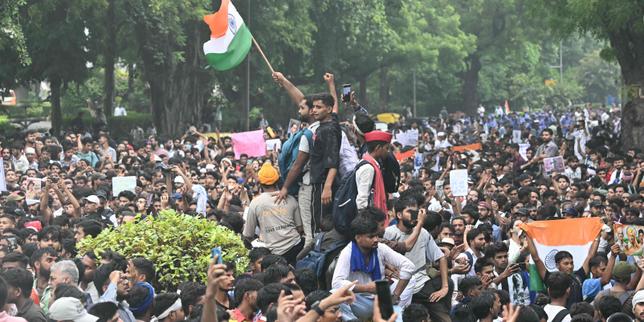
Youth movements in India are changing. Fast.
If you thought youth protest in South Asia was just a passing trend, look at the streets of New Delhi, Kolkata, and Mumbai. Gen Z in India isn't backing down. They're occupying public squares, organizing on encrypted channels, and keeping intense pressure on elected officials over corruption, paper leaks, and civil liberties.
It's not just noise. It's a fundamental shift in how the country's youngest citizens talk to power.
What Indian Youth Activism Is Really About Right Now
People love to reduce youth anger to simple political party rivalries. That's a mistake.
What we're seeing across Indian campuses and urban centers goes much deeper than party loyalty. Gen Z in India faces a unique blend of high economic stakes and shrinking spaces for dissent. When paper leaks derail competitive exams like the NEET or UGC-NET, affecting millions of students after years of grueling prep, it hits home directly. It's personal.
The frustration stems from real issues:
- Rampant corruption in public recruitment and national entrance tests.
- Rising unemployment despite strong macroeconomic growth figures.
- Crackdowns on student unions and free speech within university spaces.
- Safety concerns for women, highlighted by widespread outrage following incidents like the tragedy at RG Kar Medical College in Kolkata.
They aren't taking to the streets just because they want to protest. They feel forced into it.
Beyond the Screen: How Virtual Networks Become Street Power
It's easy to dismiss online activism as slacktivism. But Indian Gen Z bridges the digital-physical gap seamlessly.
A call to gather at Jantar Mantar or Bharat Mandapam can start on Instagram Reels or a closed WhatsApp group at midnight. By noon, thousands show up with handmade posters and chants. They use social media as an operational coordination tool, not just a broadcasting channel. When police set up barricades, live updates on Telegram redirect crowds in real time.
That speed makes it incredibly tough for authorities to predict or contain crowds using old-school containment strategies.
The Pushback from the Top
Governments don't like sustained, unpredictable public pressure.
In response to these youth-led movements, state and federal authorities have deployed heavy measures. Sedition laws, preventive detentions, and sudden internet shutdowns are routine tools. When protests flare up in regions like Jammu & Kashmir, Manipur, or urban centers like Delhi, mobile data gets snapped fast.
Yet, shutting down the internet doesn't freeze the anger anymore. It often backfires, pushing students to march directly to local administrative offices to demand answers.
Why Traditional Political Parties Are Panicking
Here's the funny thing: neither the ruling coalition nor the opposition quite knows how to handle this generation.
Traditional political outfits operate on hierarchy, patronage, and vote-bank logic. Gen Z protesters, by contrast, tend to distrust leaders across the entire political spectrum. They don't want a veteran politician hijacking their microphone at a rally. When political figures try to co-opt their marches, students routinely chant them off the stage.
That independence makes them dangerous to the status quo. You can't bribe a decentralized group with political appointments or soft promises when they don't have a single leader to negotiate with.
Staying Safe and Effective During Civil Demonstrations
If you're tracking these movements or participating in grassroots civil action in India, staying informed and protected matters more than ever.
- Secure your digital trail. Use end-to-end encrypted messaging platforms. Turn off biometric unlock features (like face ID or fingerprint scan) on your phone before attending public gatherings so law enforcement cannot easily force access.
- Know your legal rights. Keep contacts for legal aid collectives saved locally on your phone and written down on physical paper. Know the basic provisions around detention, particularly regarding the legal protections for women during arrests after sunset.
- Verify information before sharing. Disinformation moves fast during protests. Don't amplify unverified movement calls or panic-inducing rumors without double-checking reliable ground sources.
The dynamic between India's government and its youngest generation isn't settling down anytime soon. As long as economic anxieties and governance issues remain unaddressed, the street will remain Gen Z's primary megaphone.