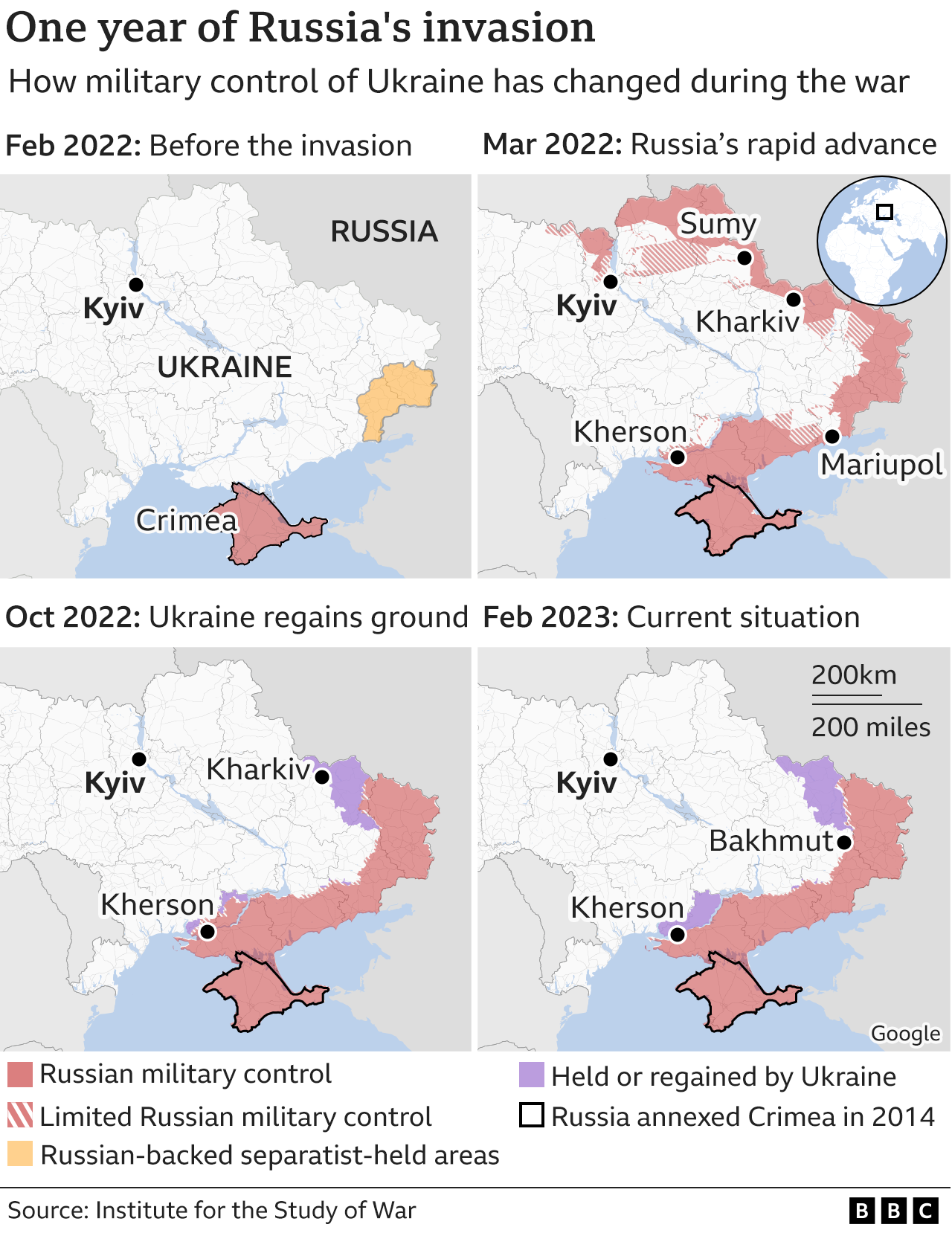
The current diplomatic friction between Kyiv and the newly reconfigured Washington-Moscow axis is not a failure of communication, but a fundamental clash of strategic objectives. While public discourse focuses on the "demands" for details made by President Volodymyr Zelenskyy, the underlying reality is a struggle over sovereignty-risk pricing. Ukraine view a ceasefire as a variable dependent on security guarantees, whereas the Trump-Putin dialogue treats a ceasefire as the primary independent variable. This structural mismatch creates a strategic vacuum where "peace" becomes a technical impossibility without a shared definition of long-term deterrence.
The Trilemma of Ukrainian Sovereignty
Ukraine’s insistence on the specifics of a proposed ceasefire stems from a historical data set—specifically the failure of the 2014 and 2015 Minsk Agreements. From the perspective of Kyiv’s military and political leadership, a ceasefire without precise mechanisms for enforcement is merely a rearming window for the Russian Federation. To analyze Zelenskyy's position, we must deconstruct it into three non-negotiable pillars that form his strategic baseline:
- The Deterrence Floor: Any pause in hostilities must be backed by external kinetic guarantees (NATO Article 5 or equivalent bilateral treaties). Without these, the net present value of a ceasefire for Ukraine is negative.
- Territorial Integrity vs. Administrative Reality: While the frontline represents the current limit of kinetic control, Ukraine's legal framework cannot absorb a "frozen conflict" without triggering domestic political instability. The demand for "details" is a demand for a legal roadmap regarding the status of occupied regions.
- Economic Viability: A ceasefire that leaves Ukraine’s Black Sea access contested or its energy infrastructure under a perpetual threat of "snap-back" strikes prevents the foreign direct investment (FDI) required for reconstruction.
The Trump-Putin Feedback Loop
The dialogue between Donald Trump and Vladimir Putin operates on a different logic: Transactionalist Realism. This framework prioritizes the immediate cessation of expenditure (for the U.S.) and the consolidation of territorial gains (for Russia).
The tension arises because the Trump administration’s proposed "peace" likely involves a trade-off: a freeze on current battle lines in exchange for a temporary suspension of Ukraine’s NATO aspirations. For Putin, this is a strategic win as it validates the use of force to redraw borders. For Zelenskyy, this is a strategic catastrophe because it offers no protection against a renewed offensive in 24 to 48 months.
The mechanism driving this friction is information asymmetry. By excluding Ukraine from the initial high-level talks, the U.S. and Russia have created a scenario where Kyiv is expected to sign onto a framework it did not help architect. This violates a core principle of international mediation: the durability of an agreement is directly proportional to the buy-in of the parties responsible for its execution on the ground.
Quantifying the "Details": The Mechanics of a Durable Ceasefire
When Zelenskyy asks for "details," he is not asking for rhetoric; he is asking for the technical specifications of a Security Architecture. A functional ceasefire requires solving for the following variables:
The Buffer Zone Coefficient
A simple line on a map is insufficient. A durable ceasefire requires a demilitarized zone (DMZ) of specific depth—likely $30$ to $50$ kilometers—to remove tube artillery from striking range of civilian centers. The "details" must specify who monitors this zone. If the monitoring force lacks a mandate for kinetic intervention, the DMZ is purely symbolic.
The "Snap-Back" Sanctions Architecture
Kyiv requires a codified list of economic and military consequences that trigger automatically if Russia violates the ceasefire. In previous iterations, the "consultation" process required to trigger sanctions allowed the aggressor to exploit the time lag. A modern ceasefire requires a "trigger-wire" mechanism where specific radar-verified violations result in the immediate release of pre-authorized military aid packages or the freezing of specific sovereign assets.
Long-term Military Scalability
Ukraine’s demand for details includes the future state of its Armed Forces. If a ceasefire agreement mandates a reduction in the size of the AFU or limits the types of long-range fires Ukraine can possess, it effectively mandates a state of permanent vulnerability. The strategic logic here is the Porcupine Strategy: Ukraine must be sufficiently armed to make the cost of a future Russian invasion higher than any potential gain.
The Internal Political Risk Function
Zelenskyy’s request for transparency is also a defensive maneuver against domestic fragmentation. The Ukrainian "social contract" since February 2022 has been built on the promise of total victory. Any shift toward a negotiated settlement requires a massive recalibration of public expectations.
The risk of a Internal Legitimacy Crisis increases if the President is seen as accepting a "dictated peace" from Washington. By publicly demanding details, Zelenskyy is shifting the burden of proof onto the mediators. He is forcing Trump and Putin to define what "security" looks like, knowing that any definition that falls short of NATO-style guarantees will be rejected by the Ukrainian veteran and activist classes.
The Escalation-De-escalation Paradox
The paradox of the current moment is that the more the U.S. and Russia move toward a bilateral understanding, the more Ukraine may feel compelled to escalate in the short term to improve its "negotiating equity."
- Frontline Solidification: Ukraine may launch high-risk counter-offensives to reclaim key logistics hubs (e.g., in the Zaporizhzhia or Kherson sectors) before a freeze is mandated.
- Deep Strike Normalization: Increased use of domestic long-range drones against Russian energy infrastructure serves as a reminder that a "freeze" on the front does not equate to a freeze on Russian economic pain.
This creates a "closing window" effect. As the Jan 20th transition approaches, both sides are incentivized to burn through manpower and equipment to maximize their footprint. The "peace" being discussed in Mar-a-Lago or the Kremlin is being priced in blood on the ground in Donbas.
Structural Constraints of the Proposed "Deal"
The proposed framework—reportedly involving an 800-mile DMZ and a 20-year freeze on NATO membership—faces three immediate structural failures:
- The Enforcement Gap: European powers have expressed reluctance to provide the 10,000+ troops required to police an 800-mile DMZ without U.S. backing. Without an enforcement body, the line of contact remains a live combat zone.
- The Funding Disconnect: While the Trump administration seeks to reduce U.S. financial outlays, the cost of a DMZ and the subsequent reconstruction of Ukraine will run into the hundreds of billions. If the "details" do not include a funding mechanism (such as the seizure of the $300B in frozen Russian central bank assets), the ceasefire is economically insolvent.
- The Sovereignty Veto: Ukraine remains a sovereign actor with a massive, battle-hardened military. Unlike 1945, the major powers cannot simply redraw the map of Europe without the consent of the local hegemon—which, in the context of the Eastern Front, is now Ukraine itself.
Strategic Forecast: The Pivot to "Armed Neutrality"
The most probable outcome of this demand for "details" is not a comprehensive peace treaty, but a pivot toward an Armed Neutrality Model. This model recognizes that NATO membership is off the table in the near term but replaces it with a "fortress" status.
Ukraine will likely agree to a ceasefire only if it includes:
- Pre-positioned Western equipment stocks on Ukrainian soil.
- A localized "no-fly" or "limited-fly" zone over key urban centers.
- The right to continue domestic production of long-range missile systems.
The friction between Zelenskyy, Trump, and Putin is essentially a high-stakes price discovery phase. Zelenskyy is signaling that the price of "stopping" is higher than the current Western offer. To move forward, the U.S. must transition from "ending the war" as a slogan to "underwriting the peace" as a technical, multi-decade commitment. Failure to provide these specific details will result in a fragmented ceasefire that collapses at the first point of kinetic pressure, leading to a wider, more unpredictable regional escalation.
The strategic play for Ukraine is to maintain high-intensity defense while demanding a level of detail that forces the Trump administration to either provide ironclad guarantees or admit they are asking for a Ukrainian capitulation. By framing the debate around "details," Zelenskyy moves the conversation from the emotional (peace vs. war) to the technical (deterrence vs. vulnerability), where he holds the moral and practical high ground.