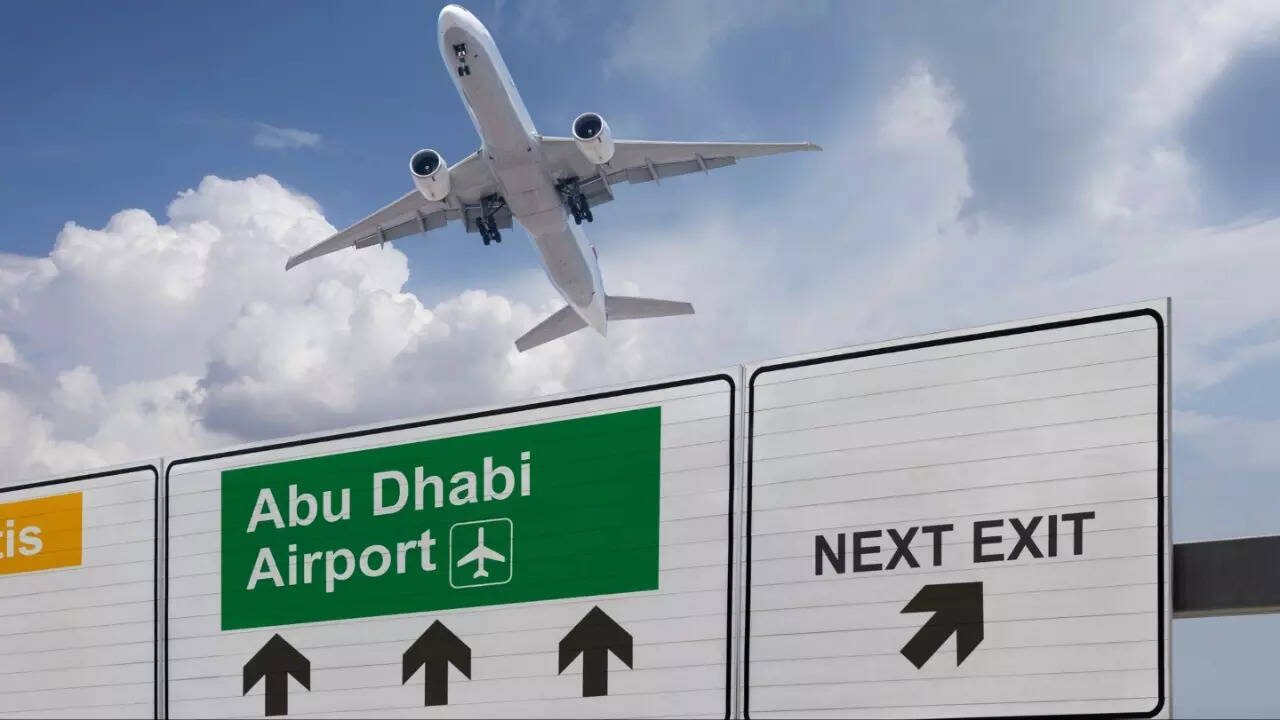
Airspace is a finite resource, and right now, the Middle East is running out of it. When Abu Dhabi Airports issued its recent urgent advisory for Zayed International Airport (AUH), it wasn't just managing a localized scheduling hiccup. It was signaling a systemic failure in the regional aviation corridor caused by the escalating friction between Iran, Israel, and the United States. For passengers, this means more than just a missed connection; it represents the total transformation of the Gulf into a high-stakes detour zone where fuel costs, crew hours, and safety margins are being pushed to the breaking point.
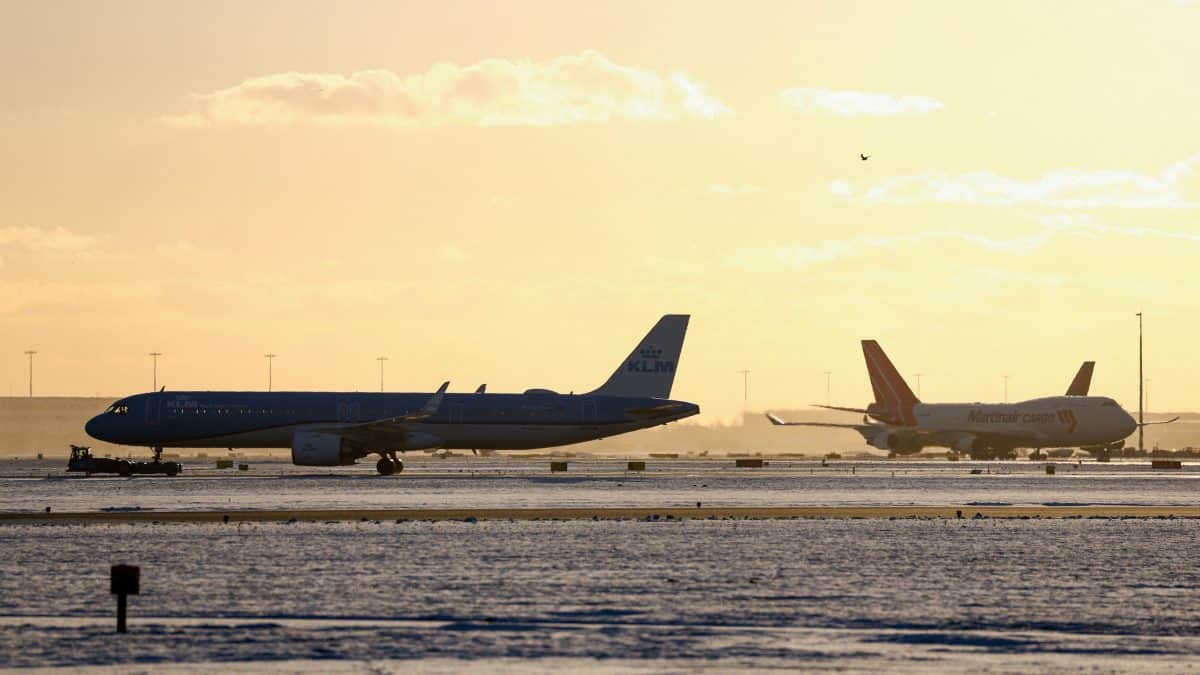
The core of the crisis lies in the closure of specific "air highways." When missiles fly or GPS spoofing becomes a standard electronic warfare tactic, civilian pilots cannot simply "fly around" the problem like a summer thunderstorm. They are forced into narrow, congested lanes over countries like Saudi Arabia and Egypt, creating a bottleneck that ripples across the globe. If you are sitting on the tarmac in Abu Dhabi, you are waiting for a slot in a sky that is physically incapable of holding more metal.
The Economics of the Long Way Around
Aviation operates on razor-thin margins. A flight from London to Abu Dhabi that traditionally transits Iraqi or Iranian airspace must now veer significantly south. This isn't a minor course correction. It adds upwards of 45 to 90 minutes of flight time. To the uninitiated, an hour seems manageable. To a dispatcher, it is a catastrophe.
Every extra minute in the air consumes hundreds of pounds of Jet A-1 fuel. On a Boeing 777-300ER, those costs scale into the tens of thousands of dollars per flight. Multiply that by the hundreds of daily movements at a hub like Zayed International, and the financial hemorrhage becomes clear. Airlines are currently eating these costs to maintain market share, but the recent advisories suggest that the operational strain is becoming unsustainable.
We are seeing a shift in how "hub-and-spoke" models function. Abu Dhabi’s massive investment in the new Terminal A was designed for maximum efficiency—quick transfers and high throughput. But the efficiency of a terminal matters little when the planes are held on the ground in Europe or Asia because the transit corridors through the Levant are effectively dark.
The Invisible Threat of GPS Spoofing
Beyond the physical danger of kinetic weaponry—missiles and drones—there is the electronic shadow war. Pilots operating in the vicinity of the Iran-Israel conflict zones have reported a surge in GPS spoofing. This is far more dangerous than simple jamming.
In a jamming scenario, the signal is lost, and the aircraft reverts to inertial navigation systems. In a spoofing scenario, the aircraft’s instruments are fed false coordinates. The plane thinks it is miles away from its actual position. While modern commercial jets have redundant systems, the mental load on a flight crew increases exponentially when their primary navigation tools start lying to them.
Abu Dhabi’s advisory is a protective measure against this chaos. By slowing down operations and increasing the "buffer" between flights, the airport is attempting to account for the slower, more cautious approach procedures that pilots must now employ. Safety is the priority, but the byproduct is a degraded passenger experience that no amount of luxury lounge access can fix.
Why Diversions Are No Longer Sufficient
In previous decades, a localized conflict meant a simple diversion. During the 1990s or the early 2000s, there were still plenty of open paths. That is no longer the case. The current geopolitical map has created a series of "no-go" zones that overlap.
- Russian Airspace: Closed to most Western carriers due to the Ukraine conflict.
- Ukrainian Airspace: A total kinetic combat zone.
- Sudanese Airspace: Effectively closed due to civil war.
- Iranian/Iraqi Airspace: Increasingly volatile and subject to immediate, unannounced closures.
When you look at a flight path from New York to Abu Dhabi, the aircraft is essentially threading a needle between various conflict zones. If one more "eye" of that needle closes, the route may become commercially unviable. This is the "why" behind the urgency of the AUH alerts. The airport isn't just worried about today’s delay; they are worried about the structural integrity of the entire East-West flight bridge.
The Human Cost of Crew Timings
Airlines are also hitting a wall with Flight Duty Period (FDP) limits. International regulations are strict about how long a pilot and cabin crew can work. When a flight is delayed by three hours on the ground in Abu Dhabi due to "airspace congestion," and then has to fly a route that is two hours longer than planned, the crew often "times out."
This creates a secondary wave of cancellations. You might have a perfectly functional airplane and a clear path to your destination, but if the crew has exceeded their legal working hours, that plane stays at the gate. Zayed International is currently a graveyard of these "timed-out" schedules, where passengers are stranded not because of weather or mechanical failure, but because the geography of the war has exhausted the humans at the controls.
The Illusion of Normalcy in Terminal A
Walking through the shimmering glass of the new Zayed International terminal, one might feel insulated from the regional fire. The retail is high-end, the floors are polished, and the biometric gates promise a friction-free journey. But the advisory boards tell a different story.
The airport’s management is in a constant state of "tactical retreat." They are re-allocating gates to handle the massive influx of passengers from delayed flights and trying to manage the logistics of thousands of people who have missed their connections to Sydney, Mumbai, or New York. The infrastructure is world-class, but it is being used as a high-end waiting room rather than a transit engine.
The Strategic Shift for Gulf Carriers
For years, the "Big Three" Gulf carriers—Etihad, Emirates, and Qatar Airways—capitalized on their central location. They were the world's crossroads. That central location has now become their greatest vulnerability.
If the conflict between Iran and the US-Israel alliance widens, the "crossroads" becomes a "front line." We are already seeing some long-haul carriers look toward ultra-long-range (ULR) flights that bypass the Middle East entirely, opting for trans-Pacific routes or southern routes over Africa, despite the increased fuel burn.
For Abu Dhabi, the risk is that the current "urgent advisory" becomes a permanent state of being. If passengers begin to perceive the Gulf hubs as "high-risk" or "unreliable" due to constant geopolitical delays, the multi-billion dollar investment in aviation infrastructure could see a diminishing return.
What This Means for Your Travel Strategy
If you are flying through Abu Dhabi in the current climate, the standard "two-hour layover" is a relic of a more peaceful era. You are now operating in a world where a four-hour buffer is the bare minimum.
- Direct Booking is Essential: Avoid third-party booking sites. If a conflict-related delay happens, you need to be at the top of the airline's priority list for rebooking.
- Monitor the NOTAMs: Notices to Air Missions (NOTAMs) are the pulse of the sky. If you see a sudden flurry of NOTAMs for the Baghdad or Tehran flight information regions, expect your flight out of AUH to be impacted, regardless of what the departure board says.
- Insurance is Non-Negotiable: Standard travel insurance often has "Act of War" exclusions. Read the fine print. You need coverage that specifically addresses "airspace closure" and "ATC delays."
The Sovereignty of the Skies
The ultimate takeaway from the chaos at Zayed International is that aviation is never truly "global." It is a collection of sovereign territories that can be revoked at a moment's notice. When Iran closes its skies or Israel launches a counter-offensive, the concept of a "global village" evaporates.
The advisory issued by Abu Dhabi is a rare moment of transparency. Usually, airports prefer to hide the mess behind "operational reasons" or "weather." By citing the conflict directly, they are acknowledging that the situation has moved beyond their control. They are no longer just an airport; they are a barometer for the stability of the modern world.
As long as the regional powers remain in a state of kinetic or electronic escalation, the flight boards at Zayed International will continue to bleed red. The efficiency of the 21st-century traveler has been sacrificed to the territorial disputes of the 20th century.
Pack a heavy bag, keep your charger close, and expect the "urgent advisory" to be the first of many as the map of the Middle East continues to shift under our wings.
Check your flight status directly through the airline's mobile app at least six hours before heading to the terminal to see if your aircraft has even begun its inbound journey.