The traditional Westphalian concept of sovereignty is currently colliding with the reality of borderless digital externalities. When a nation-state provides "safe harbor" to cyber-criminals, it is essentially subsidizing global systemic risk to benefit its local economy or intelligence apparatus. The recent policy shift signaled by the U.S. administration—specifically the threat of visa restrictions and economic sanctions against countries "hiding" these actors—represents an attempt to internalize these costs for the offending nations. By transforming cyber-criminality from a low-risk domestic asset into a high-liability diplomatic burden, the U.S. aims to alter the expected value calculation for non-cooperative regimes.
The Architecture of State-Sponsored Passive Complicity
Complicity in the cyber-criminal ecosystem is rarely a matter of explicit legal authorization; rather, it functions through a three-tier hierarchy of state involvement. Understanding this hierarchy is essential for predicting which diplomatic levers will be effective against specific regimes. Also making headlines in related news: The Polymer Entropy Crisis Systems Analysis of the Global Plastic Lifecycle.
- Active Integration: The state directly employs criminal actors for dual-use purposes—espionage by day, ransomware by night. In these cases, sanctions on individuals are rarely effective because the state provides total institutional insulation.
- Strategic Negligence: The state possesses the technical capability to interdict criminal infrastructure but chooses not to, provided the targets remain outside its borders. This creates a "gray zone" where the state benefits from capital inflows without the overhead of active management.
- Capacity Deficit: The state lacks the forensic or judicial infrastructure to police its digital borders. Here, punitive measures like visa restrictions often backfire by further isolating the very technical talent needed for reform.
The strategic pivot toward visa restrictions targets the "talent incentive" within these tiers. Most high-level cyber-criminals in non-extradition jurisdictions value the ability to travel to "neutral" or Western-aligned hubs for money laundering, luxury consumption, or relocation. By placing a lien on their mobility, the U.S. is not just targeting the criminals, but also the mid-level bureaucrats and oligarchs who benefit from their presence.
The Cost of Inaction as a Macroeconomic Variable
To quantify the necessity of these sanctions, one must look at the Cyber Externality Ratio. This is the relationship between the local economic gain a country realizes from hosting cyber-criminals (e.g., spent crypto-rents, local hardware procurement) versus the global damage those criminals inflict. Current estimates suggest that for every $1 million in illicit gain brought into a "safe harbor" country, the global economy suffers upwards of $40 million in downtime, recovery, and data-loss costs. More information on this are explored by The Verge.
The U.S. strategy aims to bridge this 40:1 gap by imposing "asymmetric costs" through the following mechanisms:
- Financial Friction: Expanding the use of Section 311 of the USA PATRIOT Act to designate entire foreign jurisdictions or their financial sectors as "primary money laundering concerns." This effectively severs the country from the USD clearing system.
- Diplomatic Devaluation: Reclassifying "safe harbor" nations in a manner similar to the "State Sponsors of Terrorism" list. This triggers automatic triggers in private sector risk-assessment algorithms, leading to a "de-risking" trend where multinational corporations exit the market regardless of whether a specific sanction applies to them.
- Individual Mobility Penalties: Using visa bans as a psychological tool. For a cyber-criminal or a complicit official, the inability to access global financial hubs like Dubai, Singapore, or Zurich—which often coordinate with U.S. watchlists—renders their illicit wealth significantly less liquid.
The Enforcement Bottleneck and Attribution Logic
The primary limitation of this strategy lies in the "Attribution-Action Gap." For a sanction or visa restriction to be defensible under international norms, the evidence linking the criminal to the specific jurisdiction must be high-fidelity.
Cyber-criminals utilize a complex stack of obfuscation:
- Network Layer: VPNs and Tor entry/exit nodes.
- Physical Layer: Hosting servers in a different country than their physical residence.
- Financial Layer: Decentralized mixers and "chain-hopping" across blockchains.
If the U.S. implements "blanket" sanctions based on weak attribution, it risks a "Sovereign Blowback" effect. This occurs when a sanctioned country accelerates its transition into an alternative financial ecosystem (such as the BRICS-led payment systems), thereby becoming permanently immune to USD-based leverage. The strategy only works if the target country still perceives value in its integration with the Western-led global order.
The Game Theory of Non-Extradition
At its core, the standoff between the U.S. and "safe harbor" nations is a classic Iterated Prisoner's Dilemma.
- The "Hiding" Country's Payoff: Protect the criminal, receive a share of the loot (or at least no internal security threat), but face potential sanctions.
- The U.S. Payoff: Impose sanctions, signal resolve, but risk losing diplomatic cooperation on other fronts (e.g., energy, counter-terrorism).
The introduction of visa restrictions is a "tit-for-tat" move designed to break the cycle of defection. By targeting the individuals who run the state apparatus, the U.S. is betting that a government official's desire for personal global mobility will eventually outweigh the state's minor economic gain from protecting a ransomware gang.
However, this assumes the "rationality" of the target regime. In highly centralized or autocratic states, the leadership may view the cyber-criminal as a strategic asset for asymmetric warfare. In these instances, visa restrictions are not a deterrent but a formal acknowledgment of a state of cyber-hostility.
Structural Implementation of the "Trump Doctrine" on Cyber-Security
The proposed framework suggests a shift toward Aggressive Decoupling. Unlike previous administrations that focused on "naming and shaming" via DOJ indictments—which rarely resulted in arrests—the new approach treats cyber-criminality as a trade and border issue.
- Reciprocity-Based Visa Issuance: Tying the volume of business and tourist visas issued to a nation to their compliance with Mutual Legal Assistance Treaties (MLATs). If a country ignores 90% of U.S. requests for server seizures, the U.S. reduces their visa allotment by a corresponding percentage.
- Targeted Infrastructure Interdiction: Moving beyond legal threats to active "Title 10" military or "Title 50" intelligence operations to physically or digitally disable hosting providers in non-cooperative jurisdictions.
- Secondary Sanctions on Enablers: Penalizing third-party nations that act as "bridges." For example, if Country A hides criminals and Country B provides them with unmonitored banking services, Country B faces the same sanctions as Country A.
This creates a Cordon Sanitaire around the digital economy of non-compliant nations. The intent is to make the "cyber-criminal tax" so high that the local population and the business elite demand the expulsion of these actors to restore their own access to the global market.
Strategic Play: The Shift to Jurisdictional Arbitrage
As the U.S. tightens its grip on traditional safe harbors, we should anticipate a migration of these actors toward "failed states" or jurisdictions with no meaningful central government. This will render the "sanctions and visas" toolset obsolete, as there will be no functional government to sanction and no officials to ban.
The strategic response must move from State-Level Deterrence to Infrastructural Denial. This involves a permanent shift in how the internet is routed. We are likely moving toward a "Bifurcated Internet" (Splinternet), where traffic from non-compliant jurisdictions is pre-emptively throttled or subjected to extreme inspection at the gateway level.
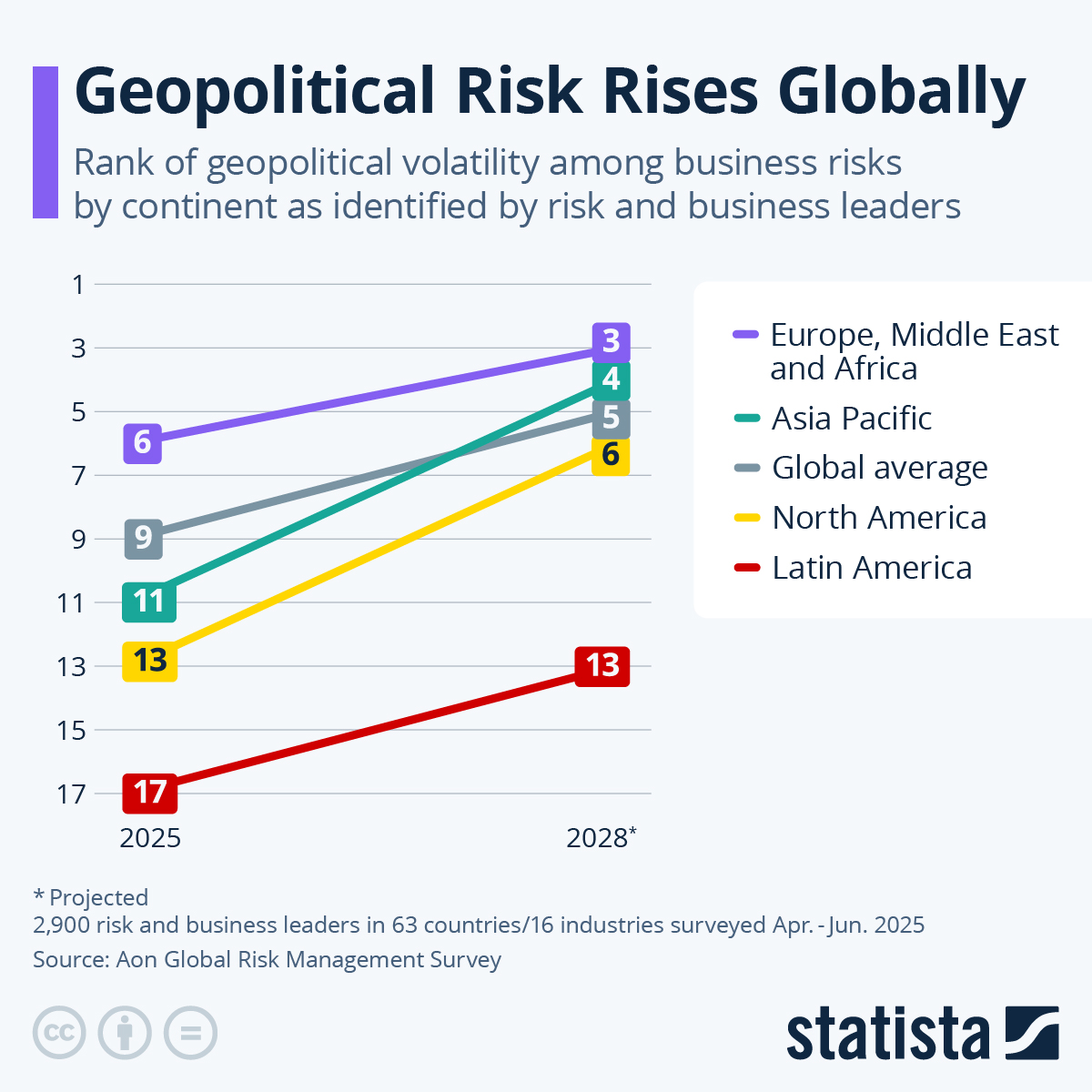
For the enterprise, this means "Cyber-Resilience" is no longer just about firewalls; it is about Geopolitical Risk Management. Organizations must map their digital supply chains to identify dependencies on "High-Risk Jurisdictions." If a critical SaaS provider hosts data in a country currently on the U.S. "Cyber Warning List," the risk of a sudden "digital blockade" via U.S. sanctions is a material threat to business continuity. The final play is not to wait for the sanctions to hit, but to proactively de-risk the infrastructure stack by migrating all critical processes to "Rule-of-Law" jurisdictions.