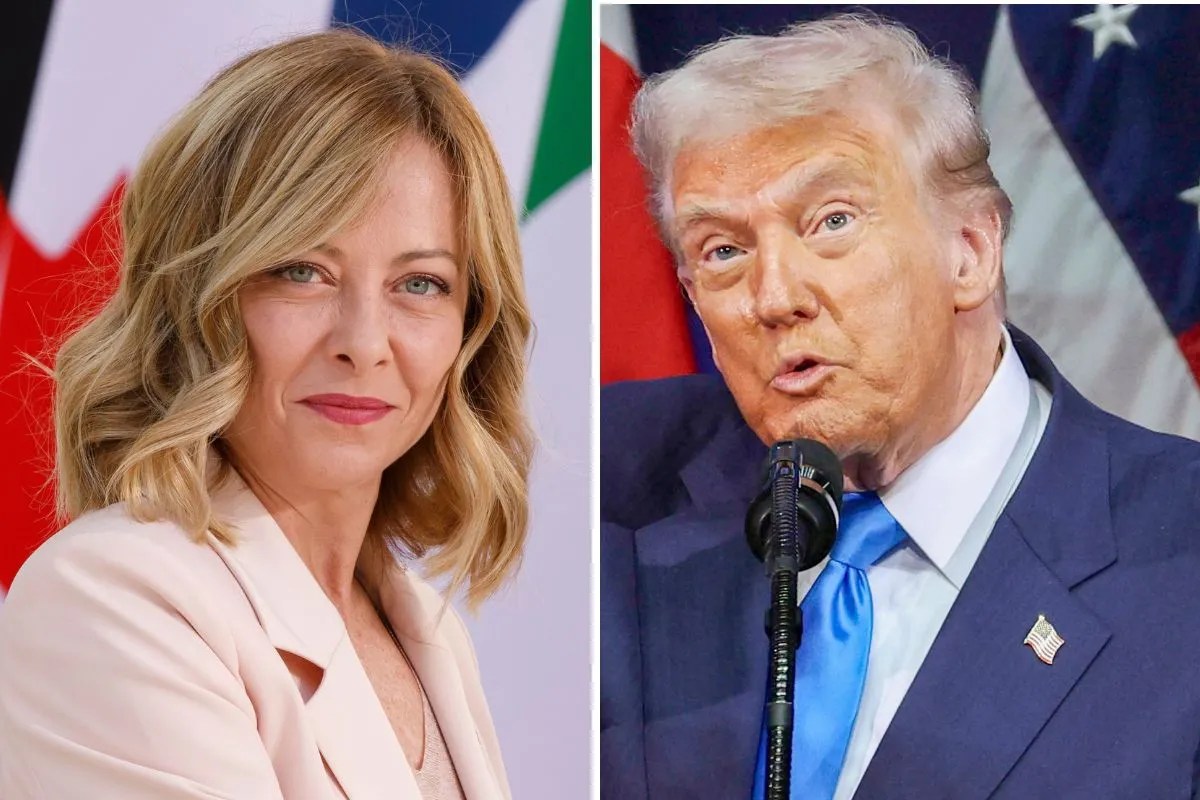
The strategic divergence between Italian Prime Minister Giorgia Meloni and U.S. President Donald Trump represents a structural breakdown in ideological alignment under the pressure of hard state interests. Meloni’s declaration of "no regrets" regarding her political investment in Washington, delivered at the NATO summit in Ankara, highlights a systemic shift: shared populist rhetoric regarding internal immigration policies and opposition to specific cultural movements cannot override structural disagreement on military deployment, airspace sovereignty, and Middle Eastern security architecture.
The breakdown of this bilateral relationship provides an analytical blueprint for how mid-tier Western powers calculate risk when caught between domestic sovereignty and superpower expectations.
The Dual-Driver Model of Friction
The breakdown can be mapped across two distinct friction layers: structural strategic differences and symbolic asymmetric status claims. The interaction of these two layers created a reinforcing feedback loop that accelerated the diplomatic degradation.
Structural Strata: The Airspace and Engagement Bottleneck
The foundational breakdown began with a hard security disagreement concerning West Asian security policy. Two operational decisions systematically eroded the strategic trust:
- The Airspace Veto: Italy’s refusal to grant U.S. military aircraft bound for the Middle East permission to utilize the Sigonella air base in Sicily. Sigonella is a vital logistical node for Mediterranean projection. Restricting its operational scope directly imposed an increased transit cost and time penalty on U.S. military logistics during an active crisis.
- The Iran Divergence: Meloni’s explicit criticism of U.S. posture concerning Iran, specifically following tensions that drew papal condemnation. Rome prioritized regional stabilization and the containment of maritime trade disruption in the Mediterranean-Suez corridor, whereas Washington demanded unified Western coalition pressure.
Symbolic Strata: Asymmetric Status Assertions
When structural alignment failed, the dispute shifted into the domain of domestic political theater and diplomatic optics. This produced a secondary friction loop:
- The Photograph Disparity: The U.S. executive branch claimed that the Italian Prime Minister requested diplomatic validation through a manufactured photo opportunity during the G7 gathering in Evian-les-Bains. This assertion was designed to frame the bilateral relationship as transactional, positioning the mid-tier power as a demand-seeker.
- The Sovereignty Refusal: Rome countered by framing the U.S. narrative as a direct challenge to the sovereign dignity of the Italian state. The deployment of the phrase "neither I nor Italy ever beg" by Meloni, followed by Deputy Prime Minister Antonio Tajani canceling his official diplomatic mission to Washington, represents an intentional escalation to signal that sovereign prestige takes precedence over executive alignment.
The Strategic Investment Calculus
Meloni’s defensive framework at Ankara relies on a long-term political diversification strategy. By investing early in ties with Trump, Rome attempted to position itself as the primary ideological and diplomatic bridge between Washington and the European Union.
[Early Strategy]  Rome -> Ideological Bridge -> Washington & Brussels
[Current Reality] Strategic Friction + Asymmetric Public Disagreements -> Bridge Collapses
This structural calculus broke down due to a fundamental misjudgment of the asymmetric nature of populist alliances. While conservative or nationalist parties often share alignment on domestic policy principles—such as border security or anti-woke governance frameworks—their foreign policies remain strictly transactional. When Italy acted to protect its local security architecture by restricting military transit, the shared ideological affinity failed to buffer the relationship against realpolitik friction.
The current strategy employed by Rome shifts from an affinity-based alliance to a hedged sovereignty posture. Meloni’s assertion that her diplomatic engagement is applied uniformly across all international partners—rather than tailored specifically to a single U.S. administration—is an effort to lower the political cost of the public rift. By framing her actions as a consistent, rule-based approach to statecraft driven by "the unity of the West," she shields her domestic flank from accusations of diplomatic failure.
Strategic Recommendation for Middle-Power Posturing
For mid-tier nations navigating a fractured international environment, the Meloni-Trump dispute demonstrates that ideological alignment offers no insulation against structural geopolitical friction. Relying on shared political rhetoric creates a false sense of security that collapses the moment national security priorities diverge.
The optimal play for state actors in this position is to decouple domestic political messaging from hard strategic commitments. Security arrangements, base access rights, and regional intervention policies must be treated as independent variables governed strictly by national interest calculations, rather than as bargaining chips to maintain personal executive rapport.