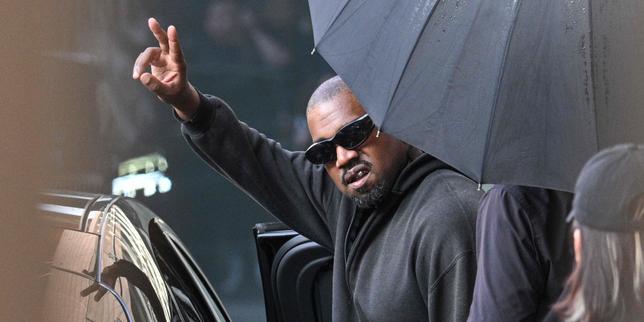
National border security operates on a risk-assessment calculus that treats high-profile cultural figures not as individuals, but as vectors for potential public disorder. The denial of entry to Kanye West (Ye) by United Kingdom authorities following a series of antisemitic statements represents the activation of the "conducive to the public good" clause within British immigration law. This mechanism serves as a pre-emptive strike against the domestic radicalization of specific demographics and the subsequent strain on internal security resources.
The Tripartite Framework of Entry Denial
State-level exclusion of high-influence individuals typically rests on three structural pillars. When a figure of West's reach engages in inflammatory rhetoric, the Home Office evaluates the risk through these lenses:
- The Public Order Variable: This focuses on the physical security requirements triggered by the person's presence. If a visit is likely to spark violent protests or counter-protests, the state assesses the cost-benefit ratio of policing that presence.
- The Incitement Threshold: Under the UK’s "Unacceptable Behaviour" policy, the government can exclude individuals who use their platform to foster hatred or provoke others to commit terrorist acts or serious crimes. Antisemitic rhetoric falls squarely into the category of fostering inter-community tension.
- The Precedent Maintenance Clause: Granting entry to an individual who has openly violated national standards of conduct creates a "permissive environment" signaling that hate speech is negotiable if the offender is sufficiently famous.
The cancellation of the festival that originally invited West is a secondary market reaction. The promoters faced a collapse of their liability insurance and a mass exit of corporate sponsors, demonstrating how the private sector mirrors state-enforced moral boundaries to protect brand equity.
The Cost Function of Hate Speech in Global Markets
The economic fallout for a public figure who moves from "controversial" to "excluded" is not linear; it is an exponential decay. The "Ye" phenomenon illustrates a total breakdown in the value chain of a personal brand.
Brand Liquidation and the Termination of Intellectual Property Support
When a figure is barred from a major market like the UK, the move triggers "Morals Clauses" in high-stakes contracts. These clauses function as a kill-switch for partnerships. Adidas and Gap did not just end their relationship with West; they effectively liquidated the inventory and deleted the future earning potential of the designs. This is a transition from a revenue-sharing model to a total loss-absorption model for the corporate partner.
The Diminishing Returns of Outlaw Status
While some public figures thrive on being "cancelled" by appealing to a niche, the scale required to sustain a global fashion and music empire like Yeezy cannot survive on a fringe audience. The logistical infrastructure—shipping, payment processing, and hosting—required for a global business is largely controlled by institutions that adhere to strict ESG (Environmental, Social, and Governance) and compliance standards. Once a figure is officially flagged by a sovereign state for hate speech, these service providers classify them as high-risk, leading to a "de-banking" effect.
Logic of the UK Exclusion Policy
The Home Secretary’s power to exclude is governed by the Immigration Act 1971. The legal standard is not "guilt" in a criminal sense, but a "balance of probabilities" regarding future harm.
- The Subjective Discretionary Power: Unlike a court trial, the Home Office does not need a conviction to bar entry. They require a reasonable belief that the person’s character or associations make them undesirable.
- The Impact of Digital Permanence: In the past, inflammatory statements might fade. In the current media architecture, West's antisemitic remarks are indexed and archived, providing a permanent evidentiary basis for entry refusal that is difficult to challenge via judicial review.
- The Burden of Public Good: The state argues that the social cohesion of Jewish communities in the UK outweighs the commercial interests of a music festival or the freedom of movement of a foreign national.
Operational Failures in Talent Procurement
The festival organizers committed a fundamental error in their risk assessment. They prioritized the "draw" of a global superstar over the "political volatility" of the asset. In professional event management, a "Sensitivity Audit" should have identified that West was no longer a viable booking long before the official government intervention.
The failure to anticipate this ban resulted in:
- Sunken Marketing Costs: Capital spent on promoting a headliner who cannot legally enter the country is unrecoverable.
- Consumer Trust Deficit: Ticketholders for festivals buy into an experience. The collapse of the main act creates a demand for refunds that can bankrupt mid-tier production companies.
- Legal Exposure: The festival likely faced breach of contract suits from other artists who signed on under the premise of sharing a stage with a specific tier of talent.
The Geopolitical Signal of Cultural Exclusion
Western democracies are increasingly using immigration status as a tool for cultural signaling. By barring West, the UK aligns itself with a broader European stance against the resurgence of 20th-century extremist ideologies. This is a form of "Soft Power" protectionism.
The message sent to the global entertainment industry is clear: the era of "any publicity is good publicity" has ended. For assets operating at the billion-dollar level, the threshold for acceptable public conduct is now lower than it was a decade ago because the speed of information dissemination amplifies the "harm" of hate speech.
The move by the UK government creates a template for other nations, such as Australia or Canada, which have similar "character test" requirements for visas. This effectively traps the individual in a shrinking geography of influence, where they can only operate in jurisdictions with lower social standards or less integrated global financial ties.
Strategic Decisioning for Brands and Promoters
In an environment where personal conduct can instantly trigger state-level sanctions, the management of high-profile talent requires a shift toward "Governance-First" models.
- Escrow-Based Morals Clauses: Future contracts will likely see a greater percentage of talent fees held in escrow, releasable only upon the completion of the event without a government-triggered cancellation.
- State-Risk Insurance: New insurance products are being designed to cover the specific risk of "Visa Denial due to Public Conduct," though the premiums for historically volatile assets will be prohibitive.
- Vetting as Infrastructure: The role of the "Publicist" is being replaced by "Compliance Officers" who treat the artist's social media output as a regulatory filing subject to audit.
The case of West in the UK proves that celebrity status does not grant immunity from the fundamental requirements of national social contracts. When an individual’s rhetoric poses a quantifiable risk to a state’s internal stability, the machinery of border control will prioritize the collective "Public Good" over the individual's right to commerce. The market will always follow the state; where a person cannot walk, their products cannot sell.
Promoters must immediately pivot toward booking assets with high "Social Stability Scores" to ensure the long-term viability of live entertainment investments.