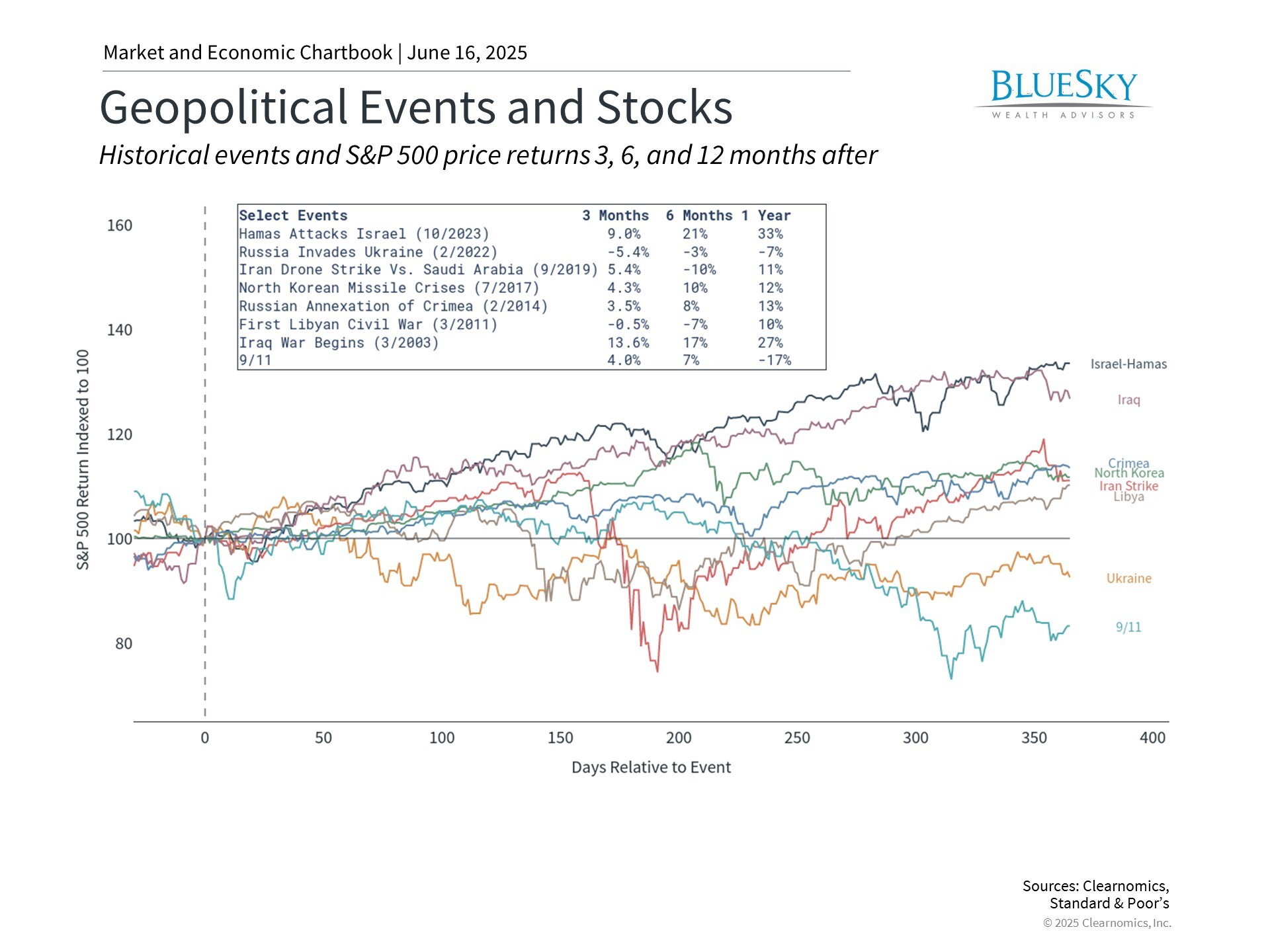
Equity markets function as a real-time discounting mechanism for geopolitical tail risks, and the recent volatility surrounding U.S.-Iran tensions serves as a textbook study in risk-premium compression. When President Trump signaled that Iran was "standing down" following the missile strikes on Al-Asad Airbase, the market did not merely react to the absence of war; it recalibrated the entire probability distribution of energy supply disruptions and sovereign credit risk. This transition from a "war footing" to a "diplomatic stalemate" shifted the dominant market narrative from capital preservation to growth-oriented positioning.
The Volatility Transference Model
Market participants experienced a classic V-shaped recovery in sentiment because the conflict failed to breach the threshold of a "protracted kinetic engagement." To understand why the S&P 500, Nasdaq, and Dow Jones Industrial Average reversed their overnight losses so aggressively, we must examine the three primary levers of institutional risk assessment:
- The Energy Buffer: Unlike the oil shocks of the 1970s, the current global energy infrastructure possesses a high degree of geographic elasticity. The immediate spike in Brent Crude prices reflected a "fear premium" rather than a physical deficit. Once the rhetoric shifted from escalation to "standing down," that premium evaporated.
- Sovereign Intent vs. Capability: The markets distinguished between Iran’s capability to inflict localized damage and its intent to survive. A full-scale war would threaten the regime's existence, making it a low-probability event. Institutional algorithms began buying the dip as soon as the Iranian response was identified as "proportional" and "calibrated."
- The Fed Put Re-evaluation: Geopolitical instability often reinforces the "lower for longer" interest rate environment. Investors realized that even if the conflict had simmered, the Federal Reserve would likely remain accommodative to offset any resulting economic friction.
Quantifying the De-escalation Signal
The "very complete" or "standing down" rhetoric acted as a definitive signal to the algorithmic trading systems that dominate NYSE and Nasdaq volume. We can break down the price action into a logical sequence of liquidation and re-accumulation.
The Liquidation Phase
As news of the missile strikes broke, automated risk-parity funds triggered sell orders based on a breach of standard deviation bands. This was not a fundamental assessment of corporate earnings but a technical necessity driven by volatility-targeting strategies. The flight to safe havens—Gold (XAU/USD) and U.S. Treasuries—reached a local peak as the "uncertainty coefficient" was at its maximum.
The Re-accumulation Phase
The stabilization began when the Iranian Foreign Ministry communicated through backchannels and social media that they did not seek "escalation or war." This provided the fundamental "floor." When the U.S. administration corroborated this stance by emphasizing economic sanctions over military retaliation, the market entered a phase of aggressive mean reversion.
The Sectoral Rotation of Risk
While the broad indices ended higher, the internal composition of the rally revealed where smart money is moving. We see a distinct divergence between "War Proxies" and "Growth Drivers."
- Defense and Aerospace: Names like Lockheed Martin and Raytheon initially gained, but their momentum stalled as the prospect of a massive, multi-year procurement cycle for a new Middle Eastern conflict faded.
- Technology and Growth: The Nasdaq’s outperformance signals that investors are prioritizing the "high-duration" assets. In a world where the Middle East is contained, the primary driver of equity value remains the digital transformation and software-as-a-service (SaaS) margins.
- Energy and Commodities: The collapse of the oil spike illustrates a structural shift. The United States is now a net exporter of petroleum products, which fundamentally alters the "Oil-to-Equity" correlation. Geopolitical flares in the Strait of Hormuz no longer dictate the health of the U.S. consumer as they did twenty years ago.
The Disconnect Between Headlines and Hard Data
Retail investors often fall into the trap of "headline trading," where the emotional weight of a news event obscures the underlying economic data. The factual reality is that the U.S. labor market remains tight, and corporate balance sheets are flush with cash.
The "roller-coaster" session was effectively a stress test of the current bull market's resilience. The fact that stocks finished at or near record highs suggests that the "Pain Trade" is still to the upside. Short-sellers who bet on a sustained downturn were forced to cover their positions, providing the fuel for the afternoon rally. This is a mechanical feedback loop: lower prices attract value buyers, which triggers short-covers, which then triggers momentum-following algorithms.
Strategic Asset Allocation in High-Entropy Environments
To navigate these sessions, one must apply a Bayesian framework—constantly updating the probability of an outcome based on new information. The mistake most analysts make is treating a geopolitical event as a binary (War vs. Peace). In reality, it is a spectrum of "Managed Friction."
The current equilibrium suggests that while the U.S. and Iran will remain adversaries, the threshold for a market-breaking event has been raised significantly. The "cost of conflict" for both parties is too high, creating a stable, albeit tense, status quo.
Investors should focus on three specific variables to gauge the next phase of market stability:
- The 10-Year Treasury Yield: If yields continue to rise despite geopolitical noise, it confirms that the market is prioritizing domestic economic growth over international risk.
- Credit Spreads: High-yield credit spreads remained remarkably tight throughout the Iran flare-up. This is the "canary in the coal mine." As long as the credit markets are calm, the equity market's "roller-coaster" is merely surface-level noise.
- The VIX Term Structure: Observe the difference between the spot VIX and the 3-month futures. A "backwardation" (where spot is higher than future) indicates immediate panic, but the rapid return to "contango" suggests that the professional hedging community viewed the Iran tension as a transitory spike.
The Mechanistic Path Forward
The logical conclusion of this session is not that "everything is fine," but that the market has priced in a specific brand of geopolitical theater. The "Trump Effect" on markets often involves a period of high-decibel rhetoric followed by a pragmatic de-escalation that protects the equity market—which the administration views as a key scorecard of its success.
The strategic play here is not to chase the defense stocks on the next headline, but to use the inevitable volatility spikes to add exposure to secular growth themes. The volatility is the entry fee for the long-term returns offered by an economy that has decoupled its primary growth engine from Middle Eastern stability.
The decoupling is driven by two structural shifts: the U.S. energy independence mentioned previously and the shift toward an intangible-asset economy. When the value of the leading companies (Apple, Microsoft, Alphabet) is derived from intellectual property and global ecosystems rather than physical supply chains through the Persian Gulf, the "Geopolitical Risk Discount" must be permanently lowered.
Institutional portfolios should maintain a "barbell" strategy. On one side, high-conviction technology and healthcare assets that are immune to regional skirmishes. On the other, a cash-heavy opportunistic sleeve designed to buy the "algorithmic liquidations" that occur every time a missile is fired or a tweet is sent. The session following the Iran strikes proved that the fastest way to lose alpha is to mistake a temporary tactical shift for a permanent structural collapse.
The primary risk to this thesis is not a single missile strike, but a systemic failure of the global credit plumbing. As long as the repo markets and the dollar swap lines remain functional, geopolitical shocks will continue to be "bought" by a market that is increasingly conditioned to look through the noise toward the underlying liquidity cycle.