The immediate 2% to 4% contraction in crude oil benchmarks following the announcement of a conditional two-week ceasefire between the United States and Iran is not a mere reaction to a headline; it is a rapid recalibration of the "Geopolitical Risk Premium." In energy markets, price is a function of current physical supply-demand balances plus the discounted probability of future supply disruptions. By establishing a fourteen-day window of non-aggression, the probability of a "worst-case scenario"—specifically the closure of the Strait of Hormuz—drops from a localized peak toward a baseline mean, forcing algorithmic and manual traders to shed long positions.
The Mechanics of the Risk Premium Compression
Global oil prices typically carry a hidden "insurance cost" during periods of heightened Middle Eastern tension. This premium represents the financial cost of hedging against a sudden loss of the roughly 21 million barrels per day (bpd) that flow through the Strait of Hormuz. When Trump signals a conditional ceasefire, he effectively provides the market with a "volatility dampener." If you found value in this article, you should read: this related article.
The compression of this premium follows three distinct logical pillars:
- Probability Weighting of Kinetic Conflict: Before the ceasefire, the market priced in a non-zero chance of infrastructure strikes on Iranian export terminals (Kharg Island) or retaliatory strikes on Saudi Abqaiq facilities. A ceasefire, even a conditional one, resets this probability to near zero for the duration of the window.
- Short-Term Supply Assurance: While the ceasefire does not immediately bring new Iranian barrels to the global market—due to the persistence of primary and secondary sanctions—it removes the threat of "interdiction." This refers to the risk of tankers being seized or attacked, which increases insurance premiums and freight rates.
- The Speculative Exit: Managed money (hedge funds) often enters "long" positions as a hedge against geopolitical chaos. The announcement triggers "stop-loss" orders, creating a cascade of selling pressure that overshoots the actual fundamental shift.
The Conditional Nature of the Fourteen-Day Window
The market's skepticism is baked into the "conditional" nature of the agreement. For a strategy consultant, the duration—fourteen days—is too short for a structural shift in oil production but long enough to alter the "Forward Curve." For another perspective on this event, see the recent coverage from MarketWatch.
The Forward Curve illustrates the price of oil for delivery in future months. If the ceasefire were perceived as a permanent shift toward diplomacy, the curve would shift into "Contango," where future prices are higher than current prices, signaling a glut. However, because this is a two-week "conditional" pause, the market remains in "Backwardation," where current prices are higher than future ones. This indicates that the market views the relief as a temporary reprieve rather than a permanent resolution of the supply-side deficit.
Operational Variables of Iranian Export Recovery
If the ceasefire leads to a broader diplomatic framework, the return of Iranian crude involves a multi-stage physical and regulatory process. Understanding these steps allows an analyst to predict price movements more accurately than simply following headlines.
- The Floating Storage Release: Iran holds millions of barrels of crude on tankers in the Persian Gulf and near Chinese ports. This is "ready-to-market" supply. Upon a sanctions waiver, this volume can hit the market within 72 hours, creating a localized price floor collapse.
- Production Ramp-up Latency: Reopening "shut-in" wells is not a binary switch. Reservoirs that have been dormant or producing at low capacity due to sanctions require technical maintenance. The technical ramp-up to pre-sanction levels (approximately 3.8 million bpd) would take between three to six months.
- The Quality Match Problem: Iranian Heavy and Iranian Light crudes are medium-sour grades. Refineries in Asia and Southern Europe are optimized for this specific "assay." If the ceasefire leads to a resumption of trade, these refineries will pivot away from more expensive Brent or West Continental substitutes, driving down the premiums for those specific grades.
Strategic Implications for Global Inventory Management
For corporate entities and sovereign wealth funds, this price slide creates a specific set of tactical pressures.
The first pressure is the Inventory Devaluation Risk. Companies holding large physical stocks of crude see the book value of their assets drop instantly. To mitigate this, firms often use "crack spreads"—the difference between the price of crude and the price of refined products—to lock in margins before the crude price drop filters through to gasoline and diesel.
The second is the OPEC+ Strategic Response. The cartel, led by Saudi Arabia and Russia, monitors these geopolitical shifts to decide on production quotas. A ceasefire that threatens to eventually bring Iranian barrels back to the market puts OPEC+ in a defensive posture. They must decide whether to proactively cut production to keep prices high or maintain production to defend market share against a potential Iranian return.
The Cost Function of Geopolitical Signaling
The use of a "two-week" timeline is a classic negotiation tactic designed to test "sincerity" without committing to long-term concessions. In economic terms, this is a "low-cost signal." Trump loses little by pausing for two weeks, but the "Information Effect" on the market is massive.
The volatility created by this signal serves two domestic purposes:
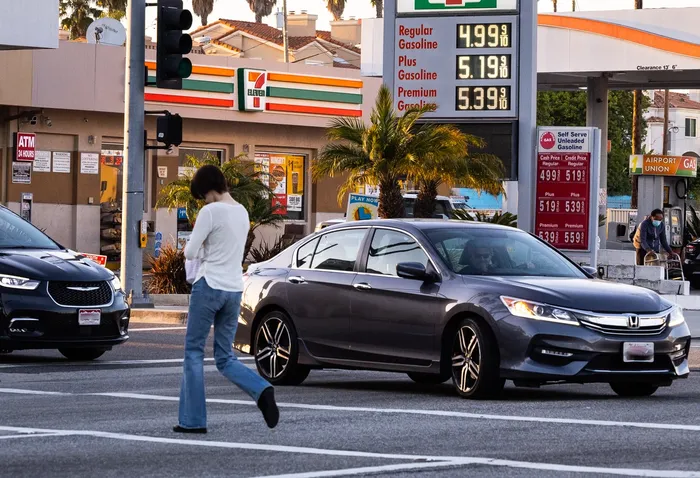
- Lowering Domestic Energy Costs: A slide in crude prices leads to a delayed but predictable drop in retail gasoline prices, easing inflationary pressure.
- Testing the Iranian Revenue Floor: By observing how the market reacts, the administration can gauge how much "risk premium" is actually propping up Iranian shadow-market sales.
Asymmetric Risks: The Bottleneck of Failure
The primary risk to this downward price trend is a "Failure of Condition." If either party violates the ceasefire terms within the 14-day window, the resulting "snapback" in price will likely exceed the initial drop. This is because the market will price in a "Vengeance Premium"—the assumption that the failed diplomacy will lead to an even more aggressive kinetic conflict than before.
$P_{new} = P_{base} + (P_{risk} \times \Delta V)$
In this simplified model, the new price ($P_{new}$) is the base fundamental price ($P_{base}$) plus the risk premium ($P_{risk}$) multiplied by the change in perceived volatility ($\Delta V$). The ceasefire currently forces $\Delta V$ into a negative value, but a violation would send $\Delta V$ to a value higher than its starting point.
Strategic Recommendation for Market Participants
The current slide is a liquidity event driven by sentiment, not a fundamental change in the number of barrels being pumped out of the ground today. The strategic play is to treat this 14-day window as a "synthetic hedge."
Refineries should look to lock in purchase contracts for the next quarter during this temporary dip, as the "conditional" nature of the ceasefire suggests a high probability of a return to the status quo. Simultaneously, upstream producers should increase their "Put" option coverage to protect against a scenario where the ceasefire is extended or leads to a formal nuclear deal, which would structurally reset oil prices to a lower equilibrium permanently.
The most significant data point to watch is not the ceasefire itself, but the "Export Credit" movements and tanker tracking data coming out of the Iranian port of Jask. If tanker movements increase despite the ceasefire, it suggests a "leakage" in the sanctions regime that will prevent prices from rebounding even if the ceasefire fails.