The intersection of state-enforced deportation and acute seismic events creates a highly volatile human-accounting bottleneck. When United States Immigration and Customs Enforcement (ICE) deports individuals via charter flights—such as the documented operational profile of Flight 164—the receiving state assumes absolute custody and administrative responsibility upon tarmac arrival. However, when a severe earthquake disrupts the destination country's infrastructure immediately following a flight's arrival, the tracking mechanisms of both the sending and receiving nations suffer systemic failure. This analysis dissects the structural breakdown that occurs when forced repatriation collides with catastrophic logistical disruption, transforming a routine state action into a crisis of unaccounted-for populations.
The Operational Mechanics of Deportation Transfer
To understand how individuals become unaccounted for following a repatriation flight, one must first isolate the standard operating procedures of international prisoner and deportee transfers. The process relies on a strict, binary handoff framework.
- Custody Phase 1 (Sending State): The deporting nation retains absolute control over the manifest, physical security, and transit logistics. Biometric data and identification logs are maintained within domestic agency databases (e.g., Department of Homeland Security systems).
- The Tarmac Handshake: Physical custody shifts at the specific moment aircraft doors open and receiving nation officials verify the physical manifest against incoming individuals.
- Custody Phase 2 (Receiving State): The host nation assumes processing responsibilities, which typically involve domestic background checks, medical screening, and eventual release or detention within the homeland territory.
The vulnerability in this framework lies in the assumption of bureaucratic continuity. The system assumes the receiving nation possesses functional digital networks, structural integrity in its processing facilities, and available personnel to log the arrivals into localized databases.
Seismic Disruption and the Bureaucratic Blackout
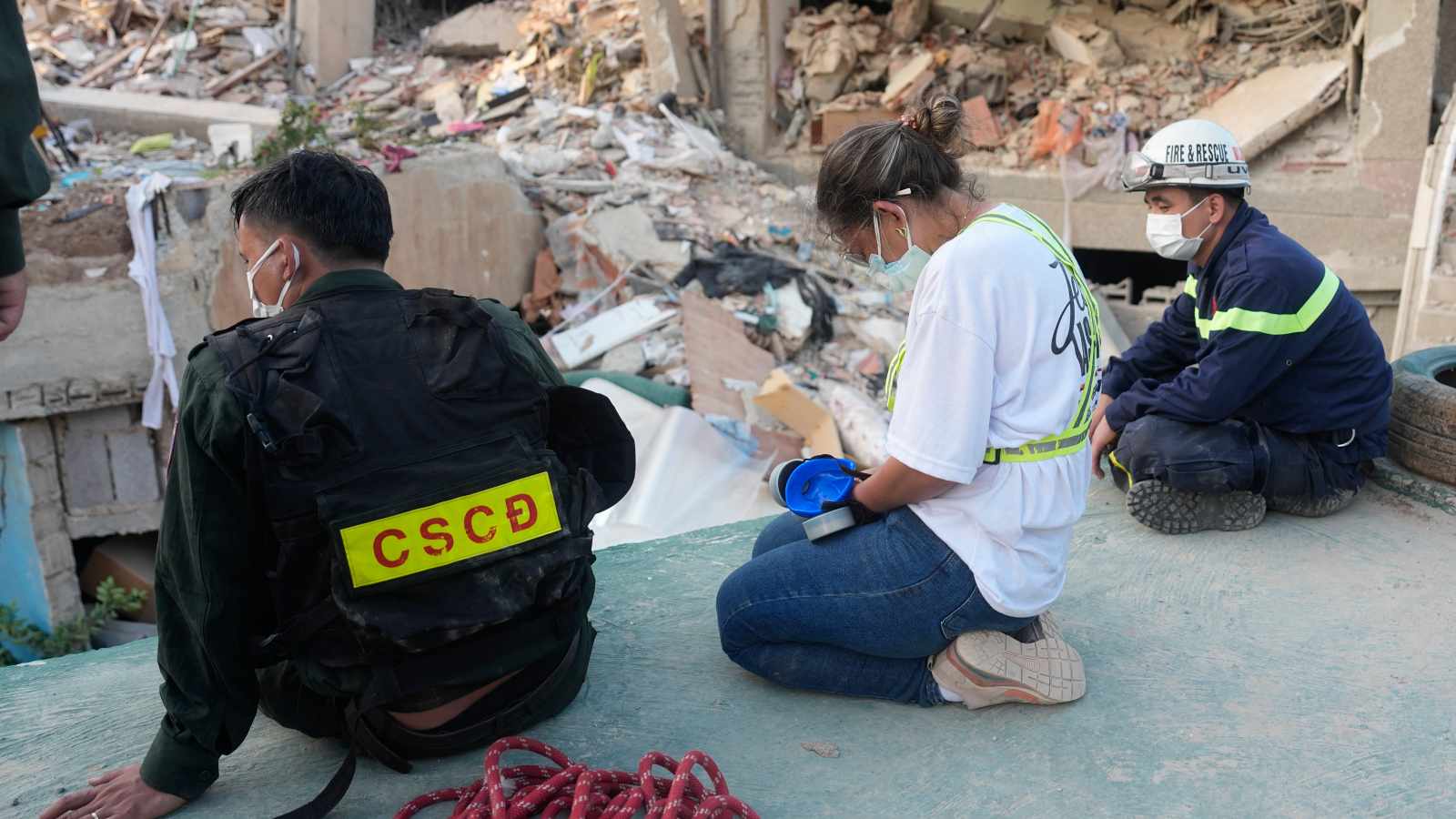
When a major earthquake strikes a receiving nation—specifically one with pre-existing infrastructure deficits like Venezuela—the primary, secondary, and tertiary effects cascade through the immigration processing chain.
Primary Infrastructure Collapse
Seismic activity immediately compromises electrical grids and telecommunications networks. When power fails, localized immigration databases go offline. If the receiving officials are forced to switch to manual, paper-based manifests during a crisis, the data integrity drops exponentially.
Decentralization of Authority
During an acute environmental disaster, state resources pivot from administrative processing to emergency response and survival. Security personnel assigned to process or detain repatriated individuals are routinely reassigned to search-and-rescue operations or critical infrastructure protection. This sudden reduction in operational oversight creates immediate structural gaps where individuals can depart processing zones without formal exit logging.
Urban Displacement Dynamics
An earthquake forces mass evacuations of structures. If a processing center or transit hub suffers structural damage, personnel must evacuate detainees and arrivals into open-air environments. In the chaos of an emergency evacuation, the perimeter security of temporary holding areas degrades. Individuals who leave these unsecured zones are not necessarily fleeing unlawfully; rather, they are responding to an immediate survival imperative amid a collapsing physical environment.
The Accountability Gap: Missing vs. Unaccounted For
A critical distinction must be made between individuals who are genuinely missing under debris and those who are unaccounted for due to administrative disarray. Media reporting frequently conflates these two categories, generating systemic narrative errors.
The first category involves localized casualties. If the repatriation facilities or surrounding transit sectors suffer structural collapse, individuals may be trapped or killed before formal registration occurs. Without localized records, matching recovering victims to the specific manifest of Flight 164 becomes a prolonged forensic challenge.
The second category is a function of broken tracking loops. If deportees are released prematurely due to facility damage, or if they navigate away from the airport zone independently because no state authority remains to process them, they exist in a data void. The sending country lists them as successfully deported; the receiving country has no digitized record of their integration or internal movement.
Structural Bottlenecks in Bi-National Communications
The geopolitical friction between the United States and Venezuela exacerbates tracking failures during crises. When formal diplomatic channels are strained or non-existent, real-time data sharing ceases.
The sending nation cannot verify if its manifest matches the post-disaster survival logs of the receiving nation because there is no secure, automated pipeline for data reconciliation. The lack of bilateral cooperation means that tracking anomalies—which might normally be resolved by a simple agency-to-agency query—instead become permanent information blackholes.
Furthermore, family members seeking information face a bifurcated system. The deporting nation considers its file closed upon the aircraft's departure, while the disaster-struck receiving nation lacks the bureaucratic bandwidth to answer inquiries regarding newly arrived personnel.
Strategic Mitigation for High-Risk Repatriation Corridors
To prevent the recurrence of systemic tracking failures during trans-national operations in disaster-prone regions, sending and receiving authorities must transition from linear processing models to resilient, decentralized frameworks.
Air charter operations must integrate real-time satellite-backed data logging that operates independently of local ground power grids. This ensures that the definitive manifest verification survives the immediate aftermath of a localized catastrophe. Additionally, international oversight bodies, such as the International Organization for Migration (IOM), must be granted immediate triage access to tarmac drop-zones during environmental crises to act as an independent ledger of record, ensuring human accountability when state mechanisms fracture under seismic stress.