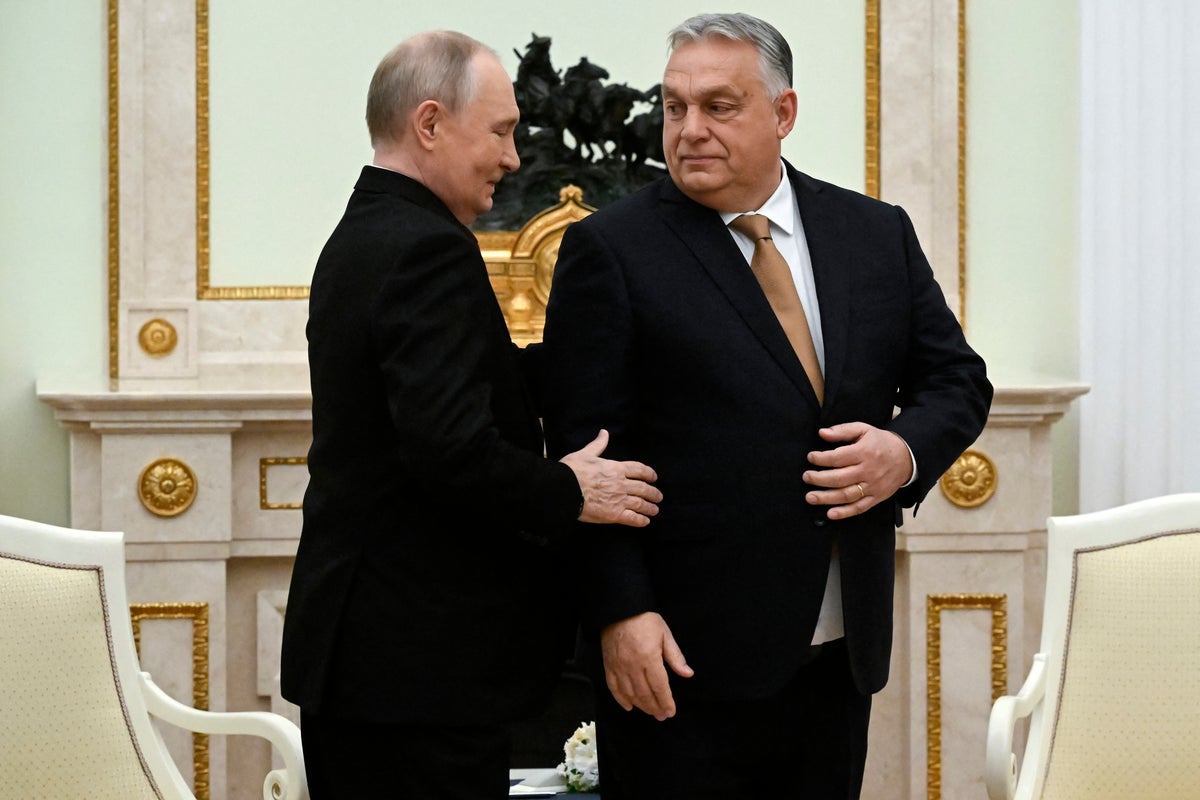
The Kremlin’s sudden pivot to distance itself from Viktor Orban following his historic electoral defeat is not a diplomatic cooling but a calculated liquidation of a depreciated political asset. Moscow operates on a strict utility-based framework for foreign relations, where "friendship" is a non-existent metric; the only relevant variables are transactional leverage and strategic depth. When Orban’s domestic mandate collapsed, his value as a disruptor within the European Union (EU) and NATO fell below the cost of maintenance. This creates a vacuum in Russia’s "Trojan Horse" strategy in Eastern Europe, forcing a total recalibration of how the Kremlin projects influence within democratic blocs.
The Three Pillars of the Orban-Putin Transactional Framework
To understand why the Kremlin is now claiming a lack of personal ties, one must first quantify the original utility of the relationship. This was never a bilateral alliance of shared values, but a three-pronged exchange of strategic goods.
- Energy Monopsony and Arbitrage: Hungary functioned as the primary entry point for Russian hydrocarbons into Central Europe, bypassing traditional transit risks. By securing long-term, below-market gas contracts, Orban could subsidize domestic utility prices—his "rezsicsökkentés" policy—thereby securing his populist base. In return, the Kremlin secured a guaranteed revenue stream and a physical foothold via the Paks II nuclear power plant expansion.
- Institutional Sabotage: Within the EU’s consensus-based decision-making structure, a single veto is a weapon of asymmetric warfare. Orban utilized this power to delay sanctions packages, block military aid to Ukraine, and complicate NATO accession for Sweden and Finland. For Putin, Orban was a low-cost mechanism to induce friction within Western alliances.
- Ideological Prototyping: Hungary served as a laboratory for "illiberal democracy," a model that mirrored the Kremlin’s domestic governance but operated within the legal framework of the West. This provided Moscow with a proof-of-concept that EU member states could be structurally captured from within.
The Cost Function of Political Failure
The Kremlin’s rhetoric of "never friends" is a response to a catastrophic shift in the risk-reward ratio. In the immediate aftermath of Orban's defeat, several variables shifted simultaneously, rendering the Hungarian prime minister a liability.
Diminished Veto Utility
A leader without a domestic mandate loses the psychological edge required for high-stakes international brinkmanship. The incoming Hungarian administration’s platform of "European reintegration" removes Moscow’s primary lever within the European Council. The Kremlin recognizes that maintaining ties with a disgraced, out-of-office leader offers zero return on investment while incurring diplomatic friction with the new government.
The Exposure Risk
Maintaining the "strongman" narrative requires a continuous streak of perceived inevitability. Orban’s loss demonstrates that the illiberal model is reversible, a reality the Kremlin cannot allow to contaminate its own domestic narrative. By retroactively framing the relationship as strictly professional and distant, Moscow attempts to insulate itself from the "contagion of defeat." This is a standard procedure in the Russian intelligence community: burn the asset when the cover is blown.
Structural Failures in the Russian Influence Model
The collapse of the Orban-Putin axis exposes a fundamental flaw in the Kremlin's foreign policy: the over-reliance on individual proxies rather than institutional or economic integration.
- Personalist Fragility: Because the relationship was built on the personal chemistry and mutual survival of two individuals, it lacked the institutional "sticky power" that defines Western alliances. When the individual falls, the entire strategic bridge collapses.
- The Transparency Bottleneck: Democratic elections act as a transparency mechanism that autocratic influence cannot survive. The surge in voter turnout and the unification of the Hungarian opposition created a level of political noise that the Kremlin’s traditional disinformation toolkits could not suppress.
The Mechanics of Disavowal
The specific language used by the Kremlin—denying personal friendship—serves a specific operational purpose. In the Russian diplomatic lexicon, the term "friend" (drug) implies a level of informal security guarantee. By stripping Orban of this title, the Kremlin is signaling to the new Hungarian leadership that it is open for business on a purely pragmatic basis. This is an invitation to negotiate the terms of energy debt and infrastructure projects (like Paks II) without the ideological baggage of the previous decade.
This creates a tactical pivot where the Kremlin moves from Influence through Obstruction to Influence through Debt.
The Paks II Debt Trap
The expansion of the Paks nuclear power plant is financed by a €10 billion Russian state loan. Even with Orban gone, this financial tether remains. The Kremlin’s "never friends" stance allows it to approach the new government as a cold-blooded creditor rather than a political patron. This shift increases Moscow’s ability to demand unfavorable terms or use the debt as a bargaining chip for continued energy dependence.
Realignment of the Regional Power Dynamics
The removal of the Hungarian outlier changes the calculus for other actors in the Visegrád Group (V4). For years, Poland, the Czech Republic, and Slovakia had to navigate the friction caused by Hungary’s pro-Russian stance. With Orban’s exit and the Kremlin’s subsequent disavowal, the V4 is likely to consolidate into a more cohesive, pro-security bloc.
The second-order effect is the isolation of Serbia. President Aleksandar Vučić now finds himself as the lone Russian interlocutor in the Balkans without his primary EU advocate in Budapest. This increases the pressure on Belgrade to choose between its European aspirations and its historical affinity for Moscow. The Kremlin’s treatment of Orban serves as a warning to Vučić: the moment your domestic utility expires, the Kremlin will erase the history of your cooperation.
Tactical Recalibration for the New Hungarian Administration
The incoming government faces an immediate "sovereignty trap." They must dismantle the pro-Russian infrastructure without triggering an energy crisis or a financial default on Russian loans.
- Auditing the Energy Sector: A granular review of the gas contracts is required to identify the exact "corruption premium" paid under the Orban administration. This data is the only leverage available to renegotiate terms with Gazprom.
- Securitizing Infrastructure: The Paks II project must be reassessed not as an energy project, but as a national security vulnerability. If the project cannot be canceled without crippling penalties, it must be internationalized, bringing in Western partners to dilute Russian technical and financial control.
- Counter-Intelligence Purge: The systemic removal of Kremlin-aligned actors within the Hungarian intelligence services (Szuverenitásvédelmi Hivatal) is a prerequisite for regaining the trust of NATO allies.
The Kremlin's declaration is the sound of a closing door. It confirms that in the logic of modern autocracy, loyalty is a one-way street ending at the ballot box. The strategic priority for the West is no longer managing Orban, but preventing the Kremlin from converting its "liquidated asset" into a "predatory creditor" through the weaponization of existing state debt and energy contracts. The focus must shift from political rhetoric to the hard mathematics of infrastructure and finance. This is the only way to ensure that the "never friends" claim becomes a permanent geopolitical reality rather than a temporary tactical retreat.