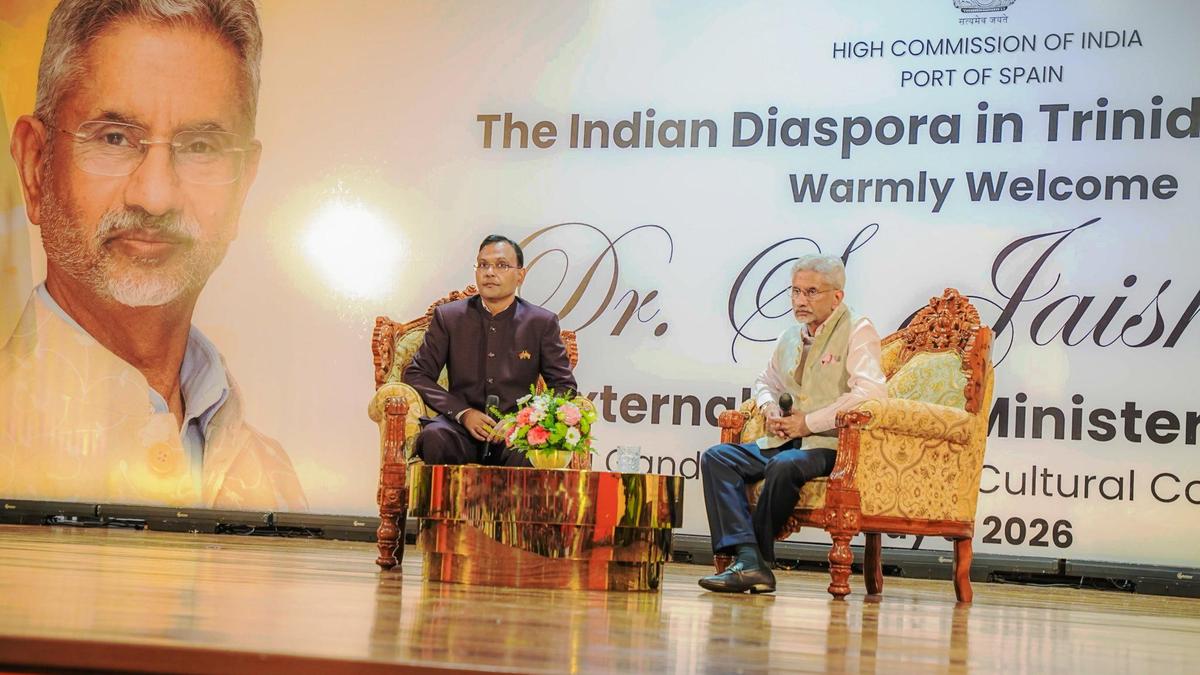
The recent bilateral engagement between India and Trinidad and Tobago (T&T), signaled by the signing of eight Memoranda of Understanding (MoUs) during External Affairs Minister S. Jaishankar’s visit, represents a calculated shift from historical cultural diplomacy toward a hard-coded economic partnership. While general reportage focuses on the ceremony of the visit, the underlying logic suggests a sophisticated "South-South" integration strategy designed to solve specific structural bottlenecks in both nations. India seeks a reliable, energy-secure foothold in the Caribbean Community (CARICOM), while T&T requires an accelerated digital and industrial pivot to reduce its dependency on volatile hydrocarbon markets.
This diplomatic maneuver functions through three primary vectors: Digital Public Infrastructure (DPI) export, pharmaceutical supply chain resilience, and agricultural technology transfer. By analyzing the specific MoUs, one can map the trajectory of Indo-Caribbean relations from a mere "diaspora connection" to a functional, data-driven economic corridor.
The DPI Export Vector: Replicating the India Stack
The most significant component of this engagement is the formalization of cooperation in digital transformation. India is not merely selling software; it is exporting a modular, population-scale administrative philosophy often referred to as the India Stack.
Trinidad and Tobago’s economic diversification relies heavily on modernizing its fiscal and social security systems. The MoU regarding digital cooperation creates a blueprint for T&T to adopt components of Aadhaar (identity) and UPI (payments). The logic here is one of leapfrogging: rather than building proprietary, siloed legacy systems, Port of Spain is looking to adopt a proven, scalable infrastructure that handles high-frequency, low-value transactions.
The mechanism of this transfer involves:
- Technical Interoperability: Establishing standards that allow T&T’s banking systems to communicate with Indian-developed payment gateways.
- Sovereign Data Control: Unlike private Silicon Valley solutions, the Indian DPI model allows the T&T government to retain control over its citizens' data, a critical requirement for national security and legislative compliance.
- Cost Reduction: By adopting open-source principles inherent in the India Stack, T&T avoids the "vendor lock-in" associated with large Western technology conglomerates.
Pharmaceutical Security and the Jan Aushadhi Model
The health sector MoU targets a specific failure in the Caribbean healthcare market: the high cost of essential medicines. Small island developing states (SIDS) often face a "small market penalty," where low procurement volumes lead to exorbitant prices from global pharmaceutical firms.
India’s strategy involves the implementation of a "Jan Aushadhi" style system in T&T. This model operates on the principle of price-volume trade-offs. By facilitating the direct import of high-quality generic drugs from Indian manufacturers, T&T can reduce its public health expenditure by an estimated 40% to 60% on essential categories such as oncology, cardiology, and diabetes management.
The structural relationship here is symbiotic. India gains a regulated entry point into the wider CARICOM pharmaceutical market, which serves as a testing ground for broader Latin American expansion. T&T, in return, secures a resilient supply chain that is less susceptible to the logistical disruptions seen during the 2020-2022 period.
Agricultural Industrialization and Food Security
The MoUs concerning agriculture and allied sectors address a fundamental vulnerability in the Caribbean: the food import bill. T&T possesses significant arable land that remains underutilized or managed with outdated techniques. India’s intervention is focused on technical knowledge transfer rather than simple commodity trading.
The collaboration centers on three specific mechanical upgrades:
- Seed Technology: Introducing climate-resilient crop varieties that can withstand the increasing salinity and humidity of the Caribbean environment.
- Mechanization: Providing small-scale machinery tailored for the terrain of the islands, which is often ill-suited for the massive industrial equipment used in North America.
- Agro-processing: Moving T&T up the value chain from raw production to processed goods, thereby increasing the shelf-life and export potential of local produce.
This creates a defensive economic shield. As global food prices fluctuate due to geopolitical instability in Europe and the Black Sea, T&T is attempting to build internal caloric self-sufficiency through Indian technical expertise.
Energy Diplomacy: Beyond Traditional Hydrocarbons
While the MoUs cover new ground, the traditional energy relationship remains the bedrock of the partnership. However, the nature of this engagement is evolving. India is no longer just a buyer of T&T’s Liquefied Natural Gas (LNG); it is becoming a partner in energy infrastructure.
India’s refining capacity and growing demand for ammonia and urea (crucial for its domestic agriculture) align perfectly with T&T’s production capabilities. The strategic logic dictates a "circular energy economy" where Indian investments in T&T’s downstream petrochemical plants secure long-term off-take agreements for Indian farmers.
The limitation of this strategy lies in the global energy transition. Both nations recognize that the hydrocarbon window is narrowing. Consequently, the energy MoUs include provisions for green hydrogen and solar integration, utilizing India’s leadership in the International Solar Alliance (ISA) to help T&T diversify its power grid.
The Cultural-Institutional Bridge: Prasar Bharati and Beyond
The MoUs involving media and cultural exchange (specifically the Prasar Bharati agreement) are often dismissed as "soft" diplomacy. A rigorous analysis reveals they are actually brand-building exercises for the "India" brand in the Western Hemisphere. By facilitating the exchange of content, India creates a cultural familiarity that lowers the barrier to entry for Indian private sector firms.
When T&T citizens become accustomed to Indian media and educational content, the psychological friction of adopting Indian technology or Indian medical services decreases. This is a classic "halo effect" strategy used by the United States in the 20th century, now being deployed by New Delhi with clinical precision.
Strategic Constraints and Execution Risks
The success of these eight MoUs is not guaranteed. Several bottlenecks could impede the projected outcomes:
- Bureaucratic Latency: Both nations possess complex administrative layers that can slow the transition from "signed intent" to "operational reality."
- Logistical Distance: The physical distance between the Indian subcontinent and the Caribbean remains a cost-driver for physical goods, emphasizing the need for high-value, low-volume exports or digital services.
- Regulatory Harmonization: Aligning the regulatory standards of the Central Drugs Standard Control Organisation (CDSCO) in India with T&T’s health authorities requires significant legal manpower.
The Forward-Looking Play: A Hub for the Americas
For Trinidad and Tobago, the long-term objective is to position itself as a gateway for Indian firms looking to enter the Latin American market. Port of Spain offers a stable, English-speaking environment with deep-water ports and established trade agreements with its neighbors.
For India, this is a blueprint for engagement with the Global South. By providing "solutions" rather than just "aid," India establishes a partnership based on mutual economic utility. The next logical step for stakeholders is the establishment of a dedicated Indo-Caribbean Business Council tasked specifically with tracking the KPIs of these eight MoUs.
Business leaders should look for immediate opportunities in the secondary tiers of these agreements, particularly in fintech consulting, ag-tech maintenance, and generic drug distribution networks. The transition from diplomatic ceremony to commercial reality will happen in the gaps between these sectors, where private capital can fill the infrastructure needs identified by the two governments.
The strategic play here is not to view these MoUs as individual events, but as a cohesive network of agreements designed to synchronize two disparate economies for a post-carbon, digital-first global market. Entities that align their investment cycles with these governmental priority areas will likely find a cleared regulatory path and significant first-mover advantages in the Caribbean basin.