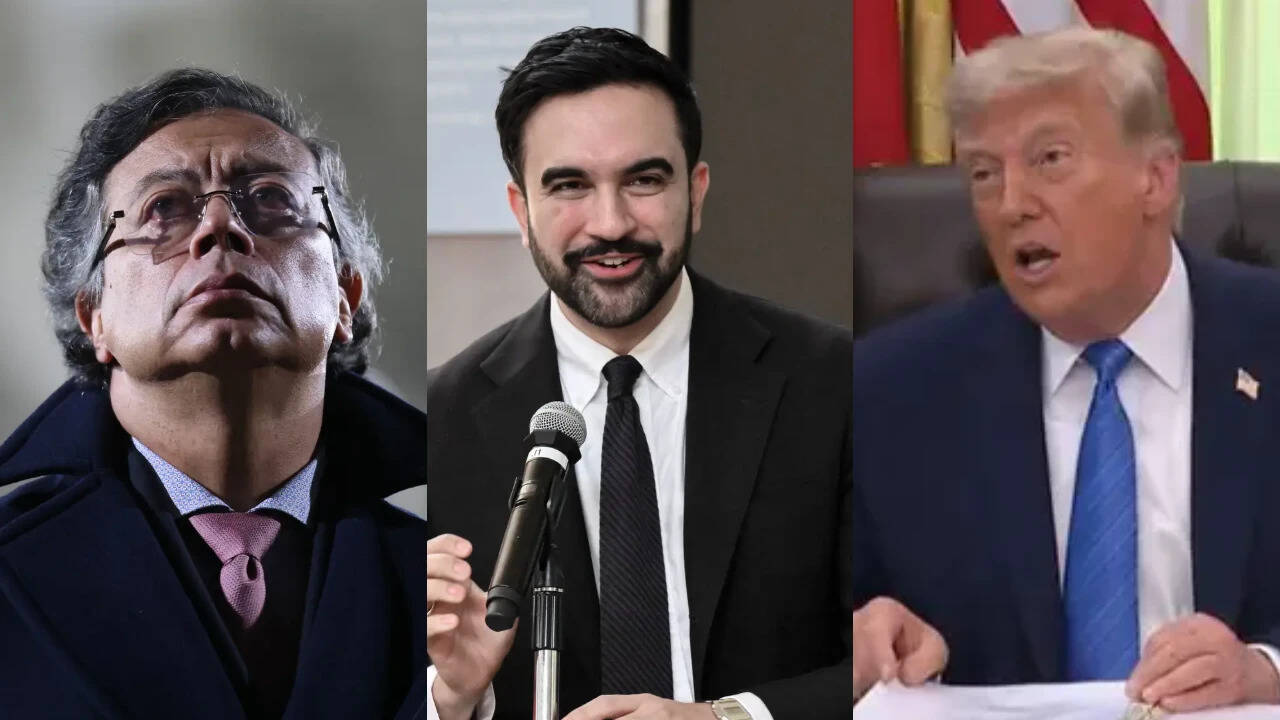
When New York City Mayor Zohran Mamdani planned a sit-down with Colombian President Gustavo Petro, it looked like a standard blueprint for cross-border progressive networking. It was supposed to be Mamdani's first big bilateral meeting with a head of state. Instead, it turned into an aggressive display of hard power diplomatic maneuvering. The White House stepped in and effectively killed the meeting before it could even start.
This isn't just about a canceled calendar invite. It is a calculated message about who gets to speak, where they get to speak, and what happens when you openly challenge the sitting U.S. president.
Why the Trump Administration Pulled the Plug
The official narrative coming out of Washington focuses heavily on the technicalities of immigration law. State Department officials were quick to point out that a visa is a privilege, not a right. Petro actually had his U.S. visa revoked last fall. That happened after he stood at a pro-Palestinian rally in Manhattan, grabbed a megaphone, and explicitly told U.S. troops to disobey presidential orders regarding support for Israel's military actions in Gaza.
The only reason Petro could even step foot in New York this week was due to a strict, limited diplomatic waiver. Colombia holds the rotating presidency of the United Nations Security Council this month. Under international agreements, the host country has to let foreign leaders attend official UN sessions.
The White House drew a hard line right there. Attending a UN session is allowed. Doing a private political meeting and a public "Dignity in Democracy" event with the democratic socialist mayor of New York City? That crossed the line. U.S. officials made it clear to their Colombian counterparts in Bogotá that stepping outside the strict UN perimeter would violate his entry conditions. The underlying threat was subtle but heavy: keep the itinerary to the UN, or risk being detained for violating immigration terms.
The Inflammatory X Post That Added Fuel to the Fire
You can't look at this diplomatic shutdown without looking at Petro's recent behavior online. He has spent months drawing fierce condemnation from Jewish and Israeli leaders for comparing Israel's military operations to the actions of Nazi Germany. He cut diplomatic ties with Israel last year.
Just days before his scheduled arrival in New York, Petro sparked a massive backlash on X. In a response to an op-ed piece backing right-wing Colombian presidential candidate Abelardo de la Espriella, Petro posted the phrase "Heil Hitler."
He defended the post later, claiming he was using the phrase to criticize what he viewed as his opponent's fascist rhetoric, rather than endorsing the Nazi slogan. But the damage was done. For critics, the post was just more proof of an increasingly unhinged digital presence. For the Trump administration, it provided easy political cover to squeeze his itinerary and isolate him during his U.S. visit.
What This Means for the Looming Colombian Election
The timing of this entire blowout is incredibly messy. Colombia is in the middle of a high-stakes presidential campaign, with a decisive runoff election scheduled for June 21. Petro is a lame-duck president whose term ends in two months, and he has been working hard to secure a victory for his chosen progressive successor, Iván Cepeda.
Petro wanted that photo with Mamdani. It was designed to show voters back home that his political movement still carries international clout and deep alliances with rising stars in the American Democratic party. By blocking the meeting, the White House effectively denied Petro a major public relations win on the eve of the vote.
Petro didn't take the shutdown quietly. He took to X to label the travel restrictions "undemocratic" and a direct violation of his freedom of expression. He also accused Washington of interfering directly in Colombia's domestic electoral campaign.
The New Precedent for International Critics
This situation sets a fascinating, friction-filled precedent for international diplomacy on U.S. soil. Historically, the U.S. has restricted the movements of authoritarian leaders or dictators—think Mahmoud Ahmadinejad or Muammar Gaddafi—when they visited the UN. Treating a democratically elected leader of a long-term South American ally the same way marks a massive shift in tactics.
Foreign policy experts are already warning that if Washington starts routinely truncating UN visits for foreign leaders who criticize the current administration, those leaders might just stop showing up entirely. It shifts the UN host status from a neutral international obligation into an active tool for political leverage.
If you want to track how this impacts regional stability, watch the June 21 election results in Colombia. The White House's aggressive pushback might backfire by fueling anti-imperialist sentiment at the ballot box, or it might successfully deflate the progressive momentum Petro worked so hard to build. Keep an eye on how the State Department handles the upcoming electoral transition in Bogotá, as that will reveal whether this hostility was personal to Petro or a permanent rewrite of U.S.-Colombia relations.