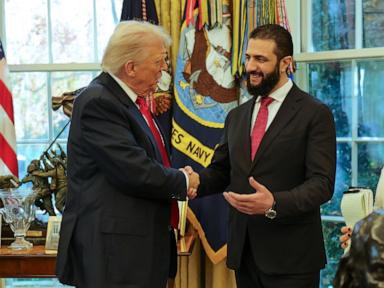
The strategic consensus holding the Levant together underwent a structural shift when US President Donald Trump proposed outsourcing the neutralization of Hezbollah to Syrian President Ahmed al-Sharaa. This diplomatic gambit, delivered on the sidelines of the G7 summit in France, is not merely erratic rhetoric; it represents an attempt to bypass the diminishing returns of conventional military campaigns in favor of a geopolitical subcontracting model. By positioning Damascus as a proxy stabilization force, Washington aims to protect its fragile framework peace agreement with Iran, limit regional civilian casualties, and force an end to Israel’s open-ended occupation of southern Lebanon.
However, the architecture of this proposal overlooks the structural constraints governing the post-Assad Syrian state, the internal security dynamics of Lebanon, and the defensive calculus of Israel. The mechanism of using a newly installed, formerly Islamist regime in Damascus to pacify an entrenched Shiite paramilitary force in Beirut introduces friction points that jeopardize regional equilibrium.
The Tri-Border Equilibrium: Strategic Postures
The current crisis operates as a system of three intersecting strategic postures, each driven by incompatible internal logic and distinct security objectives.
       [United States] ── (Framework Peace Deal) ── [Iran]
             │                                        │
     (Subcontracting)                          (Asymmetric Proxy)
             ▼                                        ▼
   [Syria: Sharaa Regime] ◄─── (Friction) ───► [Hezbollah / Lebanon]
             │                                        │
     (Border Risks)                            (Buffer Zone Conflict)
             ▼                                        ▼
       [Israel: Netanyahu] ◄──────────────────────────┘
The United States: The Subcontracting Thesis
The administration's objective is the preservation of the newly established US-Iran peace framework signed in Switzerland. Iran and regional partners have explicitly conditioned the survival of this deal on the cessation of intensive military operations in Lebanon. For Washington, the traditional instrument of stabilization—the Israeli Defense Forces (IDF)—has crossed a threshold of negative marginal utility. Continued IDF airstrikes on urban centers like Beirut disrupt global diplomacy and threaten the central US-Iranian accord.
To resolve this, the administration seeks to substitute Israeli hardware with Syrian manpower. By leveraging the historical and ideological animosity between Ahmed al-Sharaa’s Sunni-led administration and Hezbollah—which fiercely backed the deposed Bashar al-Assad during the Syrian civil war—Washington aims to achieve containment without direct American or Israeli kinetic exposure.
Syria: The Legitimacy Optimization Framework
For Damascus, the calculation is dictated by survival and state reconstruction. Since ousting the Assad regime in late 2024, Sharaa has prioritized transitioning from an isolated insurgent leader to a legitimate head of state. Financial optimization requires rebuilding critical infrastructure and attracting foreign direct investment, objectives that are entirely incompatible with a high-intensity foreign war.
While Sharaa has moved decisively to choke off Iranian supply lines flowing through Syrian territory to weaken Hezbollah, a direct military expedition into Lebanon yields a negative net asset value. Consequently, Damascus has rejected a kinetic role, countering with a proposal for a "vital economic axis" and diplomatic channels rather than an active combat deployment.
Israel: The Extended Buffer Calculus
The political leadership in Tel Aviv operates on a strictly defensive timeline. Prime Minister Benjamin Netanyahu has committed to a permanent or long-term military presence in a southern Lebanese security zone until Hezbollah is entirely disarmed. From the Israeli perspective, relying on a Syrian regime backed by Turkey and led by a leader with a jihadist lineage introduces an unacceptable strategic risk.
The primary vulnerability is the potential for a hostile Sunni coalition to establish a presence on Israel's northern border under the guise of counter-terrorism. To preempt this scenario and avoid American pressure tied to the Iranian peace deal, the Israeli security establishment is attempting to accelerate separate, direct negotiations with the Lebanese government in Beirut, aiming to isolate Hezbollah legally and structurally.
Structural Bottlenecks to Syrian Intervention
The execution of the American subcontracting strategy fails due to three distinct institutional and logistical bottlenecks within the contemporary Syrian state.
- The Military Capability Deficit: The Syrian armed forces are currently undergoing a profound structural reorganization. Transitioning from a fragmented collection of rebel factions, state remnants, and localized militias into a centralized national army requires significant time and institutional capital. Launching an expeditionary campaign against an entrenched, battle-hardened adversary like Hezbollah in the mountainous terrain of Lebanon is beyond the current power-projection capabilities of Damascus without triggering internal instability.
- The Fragility of Domestic Legitimacy: Sharaa’s political authority rests on a delicate domestic consensus. The Syrian population is exhausted by more than a decade of civil conflict. Initiating an optional foreign war on behalf of a Western power to shield Lebanese infrastructure would severely deplete Sharaa’s domestic political capital, potentially re-opening internal fractures and inviting domestic insurgencies.
- The Economic Resource Constraint: The Syrian treasury is functionally depleted. A protracted military campaign requires sustained logistics, secure supply lines, ammunition reserves, and economic cushions—none of which Damascus possesses. Sharaa’s insistence on "economic channels, not military channels" highlights the reality that Syria requires a capital inflow via reconstruction aid, rather than a capital outflow via military expenditure.
Cascading Security Implications for Israel and Lebanon
Should the United States continue to pressure Damascus toward a kinetic role, the resulting shifts in regional dynamics will produce a highly volatile security environment across the Levant.
The Re-ignition of the Lebanese Civil War
A Syrian military incursion or a forced, top-down disarmament of Hezbollah via external pressure risks breaking the fragile confessional balance in Beirut. The Lebanese government and the Lebanese Armed Forces (LAF) lack the domestic monopoly on force required to disarm Hezbollah independently. Representatives of the paramilitary group have already warned that tying Israeli withdrawal to their forced disarmament is a baseline humiliation that will trigger domestic armed conflict. A Syrian intervention would transform Lebanon into an arena for an intense sectarian war, pitting remnants of the Shiite axis against a Sunni-led Syrian force, with the civilian population caught in the crossfire.
The Northern Border Escalation Paradigm
For Israel, a Syrian intervention represents what defense officials classify as a maximum-exposure scenario. Instead of containing Hezbollah, an invasion by Sharaa’s forces could introduce radical Sunni elements and Turkish-backed proxies directly onto the borders of the Golan Heights and northern Galilee. This creates a dual-threat vector: a lingering, subterranean Shiite insurgency fighting a conventional, highly motivated Sunni force. The probability of miscalculation skyrockets, potentially drawing the IDF into a multi-front war against both state and non-state actors simultaneously.
[Current Threat Model]
Northern Border ──► Hezbollah (Shiite Paramilitary)

[Syrian Intervention Threat Model]
Northern Border ──► Hezbollah Insurgency (Asymmetric)
                 └──► Syrian/Turkish Proxies (Conventional Sunni)
The Operational Bottleneck of the Washington-Beirut Bilateral Track
Recognizing the flaws in the Syrian subcontracting model, the practical alternative is the direct, bilateral negotiation track established between Israel and Lebanon under US oversight. The mechanism under review involves a phased Israeli withdrawal from designated "pilot zones" in southern Lebanon, contingent on the sequential deployment of the LAF and the structural disarmament of Hezbollah.
The critical flaw in this mechanism is the institutional weakness of the Lebanese state. The LAF lacks the heavy armor, air superiority, and political mandate to enforce disarmament on a faction that is integrated into the social and political fabric of the country. Consequently, the security annexes of these agreements remain unexecuted, as any attempt by the Lebanese army to forcefully clear pilot zones of Hezbollah assets risks triggering a mutiny or an immediate internal collapse.
Strategic Forecast
The American proposal to use Syria as a counterweight to Hezbollah will not materialize as a kinetic reality. Sharaa will maintain a firm defensive posture, limiting Syria's role to intelligence sharing, border interdiction, and the suppression of Iranian logistics networks within his borders. He will not deploy troops across the Lebanese frontier.
The path forward will be dictated by the speed of the separate Israel-Lebanon negotiations. Netanyahu will maintain the IDF buffer zone in southern Lebanon, utilizing tactical leverage to extract structural concessions from Beirut. The United States will find its broader Iranian framework deal routinely challenged by localized escalations in Lebanon, forcing Washington to abandon the Syrian subcontracting thesis. Instead, the administration will have to pivot toward a heavily subsidized, internationally policed containment strategy along the Blue Line, using international financial guarantees to gradually build up the Lebanese state's internal security architecture over the next decade.
This analytical overview of the tactical realities on the ground outlines the deep complexity of the situation; for a visual breakdown of the structural shifts within Damascus and how the current administration rose to power, the video report How the Syrian Regime Collapsed provides essential historical context on Ahmed al-Sharaa's strategic calculations.