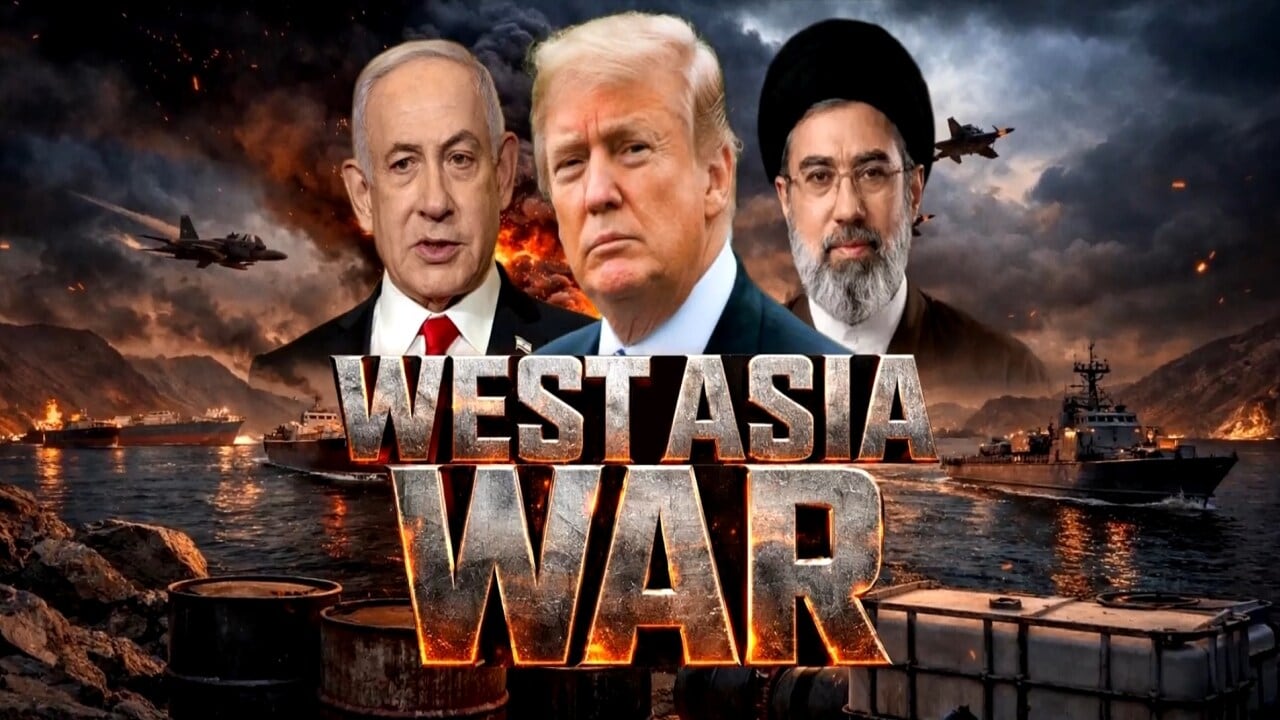
The prevailing narrative that Donald Trump’s ultimatums to Tehran signify a binary choice between "peace" or "war" fails to account for the mechanical application of Escalatory Dominance. In geopolitical terms, an ultimatum is not merely a threat; it is a price-setting mechanism designed to increase the cost of a competitor's status quo until that cost exceeds the benefits of resistance. The skepticism regarding genuine peace intent often overlooks the foundational logic of transactional diplomacy: the objective is not a state of harmony, but a re-indexed power equilibrium where the adversary operates within a narrower, more predictable set of constraints.
The Mechanics of Maximum Pressure 2.0
The current diplomatic friction is defined by three distinct operational pillars that dictate how pressure is applied and perceived.
- Economic Attrition as Kinetic Proxy: By targeting the central nervous system of the Iranian economy—specifically oil exports and banking access—the administration treats financial sanctions as a non-kinetic weapon. The goal is to induce a "liquidity crisis" that forces the Iranian leadership to choose between domestic stability and regional projection.
- Credible Threat of Disproportionate Response: Peace in this framework is maintained through the "Madman Theory" of international relations, where the perceived unpredictability of the executive branch serves as a deterrent. The lack of a clear "off-ramp" is intentional; it creates a psychological bottleneck where the adversary perceives the risk of inaction as higher than the risk of concession.
- Regional Alliance Architecture: The strategy relies on outsourcing containment to regional partners. By strengthening the military capabilities of neighbors, the U.S. reduces its own "boots on the ground" requirement while maintaining a 360-degree pressure envelope around Tehran.
Defining the Conflict Threshold
To analyze whether these ultimatums lead to peace, one must define what "peace" looks like in a zero-sum environment. The traditional definition—a formal treaty and cessation of hostilities—is rarely the goal of high-stakes leverage. Instead, the administration seeks a Strategic Neutralization.
This requires analyzing the Cost Function of Non-Compliance. If Iran continues its current nuclear enrichment and regional proxy activities, the cost grows exponentially due to tightening secondary sanctions. Conversely, the cost of compliance involves a loss of ideological credibility and regional influence. The "peace" being offered is a structured surrender of specific strategic assets in exchange for economic survival. Experts who question the "intent" often mistake the harshness of the opening bid for an absence of a deal-making desire. In high-stakes negotiation, the most aggressive demand serves as the anchor point for all subsequent discussions.
The Feedback Loop of Deterrence and Miscalculation
A critical flaw in most analyses of West Asian stability is the neglect of the Miscalculation Variable. Escalatory pressure operates on a feedback loop:
- Signal: The U.S. issues a specific ultimatum (e.g., "Stop enrichment by date X").
- Perception: Iran interprets this not as a negotiation starter, but as a precursor to regime change.
- Response: Iran accelerates its capabilities to gain leverage or creates a "grey zone" conflict to demonstrate the costs of pressure.
- Escalation: The U.S. interprets the response as defiance, leading to further sanctions or kinetic posturing.
This cycle creates a bottleneck where both parties lose the ability to de-escalate without losing face. The "peace intent" is irrelevant if the structural mechanics of the pressure campaign leave no room for a graceful exit. The risk is not necessarily a planned war, but an accidental one triggered by a failure to accurately read the adversary's internal political constraints.
The Nuclear Breakout Calculation
The core of the ultimatum strategy is the Nuclear Breakout Clock. Time is the primary currency. By imposing strict deadlines, the U.S. attempts to freeze the clock. However, this ignores the Sunk Cost Fallacy of nuclear development. Iran has invested decades and billions into its nuclear infrastructure; expecting a total abandonment based on a four-year political cycle in the U.S. ignores the long-term strategic depth of the Iranian state.
The tension arises from two competing theories of change:
- Theory A (Containment): Constant pressure will eventually cause the system to crack, leading to a new, more compliant regime or a desperate agreement.
- Theory B (Provocation): Pressure removes all incentives for moderation, empowering hardliners who argue that only a nuclear deterrent can prevent a Libya-style intervention.
The administration’s reliance on Theory A creates a high-variance outcome. If it succeeds, it results in a generational shift in Middle Eastern power dynamics. If it fails, it accelerates the very nuclearization it sought to prevent.
Structural Bottlenecks in Diplomacy
Several factors act as friction points that prevent these ultimatums from translating into stable peace:
- The Credibility Gap: Having withdrawn from the JCPOA, the U.S. faces a deficit in "commitment consistency." Any new deal offered by a current administration may be viewed as temporary, lasting only until the next election cycle. This reduces the value of any "peace" offered.
- Asymmetric Warfare Capabilities: Iran’s strength lies in its ability to operate below the threshold of open war through proxies. Ultimatums that target the central government often fail to account for the decentralized nature of these groups, who may act independently to protect their own local interests.
- Global Commodity Sensitivity: Any kinetic escalation in the Persian Gulf immediately impacts global oil prices. This gives Iran a "mutually assured economic destruction" card that they can play to soften U.S. ultimatums.
The Strategic Recommendation for Regional Stability
The path toward a verifiable and lasting equilibrium requires shifting from Maximum Pressure to Maximum Clarity. The current ambiguity of "peace intent" is a byproduct of poorly defined end-states. A rigorous strategy must prioritize the following:
- Define the Floor, Not the Ceiling: Instead of demanding a total cessation of all regional influence—which is a non-starter—the U.S. should prioritize a "Red Line Architecture." This defines the specific actions that will trigger a kinetic response (e.g., 90% enrichment) while allowing for diplomatic maneuvering on lesser issues.
- Tiered Sanction Relief: Incentives must be as granular as the punishments. A binary "all or nothing" approach to sanctions ensures that the adversary has no reason to make incremental concessions. Creating a "Pay-as-you-go" peace model where specific behavioral changes lead to immediate, pre-defined economic relief creates a more manageable negotiation path.
- Multilateral Enforcement: Relying solely on U.S. ultimatums creates a fragile peace. Integrating European and Asian partners into the enforcement of the "Red Lines" ensures that Iran cannot simply pivot its trade to bypass U.S. pressure.
The goal is not to find a "peaceful intent" in the rhetoric of a specific leader, but to construct a geopolitical framework where the most rational choice for all parties is the avoidance of conflict. Peace, in this context, is a byproduct of a perfectly balanced set of threats and rewards.
The final strategic play involves moving the conflict from the realm of ideological ultimatums into the realm of Predictable Consequences. By standardizing the response to Iranian actions, the U.S. removes the volatility that leads to miscalculation. This requires a transition from a "campaign of pressure" to a "system of containment" that survives beyond the current administration. Only by institutionalizing the costs of escalation can a sustainable regional order be achieved, regardless of the perceived intent behind the initial demands.