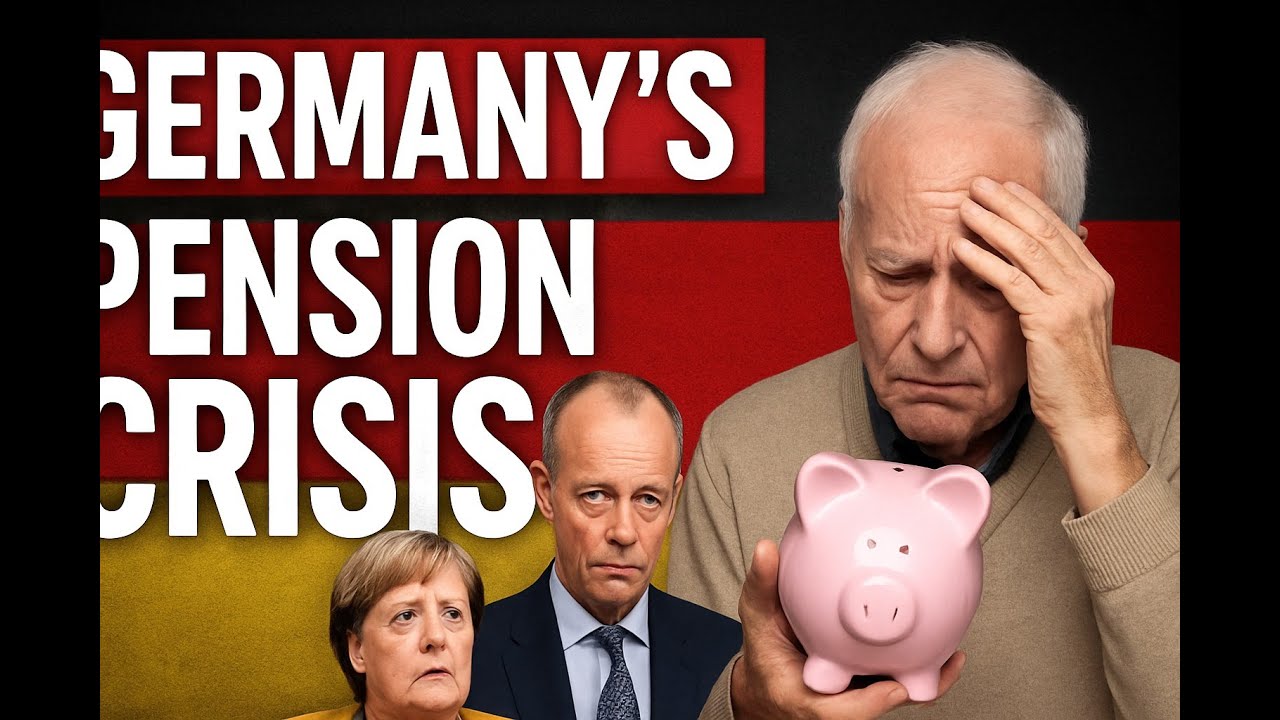
The myth of the safe, conservative German pension fund is dead. For decades, Germany’s Versorgungswerke—mandatory retirement schemes for doctors, lawyers, dentists, and architects—were viewed as bastions of impenetrable financial stability. They were the slow-and-steady titans of the German economy, managing over €300 billion with a reputation for caution that bordered on the ascetic. Today, that facade is crumbling. A series of disastrous forays into private markets has left these funds reeling from billions in losses, exposing a systemic governance crisis that has left the retirement security of over 1.4 million professionals in the crosshairs.
The scale of the wreckage is difficult to overstate. In Berlin alone, the pension fund for dentists, known as the VZB, recently initiated legal action following losses of roughly €1.1 billion—nearly half of its total assets. The portfolio, which should have been a model of boring, long-term security, featured high-risk bets ranging from US-based plastics recycling start-ups to a venture in commercial shrimp farming. When these speculative ventures collapsed, the fund’s valuation models, which kept these assets on the books at lofty, fictional prices, were stripped of their credibility. This was not a localized accident; it was the inevitable consequence of a system that abandoned its foundational mandate in search of yields that did not exist. Read more on a related topic: this related article.
The rot began during the decade of ultra-low interest rates. As bond yields evaporated, managers at these Versorgungswerke faced a terrifying prospect: they could no longer meet the long-term return targets promised to their members through traditional, safe investments. Rather than adjusting expectations or lobbying for structural reform, many turned to the opaque world of private markets. They chased venture capital, mezzanine debt, and complex real estate projects, often without the in-house expertise required to manage such volatile instruments.
Consider the hypothetical case of a pension board member who has spent thirty years perfecting their clinical skills but holds no formal training in derivative valuation or risk management. When faced with a glossy pitch from an investment bank promising double-digit returns through private equity, the pressure to sign off is immense. They were encouraged by a culture that prioritized yield above all else, often trusting external auditors and advisors who were perhaps too eager to provide the necessary justifications for these departures from sound investment strategy. By the time interest rates climbed, the leverage had become a noose. Properties lost value, start-ups burned through their capital, and the funds were left holding illiquid, devalued assets that they could not sell to cover their obligations. Further analysis by Business Insider delves into similar perspectives on the subject.
Governance failures permeate the entire structure. These funds are not monolithic; they are fragmented, with 91 professional schemes operating under varying degrees of local oversight. This fragmentation has created a culture of uneven accountability. Some funds have remained cautious, while others, blinded by the optimism of the past decade, dove headfirst into instruments they did not understand. The reliance on internal committees dominated by members of the profession—rather than seasoned financial professionals—created a breeding ground for conflicts of interest and groupthink. When the market turned, there was no independent check on the descent.
The fallout is now migrating from the boardrooms to the courts. The VZB lawsuit against its own advisers, auditors, and the Berlin state government marks a significant shift in tone. It is an acknowledgment that the "isolated case" defense, often used by umbrella organizations to minimize the damage, is no longer tenable. If auditors and advisers were providing "sham opinions" on assets, as the filing suggests, the responsibility extends far beyond the board members who signed the checks. It points toward a systemic failure of professional oversight and a profound collapse in the fiduciary duty owed to the contributors who had no say in how their retirement capital was deployed.
Critics of the current system point to the comparative performance of pension funds in countries like the Netherlands or Canada. These nations have managed to generate significantly higher returns over the last fifteen years by utilizing professional, centralized management structures that embrace transparency and risk discipline. In contrast, the German model has relied on archaic, bank-dependent structures that feel ill-equipped for the modern global financial landscape. When you look at the total losses across Hesse, Schleswig-Holstein, and North Rhine-Westphalia, the figure surpasses €2 billion, and even that may be a generous floor. Because many of these funds do not transparently disclose unrealized gains or losses, the true extent of the impairments remains obscured behind a wall of bureaucratic silence.
The argument that these losses are manageable within "diversified portfolios" is increasingly difficult to swallow for the rank-and-file physician or attorney. A professional who has dedicated their life to public service, contributing a mandatory percentage of their income into a fund they were told was unassailable, is now finding that their retirement security was effectively staked on a shrimp farm. That is not diversification. That is recklessness. The breach of trust here is fundamental. These funds were established on the premise that they would protect the elderly, yet they were operated as if they were venture capital funds.
What comes next is not just a quest for compensation but a brutal reassessment of the Versorgungswerke model itself. Demands for independent investigations are growing, and the legal battle in Berlin is merely the first salvo in what will likely be a multi-year effort to hold the architects of this mess accountable. The state governments, which have provided the regulatory frameworks for these funds, are now finding their own oversight capabilities under the microscope. If a government-mandated pension scheme can lose half its assets without a regulatory alarm bell ringing, then the entire structure is essentially broken.
The reliance on bank-based financing, once the bedrock of the German economy, is proving to be a millstone. The country’s urgent need for capital—to fund infrastructure, digitalization, and the climate transition—cannot be solved by continuing to dump pension money into failing, opaque private equity structures. There is a desperate need for a fundamental restructuring that prioritizes scalability and, above all, the rigorous oversight of those who manage the capital of the people.
The era of trusting in the institutional reputation of professional pension schemes is over. The reality is that the money was managed with insufficient expertise, inadequate oversight, and a complete disregard for the conservative principles that once defined the system. The damage done to the retirement prospects of thousands of German professionals is the price of that arrogance. Fixing this will require more than just lawsuits; it will require a complete overhaul of how Germany handles its institutional wealth, stripping away the layers of amateur management and replacing them with a system that actually understands the difference between an investment and a gamble. The time for blind trust has passed. The time for institutional reform has begun.