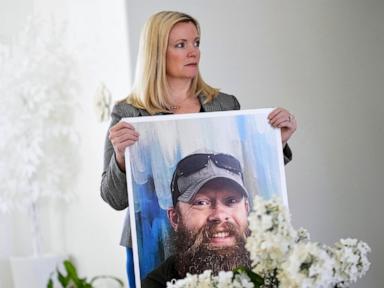
The courtroom smelled of floor wax and old paper. Dust motes drifted lazily in a shaft of pale afternoon light, illuminating the weary posture of jurors who had spent three weeks listening to testimony about a life extinguished in a matter of seconds. We like to think of a trial as a cathedral of absolute truth. We imagine gavels coming down with the heavy certainty of an ancient clock, separating the innocent from the guilty through pure, unadulterated reason.
Then the projector flickered. For a deeper dive into similar topics, we recommend: this related article.
On the screen, a dead man walked.
He turned his head. He blinked. He offered a slight, familiar smirk that his mother recognized instantly, a sharp ache catching in her throat before her mind could even process the trick. The pixels moved with an eerie, almost organic fluidity. It looked like him. It sounded like him. It possessed the phantom weight of a ghost summoned by electricity and code. To get more background on this issue, detailed coverage is available on USA Today.
Except he never made that movement.
That video was not captured by a security camera on the fatal night. It was synthesized. It was generated by an artificial intelligence model trained on old social media clips, stitched together pixel by pixel to depict an event that existed only in the architecture of an algorithm.
And that single, glowing fabrication just managed to tear a manslaughter conviction apart.
The Weight of Synthetic Shadows
To understand why an appellate court ultimately tossed the sentence, you have to look past the cold legalese of the ruling and stare directly into the psychological machinery of human memory.
We are fragile creatures when it comes to visual proof. For generations, our legal system operated on a shared unspoken contract: seeing is believing. A photograph was a frozen slice of reality. A video was a mirror held up to time. Even as grainy VHS tapes gave way to digital files, juries retained an instinctive, deep-seated reverence for moving images. When an eye sees a face, the brain fires off an ancient confirmation signal. There they are.
Artificial intelligence short-circuits that evolutionary safeguard.
Imagine sitting in that jury box. You are tired. Your back aches from the vinyl-backed chairs. The prosecutor has spent hours throwing ballistic reports and forensic timelines at you until your ears hum. Then, the defense or the prosecution introduces a moving portrait of the victim or a visual simulation of the final confrontation, rendered with hyper-realistic polish by software that costs nothing and requires no studio.
It feels real. Because it feels real, it anchors itself in your memory with the stubborn tenacity of an actual lived experience.
When courts allow synthetic media into the evidentiary record without rigorous, almost paranoid verification, they invite a digital Trojan horse into the sanctuary of justice. A pixelated ghost can testify without raising a hand to take an oath. It cannot be cross-examined about its biases, because it has no soul to interrogate—only weights, biases, and training data.
In the case that unraveled this conviction, the introduction of that AI-generated visual artifact crossed a sacred boundary. It blurred the line between what actually happened in the physical universe and what a machine calculated might have happened if the lighting and angles were slightly different. The appellate judges realized a terrifying truth: if a man's freedom can be swung by a synthetic phantom, the trial is no longer an inquiry into facts. It is an exercise in high-tech theater.
The Illusion of Mathematical Certainty
We tend to worship algorithms because they wear the clean, unblinking mask of math. We assume numbers do not lie. We assume that if a computer program processes a video, it is performing some form of objective alchemy.
Nothing could be further from the truth.
Consider how these models operate. They do not understand grief. They do not understand the jagged, unpredictable violence of a street corner altercation or the subtle micro-expressions of genuine fear versus manufactured posture. They predict the next most likely pixel based on statistical averages. They hallucinate details to fill in the blanks.
If you feed an AI enough fragments of a person, it will happily invent the rest. It will construct a synthetic smile to bridge a gap in the footage, or smooth out an awkward stumble into a fluid stride.
During the trial, this technology was treated casually, almost as an illustrative aid. But human brains do not compartmentalize "illustrative aids" from "hard evidence" very well. Once an image is burned onto the retina, it takes root. The jury remembers the video, not the cautious legal disclaimer muttered by the attorney beforehand.
This is where the intersection of law and technology enters a dark, uncharted wilderness. We are handing scalpels to people who treat them like butter knives. Prosecutors and defense teams alike are discovering that they can manufacture compelling visual narratives on a laptop in their hotel room the night before closing arguments.
The defense attorney who successfully overturned this manslaughter sentence understood the existential threat. This wasn't merely about a technical violation of evidentiary rules or a mishandled exhibit. It was about the integrity of the record itself. If we allow fabricated simulations to stand in for reality, we are no longer judging defendants based on what they did in the physical world. We are judging them against cinematic illusions crafted by software engineers half a country away.
The Fragile Boundary of Truth
Stand on any modern city street and watch the lenses. Security domes spin silently on brick facades. Dashcams record every swerve. Pocket computers capture every argument in crisp high-definition. We are drowning in data, yet we are starving for truth.
The easier it is to generate convincing reality, the harder it becomes to prove what actually occurred.
When the appellate court tossed that sentence, it did more than correct a procedural error. It threw up a desperate barricade against the oncoming tide of synthetic fiction. It sent a cold, sobering reminder to every courtroom in the country: the law cannot survive the death of objective reality.
If a video can be conjured from thin air to sway a jury's conscience, then justice ceases to be a scale measuring evidence. It becomes a megaphone for whoever has the best rendering engine.
The courtroom door closed quietly behind the lawyers as they packed their briefcases and stepped out into the evening air. The city hummed around them, indifferent and bright with neon. Somewhere in a server farm miles away, a processor hummed softly, turning billions of parameters into another perfect, impossible face.
The ghost has already learned how to speak. The question now is whether we will remember how to listen to the silence of the truth instead.


