The air inside the cabin smelled of cold coffee and old wool.
At thirty-thousand feet, the world below is reduced to a blue-gray blur of indifference. Rivers look like spilled ink. Cities look like circuits on a discarded motherboard. Up here, politics, elections, and the heavy machinery of statecraft usually feel distant, insulated by double-paned glass and the steady, low-frequency hum of jet turbines.
Then came the shift.
It was not a loud alarm. It was a murmur that traveled down the secure comms line, a quiet directive whispered through encrypted channels that changed the geometry of a journey already in motion. Somewhere over the vast, indifferent expanse of the American continent, a shadow split away from the main body.
A decoy.
To understand why a former president of the United States had to be shadowed by a duplicate aircraft, you have to abandon the sterile vocabulary of threat assessments and look at the raw, jagged edges of modern risk.
Think about the weapon that triggered the maneuver. Picture a tube, roughly the size of a heavy-duty bazooka, resting on the shoulder of a man standing in a dry, sun-baked ravine thousands of miles away. It is a Man-Portable Air-Defense System, universally known as a MANPADS. It costs a fraction of the vehicle it is designed to destroy. It requires no runway, no radar installation, no complex logistics network. It demands only two things: patience, and a clear line of sight to a rising or descending target.
When intelligence agencies intercepted the chatter—chatter specifically pointing to Iranian threats involving shoulder-fired missiles—the risk calculus shifted instantly. Commercial and private aviation operate on predictable rhythms. Flight paths are filed. Schedules are tracked. A target on final approach or initial climb is a slow, heavy-bellied bird, vulnerable to a projectile moving at supersonic speeds.
So, the planners did what security architects have done since the days of Roman legions. They created a double.
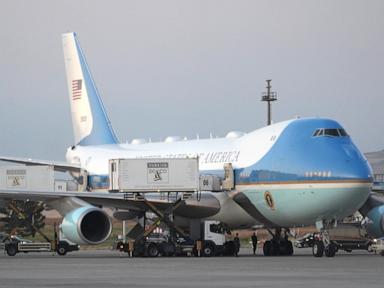
Imagine watching two identical white bodies carve identical arcs through the stratosphere. From the ground, through a long lens or a thermal scope, they are indistinguishable. Which one holds the target? Which one carries the man whose face divides a global superpower down the middle?
Uncertainty is the ultimate defensive shield.
Intelligence work is rarely about Hollywood heroics. More often, it is a tedious, exhausting exercise in paranoia. Analysts sit in windowless rooms under humming fluorescent lights, drinking bitter tea at three in the morning, staring at intercepted text strings and fragmented audio files. They weigh the credible against the absurd. They separate the empty bravado of regional proxies from the specific, operational intent of a determined adversary.
When that threat stream landed on the desks of the security detail, the decision was not made in a panic. It was calculated with the cold, methodical precision of an actuary.
Risk equals probability multiplied by consequence.
The probability of a shoulder-fired missile attack on a domestic political transit flight might be statistically low. But the consequence? Total catastrophe. In the calculus of state protection, when consequence tends toward infinity, even a low probability demands a radical intervention.
Enter the decoy.
A hypothetical scenario unfolds on the tarmac before dawn. Two planes, identical in every exterior detail, sit fifty yards apart. Engines whine to life, coughing white exhaust into the damp morning air. One aircraft will carry the principal, boarding via a hurried, low-profile transfer under the wing of armored SUVs. The other will board an empty cabin, its seats occupied only by flight bags and ballast, its transponder humming the same electronic signature.
They taxi together. They take off minutes apart, or perhaps fly overlapping vectors until the digital noise of the airspace swallows them both.
For the pilot in the decoy cockpit, the psychological weight is unique. You are flying a billboard. You are presenting a glittering, high-value profile to the sky, knowing full well that if an adversary has locked onto the frequency of your mission, you are the designated sponge. You are there to absorb the blow so that the real entity can slip through the back door of the atmosphere unmolested.
That is the hidden cost of modern public life. Every movement is a chess match played across a three-dimensional board where the pieces are human lives and the rules are written in blood and intelligence reports.
The threat from Iran did not materialize out of thin air. It grew out of a long, poisoned lineage of escalations, targeted strikes, proxy wars, and broken treaties. When a government or its allied militias swear retaliation, security apparatuses cannot afford the luxury of skepticism. They must treat every threat as if it is already in flight.
Consider what happens when the illusion succeeds. The planes land at their respective destinations. The decoy touches down at a secondary ramp, engines winding down to a quiet whistle, doors opening to reveal empty rows. The real flight touches down elsewhere, or later, its passengers stepping out into the sunlight unaware of how close the margins actually were.
The public rarely sees these gears turning. We read the headlines days later—dry, bureaucratic sentences buried in the middle of news feeds, noting that a decoy flight was utilized due to specific security concerns. The words slide off our minds like rain on a windshield. We consume them between sips of morning coffee and scroll down to the next distraction.
We forget that behind every flat, bureaucratic news brief lies a world of intense human anxiety. We forget the split-second decisions made by men and women whose entire job is to imagine the worst possible outcome so that no one else has to live through it.
The sky remains vast. The horizon remains indifferent.
Somewhere up there, a jet engine cuts through the thin, freezing air, leaving a white scar across the blue that slowly dissolves into nothing at all.