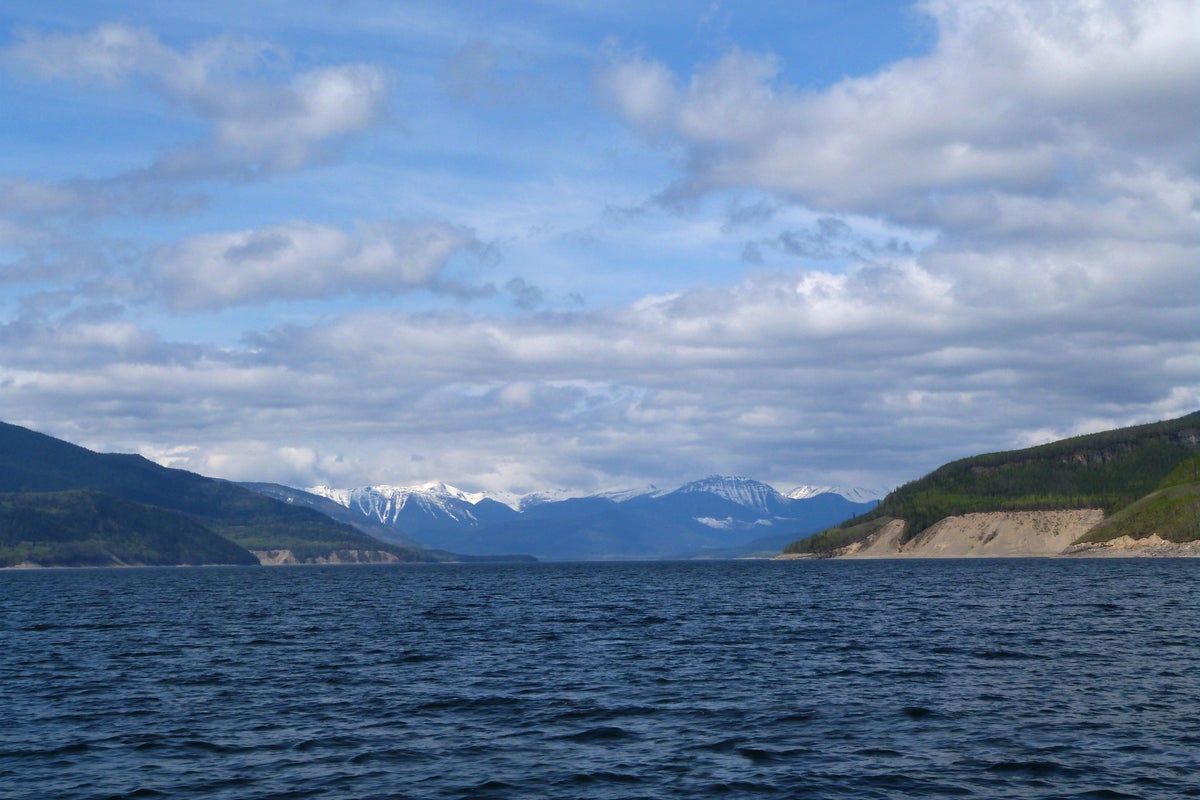
A massive, tree-covered landmass materialized out of nowhere in British Columbia's Williston Reservoir, measuring roughly the size of a Canadian football field. Then, it vanished. Weeks later, it drifted back into view, baffling local boaters, government agencies, and satellite watchers. This phantom island is not a glitch in Google Earth or an elaborate hoax generated by synthetic media. It is a physical manifestation of environmental shifts colliding with industrial hydrology, providing a masterclass in how little control we actually maintain over heavily modified ecosystems.
When the reports first crossed the desk of officials at BC Hydro, skepticism was the default operational stance. Bob Gammer, a spokesperson for the provincial power utility, admitted that initial photos were treated with high caution due to the sheer volume of manipulated digital imagery saturating the internet. A floating forest spanning nearly ten thousand square meters does not typically detach from a shoreline and go on a voyage without raising immediate alarms. Yet, satellite data corroborated what local fishermen and residents like Rocky Avery were seeing with their own eyes. The island was real, it was mobile, and it was entirely unmoored.
Understanding how this occurs requires looking past the momentary shock value and examining the mechanics of large-scale reservoirs. Williston Lake is a sprawling artificial body of water created by the construction of the W.A.C. Bennett Dam in the late 1960s. Over decades of operation, the fluctuating waterline creates an aggressive cycle of erosion along the perimeter. Trees, root systems, and organic debris accumulate in shallow bays, slowly binding together with sediment and decomposed mulch into thick, buoyant mats.
Under normal operating conditions, these terrestrial tangles remain tethered to the banks. However, a combination of heavy winter mountain snowpacks and steady summer rains pushed Williston Reservoir to near-full capacity for the first time in over a decade. That dramatic surge in water volume acted like a crowbar, prying the densely rooted vegetation away from the shore. Once buoyant and free, the mass caught the prevailing winds and surface currents, turning a patch of northern forest into an accidental vessel.
The subsequent vanishing act is where the physics get interesting. Panic-driven theories suggested the structure had broken apart and plunged to the bottom, turning into a submerged navigation hazard. Operations teams quickly clarified that the island likely did not sink at all. Instead, shifting wind patterns and current eddies pushed the mass back into sheltered coves or fragmented it into smaller, less noticeable debris fields scattered across the 1,761-square-kilometre reservoir. Subsequent sightings confirmed its erratic journey, popping up near different reaches of the lake as meteorological forces dictated.
This phenomenon exposes a blind spot in how we monitor inland infrastructure. While public utilities spend millions tracking water levels, dam integrity, and seismic stability, dynamic ecological displacement rarely features on the daily risk matrix. Reservoirs are treated as static plumbing systems when, in reality, they are chaotic, evolving environments. When water levels swing dramatically due to shifting climate patterns, these engineered basins push back in unexpected ways.
For commercial operators and recreational boaters navigating these northern waters, the floating island is an acute reminder of underlying danger. A hidden mass of timber and earth weighing thousands of tons poses a severe threat to watercraft, capable of masking shallow hazards or acting as a moving battering ram against infrastructure. BC Hydro routinely deploys debris catchers and gravel barriers to manage standard floating lumber, but a fully grown forest detaching and sailing across open water forces a recalibration of safety protocols.
Nature continues to find architectural loopholes in human designs, turning industrial water storage into a theater for geological anomalies. The wandering island of Williston Lake will eventually break down, its component trees waterlogged and sinking into the abyss piece by piece, but the conditions that spawned it are here to stay.