We live our lives under the quiet assumption that writing things down correctly still matters. We trust the punctuation marks we scatter across digital screens. A comma here, a period there, an extra line tucked quietly beneath a word. They feel weightless. Trivial.
Consider what happens next when they are not.
In a world run by databases and glowing terminals, a single keystroke can act as an invisible executioner. It does not swing a blade. It does not bang a gavel with theatrical fury. It simply sits there in the syntax, waiting to misdirect the entire apparatus of the state.
Brandon Klayme knows this better than anyone. For eighteen months, he inhabited a nightmare born entirely from a piece of digital punctuation. Not a missing sentence. Not a forged confession or a bloody fingerprint. Just one missing underscore.
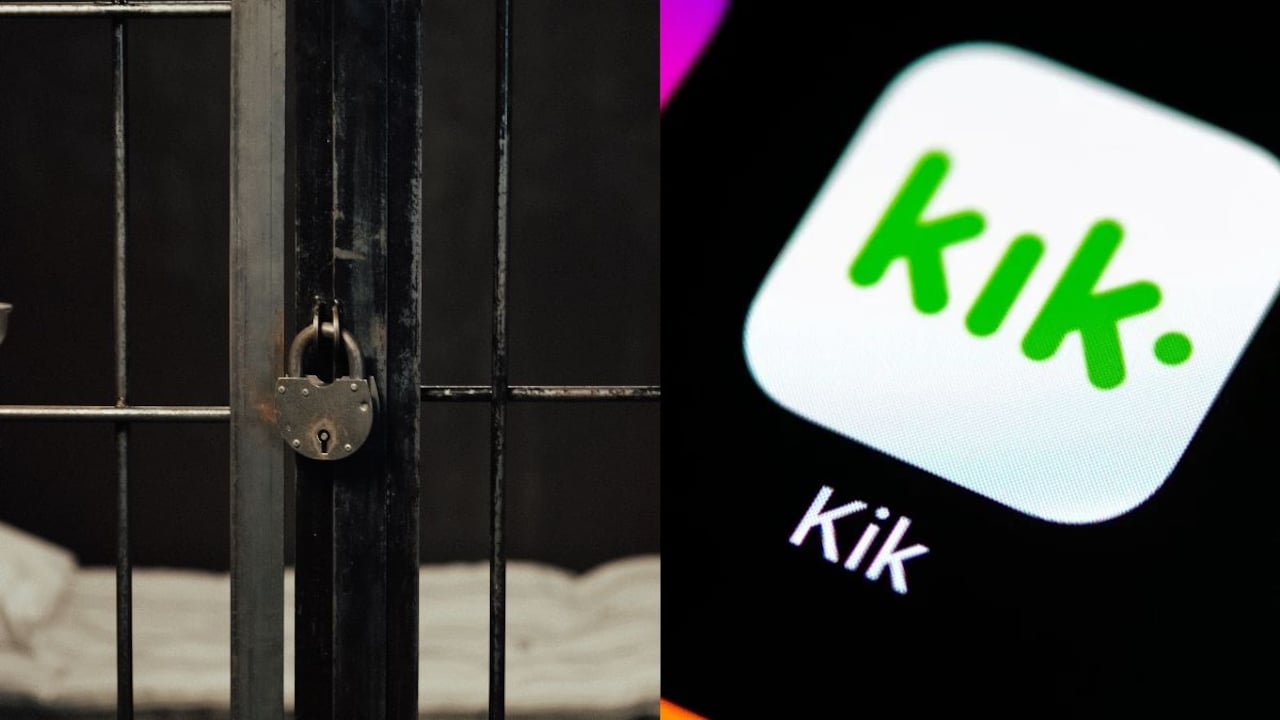
The story began far from the coastal quiet of Nova Scotia. It started in 2018 in Madison, Wisconsin, where investigators were hunting a shadow across the messaging application Kik. They were tracking an account tied to a video game reference, a nod to the dragon shouts of Skyrim. The handle they sought was written with mathematical precision: two underscores bridging the gap between syllables. Two lines instead of one.
When American authorities drafted digital subpoenas and cross-border data requests to hunt down the user, a human hand slipped. Or a parsing script choked. Somewhere in the translation between federal agencies and tech logs, one of those underscores vanished into the ether.
The handle transformed. And with it, a target was painted on the back of an entirely different human being over a thousand miles away.
Brandon Klayme had a username that was nearly identical. Nearly. His digital identity bore a single underscore where the suspect's bore two. In the sweeping, impersonal machinery of modern cross-border policing, that microscopic divergence was smoothed over. The system found what it was told to look for. It pointed an unblinking finger at Klayme.
Imagine waking up to find that the universe has quietly replaced your life with a tragic script.
In February 2020, the Halifax Regional Police moved in. They raided Klayme's digital life, searching for the debris of unspeakable crimes. They found nothing. His hard drives yielded no evidence, no illicit conversations, no hidden files linking him to the Wisconsin investigation. By all rights of physical reality, the trail should have gone cold. The mistake should have been caught in the harsh light of basic discovery.
It wasn't.
Instead, the inertia of the justice system took over. Once a machine sets its gears turning, it possesses a terrifying momentum. It prefers to grind forward rather than admit it grabbed the wrong gear. Klayme stood trial in April 2023. He maintained his innocence against accusations of child luring and exploitation, a man yelling into a hurricane of algorithmic certainty.
The court convicted him.
In 2024, a judge handed down an eighteen-month prison sentence. Think about those numbers. Eighteen months of concrete walls, steel doors, and the slow, suffocating erosion of dignity. Klayme did not merely face a trial; he served the full term. He walked inside an innocent man and spent more than five hundred days paying for a typo he never typed.
Even after his release, the fight did not end. It consumed him, driving him and his defense team back into the cold paperwork of the original case file. They hunted for the ghost in the code. This spring, while tearing apart the transcripts and digital warrants for an appeal, his lawyer noticed it. The missing line. The structural ghost that had redirected a federal investigation across international borders into the wrong living room.
When the Nova Scotia Court of Appeal finally reviewed the blunder, their words carried the weight of a profound institutional indictment. They did not just overturn a verdict on a technicality. They declared a truth that should haunt every digital investigator on the planet: Brandon Klayme was factually innocent. He should never have been charged, let alone imprisoned.
The judges noted that the username data had technically been sitting in the files all along, a silent witness ignored by overworked prosecutors and blind algorithms. Nobody looked closely enough. Everyone trusted the system.
We pin our lives to strings of text. We assume that computers do not hallucinate identity, that strings of characters are infallible walls separating the guilty from the blameless. Yet Klayme's ordeal reveals how fragile those boundaries truly are. A single keystroke separated a free life from a prison cell.
The real terror is not that machines make mistakes. It is how quietly they convince us those mistakes are absolute truth.


