There are sounds that age like wine, and then there are sounds that defy time altogether.
Picture the crisp, electric hum of an Arthur Ashe Stadium night session. The kind of evening where the late-summer humidity in Queens still clings to your skin, but a sudden breeze hints at the autumn ghosts about to haunt the grounds. The air smells of honeyed churros, spent tennis balls, and thirty thousand people holding their collective breath.
Then, it happens. A single, familiar sound cuts through the roar of the crowd.
It is the clean, effortless, liquid crispness of a Roger Federer one-handed backhand.
Time stops. For a brief, intoxicating moment, the modern era of tennis—with its bludgeoning power and heavy-spin baseliners—dissolves into mist. We are back in the cathedral of sweat and silence. We are watching the man who made violence look like a ballet.
When Roger Federer stepped back onto the grounds of the US Open for a special exhibition alongside his old rival and sparring partner Andy Roddick, the tennis world did not merely remember an athlete. It remembered an era of grace we thought we had safely archived.
The Anatomy of an Absence
It has been a few years since Federer officially walked away from the tour, his body finally whispering enough is enough after twenty-four surgeries and a knee that could no longer negotiate with gravity. Fans wept in London at the Laver Cup. They watched him sit beside Rafael Nadal, both men holding hands like aging poets mourning a lost youth.
Yet, sports does not know how to let go of its gods.
We try. We crown new champions. We obsess over Carlos Alcaraz's jaw-dropping drop shots and Jannik Sinner's metronomic baseline coldness. We write breathless articles about the changing of the guard. But human beings are creatures of nostalgia, wired to yearn for the exact shade of light we saw during our happiest hours.
Federer's return to the US Open wasn't just a nostalgic curtain call. It was a cultural thermometer. It proved that some athletes transcend their scorelines. They become architecture. When you look at the Arthur Ashe Stadium, you don't just see concrete and steel; you see the invisible lines of Federer's footwork, ghost-stepping across the blue acrylic where he won five consecutive titles between 2004 and 2008.
The Foil and the Friend
To understand the weight of that night in New York, you have to remember the dance partner. Andy Roddick.
Ah, Roddick. The perpetual underdog of the golden era, armed with a serve that could punch through a brick wall and a self-deprecating wit that made him America's sarcastic older brother. For years, Roddick was the tragic figure of men's tennis—a phenomenal champion born into the wrong decade, forced to run his heart out against a Swiss maestro who always seemed to have an extra gear, an extra angle, an extra breath.
Their rivalry was never bitter; it was a masterclass in contrasting philosophies. Roddick was pure American grit, sweat-soaked caps, and thunderous serves. Federer was mountain air, tailored blazers, and effortless geometry.
When they stood across the net from each other once more, the competitive fire flickered, transformed into something warmer. They laughed. They bantered. They traded friendly barbs about old matches and missed volleys.
Imagine standing on that court, surrounded by twenty-three thousand screaming fans, realizing that the bitter battles of your twenties have melted into a profound, shared brotherhood. That is the true magic of sports longevity. The rivalry breaks your heart when you are twenty-five; it saves your soul when you are forty-something.
Why We Still Need the Maestro
We live in an age of hyper-optimization. Every athlete today is measured by launch angles, biometric recovery scores, and nutritional split-seconds. The machine has entered the arena.
Federer belonged to a different lineage. He played like he was inventing the sport on the fly, sketching strokes on an invisible canvas. Watching him hit tennis balls during that exhibition—even at a slowed-down, exhibition pace—reminded us why we fell in love with sports in the first place. It wasn't for the math. It was for the poetry.
When a player like Federer returns, it acts as a mirror for the spectator. We look at him and calculate our own lost years. We remember where we were in 2004 when he first hoisted the silver trophy in New York. We remember the living room couches, the late nights, the shouts of disbelief at television screens.
He didn't just win matches; he punctuated our lives.
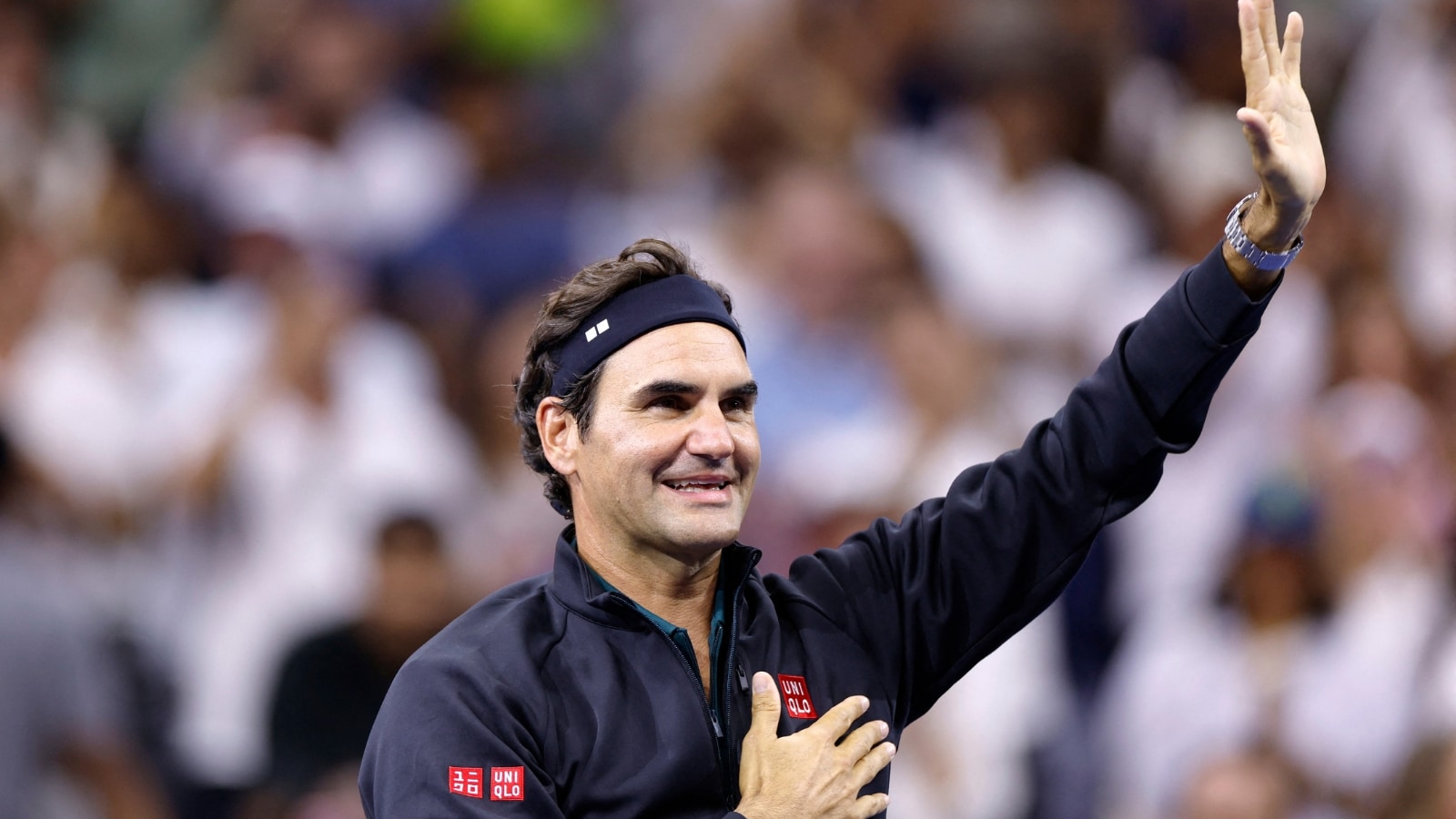
The exhibition ended, as all exhibitions must. The handshakes were warm. The microphones picked up the faint echoes of laughter. Federer walked off the court for perhaps the final time under the New York lights, waving to the corners of the stadium that stretched up into the autumn sky.
The lights in Arthur Ashe Stadium dimmed. The crowd slowly filed out into the Queens night, buzzing with the rare electricity of a ghost made flesh. The modern game will march on, fast and furious and relentless. But for one night, the past reached out across the net, touched us on the shoulder, and whispered that we were young once.