Salt crusts on glass. Down in the heavy, sunless quiet fifty feet beneath the surface of the Persian Gulf, a five-meter cylinder drifts on electric whispers. It has no crew. It feels no heat. It does not blink. Inside its titanium belly, banks of lithium batteries hum with cold efficiency while sensors drink in the acoustic signatures of passing oil tankers, naval destroyers, and the shifting sand dunes of the ocean floor.
It is an underwater glider, a silent scout manufactured by Boeing subsidiary Respironics and operated by the United States Navy Fifth Fleet. For months, it has mapped thermal layers and salinity gradients in one of the most volatile bottlenecks on Earth.
Then, a shadow falls over it.
Above, the surface waters churn. Steel hulls cut through the chop. Iranian naval forces, operating in the narrow, pressurized corridor of the Strait of Hormuz, spot the strange, uncrewed visitor drifting through disputed maritime lanes. To a coastal nation weary of foreign shadows cast along its maritime doorstep, the drone is not a marine research tool. It is an unblinking eye. An intruder. A mechanical spy drifting through the throat of the global economy.
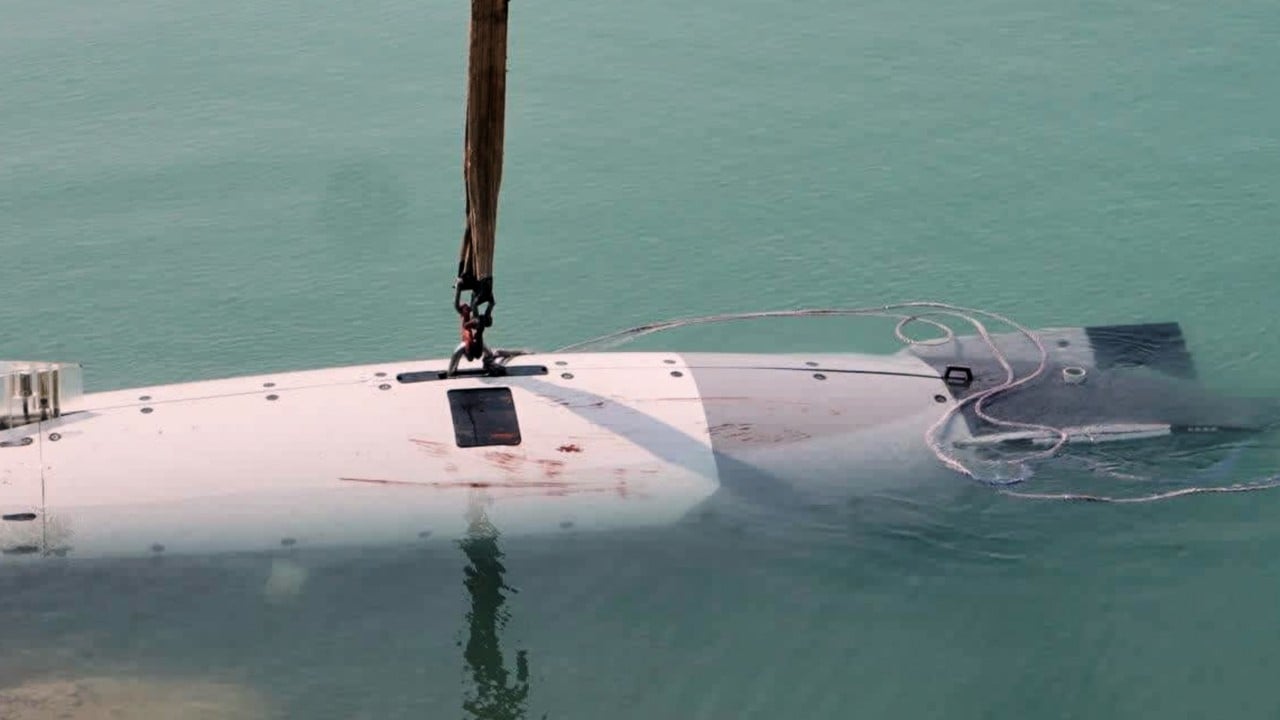
They do not hesitate. A ship approaches. Crane cables drop. The metal ghost is hauled out of its domain, wrenched from the green-blue dimness into the blinding desert glare of an Iranian deck.
Silence.
For a few hours, Washington does not know. The telemetry simply flatlines. A coordinate on a tactical map in Bahrain turns gray. In the high-stakes theater of modern geopolitics, a missing sensor package is rarely just a lost piece of hardware. It is a dropped gauntlet. It is a provocation written in binary code.
When the incident finally breaks into the headlines, the standard news feeds vomit dry syntax. Officials issue statements. Captured. Strait of Hormuz. International waters. Maritime safety. The words are sterile. They smell of conference rooms, cold coffee, and press briefings designed to soothe anxious stock markets rather than explain the raw, trembling reality of modern friction.
We read these words and nod. We file the event away under distant conflicts. But we miss the poetry of the danger. We miss the invisible architecture of a world that runs on things we cannot see.
To understand why a five-meter aluminum tube can cause admirals in two hemispheres to lean forward over their consoles, you have to look down. Not just at the map, but at the water.
Imagine standing on the bridge of a supertanker threading the needle of the Strait of Hormuz. Every single day, roughly a fifth of the world's petroleum consumption squeezes through this twenty-mile-wide maritime bottleneck. If you spill a cup of coffee on the deck, it is visible. If a geopolitical crisis erupts here, the price of gasoline spikes in Ohio before the sun sets.
Beneath this floating highway lies a second, invisible highway. It is mapped not by buoys, but by data. Navies fight for dominance here not just with aircraft carriers and missile batteries, but with information. Sound travels differently in warm, hyper-saline water than it does in the open ocean. Currents bend sonar beams. Thermoclines hide submarines like shadows behind curtains.
This is where the underwater drone lives. It is a cartographer of the unseen. By constantly measuring temperature, current velocity, and acoustic anomalies, it provides the Navy with a tactical advantage. It tells them who is listening, who is hiding, and how the water itself is moving.
When Iran intercepted that drone, they were not just seizing a piece of American property. They were blinding a scout. They were pushing back against an empire that maps every inch of the global commons from the sky and the sea.
Consider the human element wrapped inside this high-tech confrontation.
Picture a young enlisted intelligence specialist sitting in a darkened command center in Bahrain, staring at a wall of monitors. His uniform is crisp, but his eyes are bloodshot. He has been on watch for fourteen hours. He watches the telemetry feed of the glider. He sees the battery percentage. He sees the GPS coordinates. Then, without warning, the signal changes. The drift vector alters unnaturally. The machine is moving too fast for a current. It is being lifted.
He holds his breath. He knows what this means.
Across the water, on the deck of an Iranian patrol vessel, a sailor in salt-stained fatigues grips a guide rope. The wind is hot, smelling of diesel and dust. The crane groans. As the heavy cylinder breaks the surface, water streams from its fiberglass wings. It looks less like a weapon of war and more like a strange, mechanical marine mammal caught in a fisherman's net. The sailors look at it with a mixture of suspicion and curiosity. To them, this machine represents an ongoing intrusion, a constant reminder of foreign navies patrolling waters they consider their own backyard.
Two men, thousands of miles apart in culture and ideology, are connected by a piece of aluminum code. One worries about a tactical blind spot. The other worries about territorial sovereignty. Both are reacting to an automated sentinel that cares about neither.
The modern world is built on fragile, invisible scaffolding. We tend to think of geopolitics in terms of grand spectacles—speeches at the United Nations, massive amphibious landings, roaring fighter jets streaking across a bruised sky.
The reality is much quieter.
It happens in the dark. It happens through autonomous gliders drifting at half a knot, gathering terabytes of oceanographic data. It happens through fiber-optic cables resting on the abyssal plains of the ocean. It happens when a machine designed to measure salinity inadvertently crosses an imaginary line in the water and triggers a diplomatic standoff.
When the news cycle reported that the drone was eventually returned, the relief was palpable. Statements were issued, diplomatic channels hummed, and the tension receded back beneath the surface, waiting for the next spark. The public moved on to the next crisis, the next tweet, the next breaking update.
Yet the fundamental reality remains unchanged. We have mechanized the oceans. We have populated the deep blue with silent, unthinking guardians that watch our coasts, map our shipping lanes, and report back to masters who are never more than a heartbeat away from conflict.
The next time you fill your car at the pump, or check the global shipping prices of goods manufactured half a world away, remember the Strait of Hormuz. Remember the narrow strip of water where oil meets tension. And remember the silent ghost drifting through the salt, waiting for the shadow above to shift again.