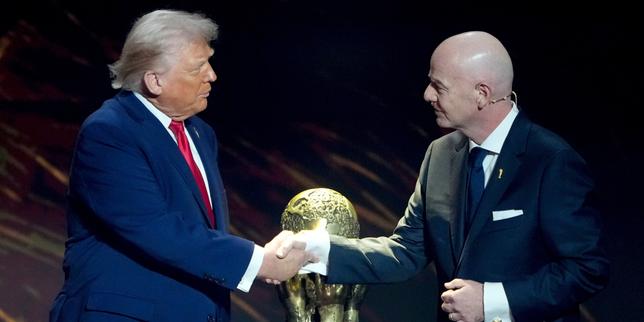
When Gianni Infantino stood on stage at Washington’s Kennedy Center and handed Donald Trump the inaugural FIFA Peace Prize, he clearly thought he was pulling off a masterstroke of sports diplomacy. Instead, he ignited a slow-burning civil war inside soccer's governing body that is threatening to overshadow the 2026 World Cup.
The decision didn't go through the usual committee channels. It didn't involve a vote by the FIFA Council. Infantino picked the winner from a shortlist of exactly one person, handing the award over during the glitzy Final Draw ceremony in Washington, DC. For a sports organization desperate to move past its history of backroom corruption, the optics couldn't be worse. FIFA wanted a global celebration. Instead, it got a massive internal revolt.
The Shortlist of One That Divided the World Cup
The "FIFA Peace Prize – Football Unites the World" was supposed to be an annual tradition recognizing extraordinary actions for global unity. FIFA even claimed the award represents the voice of five billion soccer fans. The problem is that nobody asked those fans—or the people running the sport.
Soccer federations across Europe were blindsided. Behind closed doors, European football officials are furious about how Infantino uses the organization to court personal political favor. This isn't the first time his close ties to the US President caused friction. Months before the ceremony, Infantino actually showed up late to a crucial FIFA Congress meeting because he was busy accompanying Trump on a tour of the Middle East. UEFA delegates were so disgusted by the delay that they staged a walkout.
By the time the award ceremony took place in December 2025, the frustration had boiled over into open resentment. Critics see the award as a transactional move designed to smooth over the massive logistical and political headaches of staging an expanded 48-team tournament across North America.
Real Geopolitics Blasts Through the PR Bubble
If the goal of the prize was to show soccer as an instrument of global harmony, the timing proved disastrously ironic. FIFA officially cited Trump’s "unwavering commitment to advancing peace" and his role in Middle Eastern ceasefires as the justification for the trophy. But geopolitical reality moves a lot faster than FIFA’s marketing department.
Fast forward to June 2026. As the tournament finally kicks off, the recipient of the peace prize is actively threatening massive military strikes against Iran on social media, aiming to seize market control of foreign oil fields. The contrast is jarring. You have a soccer organization preaching global friendship while its star award-winner threatens to escalate an international conflict on the very night of the opening games.
This creates an absolute nightmare for teams, players, and local organizing committees. Soccer has always tried to maintain a myth of political neutrality. Infantino’s peace prize completely shattered that illusion, dragging the organization directly into the crosshairs of global conflict.
The Cost of Backroom Governance
The real damage here isn't just bad press. It is the systemic breakdown of how FIFA is supposed to govern itself. When Infantino won his first election campaign back in 2016, he promised transparency, better governance, and an end to the era of the all-powerful, unaccountable president.
The creation and distribution of this prize shows how far the organization has drifted back into old habits. By bypassing the FIFA Council entirely, Infantino signaled that major institutional decisions can still be decided by one man in a room. For member associations trying to sell the sport to skeptical corporate sponsors and fans, this unilateral decision-making feels like a massive step backward.
It also leaves FIFA looking exceptionally weak. In the buildup to the tournament, Infantino routinely tried to frame himself as a global statesman. But when faced with the hard realities of US immigration policies, security demands, and political pressure, FIFA has been forced to repeatedly back down and admit it is just a sports organization with zero real leverage. Turning around and handing a vanity award to the host nation's leader looks less like diplomacy and more like submission.
How Soccer Federations Can Push Back
The anger inside the sport isn't going away, and federations have more leverage than they think. If member associations want to prevent the sport from being used as a personal political tool, they need to take concrete administrative steps immediately.
First, the FIFA Council needs to introduce strict oversight rules regarding the creation and funding of any official awards or prizes. No single executive should have the authority to create an official trophy, write the criteria, and select the recipient without a majority vote from the council.
Second, national federations must demand a formal review of the executive branch's schedule and alignment during major tournament cycles. When the president of a global sporting body misses administrative meetings to attend political tours, it compromises the operational efficiency of the entire sport. Federations should use their voting blocks to hold leadership accountable to the official calendar.
The 2026 tournament will eventually crown a world champion on the pitch, but the institutional fallout from the Kennedy Center stage will linger long after the final whistle. If soccer wants to protect its global appeal, it needs to stop trying to play world politics and start fixing its own house.