The velvet ropes at the Washington Hilton have a specific smell. It is a heady, cloying mixture of expensive cologne, floor wax, and the metallic tang of high-stakes anxiety. For years, this particular basement ballroom has hosted the White House Correspondents’ Dinner—an event affectionately and derisively known as the "Nerd Prom." It is a night where the people who write the news and the people who make the news pretend, for a few hours of rubbery chicken and lukewarm wine, that they are all on the same team.
Then came the Great Disruption.
For four years, the seat at the center of the head table sat empty. It wasn't just a vacant chair; it was a silent, looming statement. Donald Trump didn't just skip the dinner during his first term; he treated it like a toxic spill. He spent those Saturday nights in rallies in Pennsylvania or Michigan, surrounded by thousands of cheering supporters, pointing his finger at the "fake news" while the reporters back in D.C. adjusted their black ties and tried to find the humor in being labeled the enemy of the people.
But the air in Washington has shifted. The silence is over.
The Seat at the Head Table
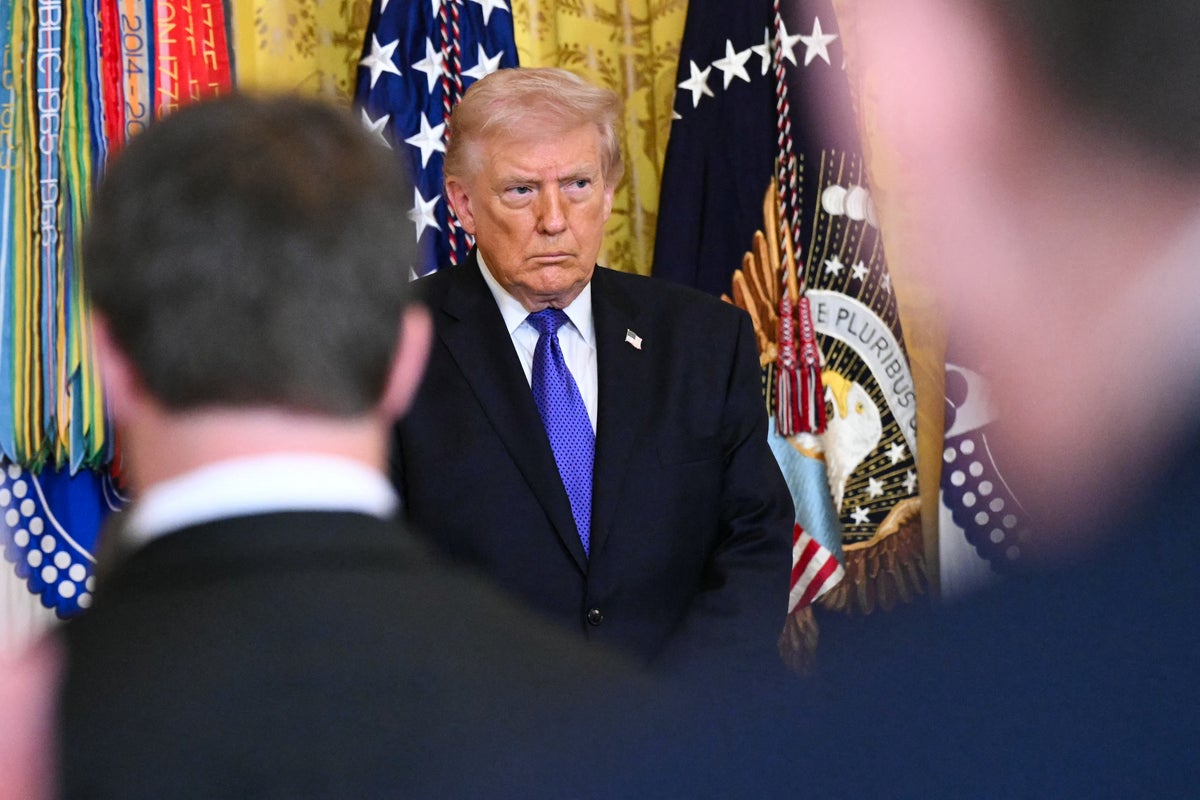
The announcement hit the press corps like a lightning strike in a library. Trump isn't just coming back; he’s arriving with the posture of a victor returning to a city he feels he has finally tamed. He isn't walking into that room to play nice or to participate in the self-deprecating tradition of presidential roasts. He is walking in because, in his own words, the "reporters finally recognize the GOAT."
Greatest of All Time.
It is a title usually reserved for athletes like Jordan or Brady, men whose dominance is quantified in rings and trophies. In the political theater of 2026, Trump has appropriated the acronym to define a different kind of victory: survival. To his inner circle, the fact that he is back in the White House and back at the podium of a dinner he once spurned is the ultimate "I told you so."
Imagine a cub reporter, twenty-four years old, clutching a digital recorder and a glass of sparkling water. Let’s call her Sarah. Sarah grew up in a world where the relationship between the press and the presidency was a series of skirmishes. She has never seen a president actually stand in that room. For her, this isn't just a black-tie assignment; it’s a brush with a whirlwind. She represents the new guard—reporters who have only known the era of the "alternative fact" and the "enemy of the people" rhetoric. For Sarah, the stakes aren't about whether the jokes are funny. The stakes are about whether the institution of the free press can survive a bear hug from the man who tried to break it.
The Anatomy of a Power Move
Why now? Why go to a dinner hosted by the very people you’ve spent a decade disparaging?
The answer lies in the mechanics of prestige. Power is most potent when it is recognized by those who hate it most. By attending, Trump isn't offering an olive branch; he’s performing a conquest. There is a psychological weight to being the center of attention in a room full of critics. It is the lion walking into a den of exhausted hunters and demanding they serve him dinner.
The "GOAT" claim is the hook. It’s the bait that ensures every cable news crawler and every social media feed is dominated by his presence before he even steps out of the motorcade. He knows the media cannot help itself. The "Nerd Prom" is a symbiotic ecosystem. The reporters need the access; the President needs the platform. Even when the relationship is broken, the magnetism remains.
Consider the optics. The room will be packed. The cameras will be positioned at every angle to catch a smirk, a frown, or a glass-clink. In previous years, the absence of the President felt like a void that the comedians struggled to fill. Without the target in the room, the arrows felt like they were being fired into the dark. Now, the target is back, and he’s claiming he owns the archery range.
The Invisible Stakes
Behind the glittering chandeliers and the tuxedoed elites, there is a profound sense of vertigo. This isn't just a dinner. It is a litmus test for the American psyche.
For the journalists in the room, the dilemma is paralyzing. If they laugh at his jokes, are they complicit? If they sit in stony silence, are they proving his point that they are "unfair" and "humorless"? It is a trap draped in silk. The "GOAT" narrative forces a confrontation with the reality of his influence. He has moved beyond being a politician; he has become a permanent atmospheric condition of American life.
There is a metaphor often used in high-altitude climbing called "the death zone." It’s the point where there isn't enough oxygen to sustain human life for long. You can visit, but you can’t stay. For a long time, the relationship between the presidency and the press has been in the death zone. Thin air. Gasps for truth. Frantic efforts to find a baseline of shared reality.
This dinner is an attempt to see if everyone can breathe again, or if they’ve simply gotten used to the suffocation.
The Echo in the Room
The traditional format of the night involves a professional comedian who is tasked with "roasting" the President. In the past, this was a moment of catharsis. It was the one night a year where the most powerful person on earth had to sit still and listen to someone tell them they were an idiot.
But how do you roast a man who has already claimed the title of Greatest of All Time? How do you mock someone who views your mockery as a badge of honor?
The tension is the point. Trump feeds on the friction. To him, a room of silent, simmering journalists is far more satisfying than a room of cheering fans. Fans are easy. Critics are a challenge. He wants to see the whites of their eyes. He wants to hear the sound of five hundred forks hitting plates simultaneously when he drops a line that crosses the "unwritten rules" of the evening.
There is an old saying in Washington: "If you want a friend, get a dog." In the world of the White House Correspondents’ Dinner, the saying should be: "If you want a narrative, invite the man who rewritten yours."
The Human Element
Let's look closer at the guest list. It isn't just the titans of the New York Times or the stars of CNN. It’s the local reporters from the Midwest, the technical crews who run the lights, and the waiters who have seen ten different administrations pass through these halls.
There is a waiter—we’ll call him Manuel. Manuel has worked this dinner for thirty years. He remembers the Clinton era, the Bush years, the Obama jokes. He has seen the evolution of the event from a sleepy trade dinner to a Hollywood-saturated circus. To Manuel, the return of Trump is just more work, more security checks, and more frantic demands for extra bread rolls. But even he feels the buzz. The energy is sharper this year. It feels less like a party and more like a weigh-in before a heavyweight fight.
The "human-centric" reality of this night is that everyone is performing. The reporters are performing their objectivity. The President is performing his dominance. The celebrities are performing their relevance.
And the public? The public is watching through a glass, darkly.
Beyond the Beef and Asparagus
The facts are simple: Trump is attending. He claims the press loves him now. He is reclaiming his spot at the center of the D.C. social universe.
But the truth is far more complex. The truth is that this attendance marks the end of an era of isolation. It is the beginning of a new, stranger chapter where the boundaries between "news" and "performance art" have finally, irrevocably dissolved.
The "GOAT" comment isn't just a boast; it’s a provocation. It’s a demand for the room to acknowledge that, despite everything—the investigations, the trials, the rhetoric, the four-year hiatus—he is still the sun around which the Washington planet orbits.
As the night nears its end, and the house lights begin to hum, the guests will spill out into the humid D.C. night. They will head to after-parties at the French Embassy or rooftop bars overlooking the Potomac. They will trade gossip about who looked tired and who laughed too hard.
But they will all be carrying the same weight. They will realize that the empty chair was easier to handle than the occupied one. The empty chair allowed them to maintain the illusion that the world might return to "normal."
The man in the chair is a reminder that there is no going back. There is only the long, strange road ahead, paved with the broken traditions of a city that thought it knew the rules of the game.
The "GOAT" has returned to the basement, and the room will never be quiet again.