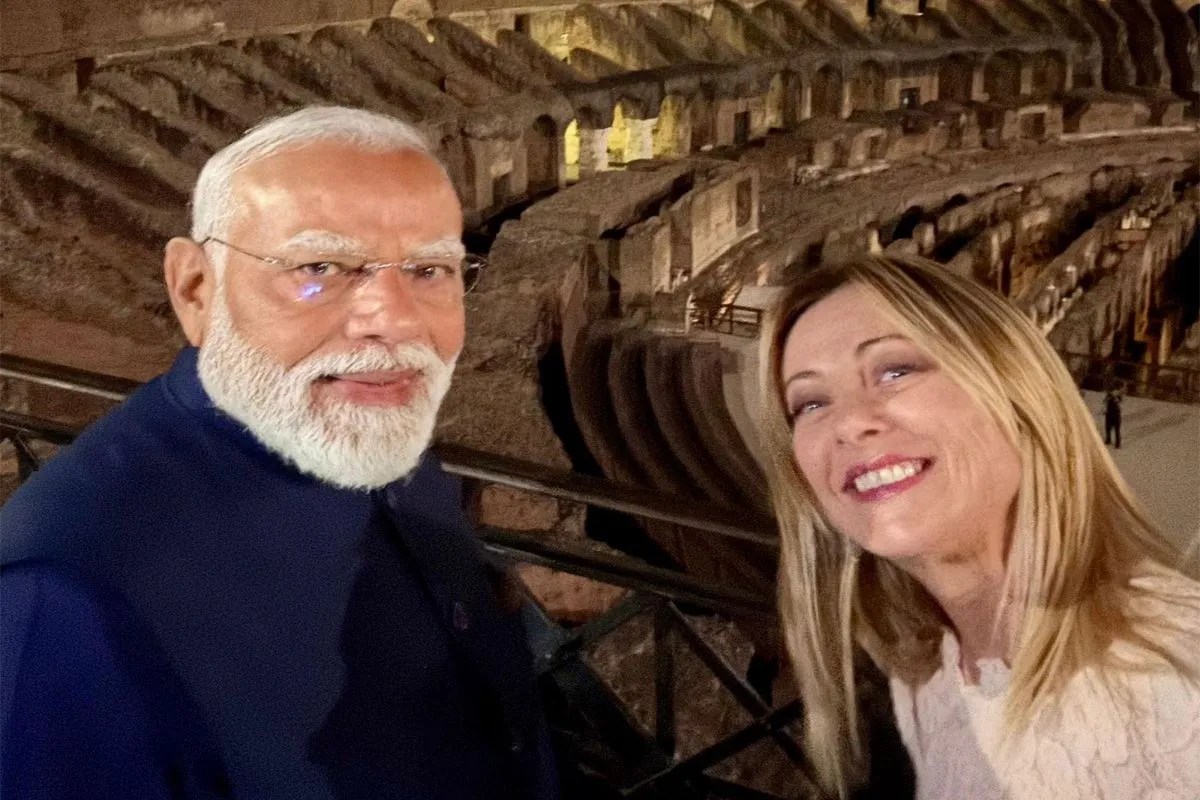
Italian Prime Minister Giorgia Meloni just sent a wave through international diplomatic circles by congratulating Indian Prime Minister Narendra Modi. The occasion wasn't just a standard election victory. Meloni highlighted Modi's achievement of becoming the longest-serving non-Congress Prime Minister of India, a milestone that reshapes how European leaders view New Delhi.
This isn't your usual diplomatic pleasantry. It represents a calculated, highly strategic alignment between Rome and New Delhi. When Meloni takes to social media or official channels to celebrate Modi's longevity in office, she's signaling something far deeper than mere polite praise. She's cementing an axis that has been quietly growing over the last few years.
The Strategic Reality Behind the Meloni Modi Chemistry
Diplomacy runs on personal chemistry, but it survives on national interest. Meloni's public acknowledgment of Modi's historic tenure reflects Europe's growing dependence on India as a stabilizing force in Asia. For decades, European nations looked at India through a somewhat detached, transactional lens. That era is over.
Italy faces massive pressure regarding supply chain security, Mediterranean maritime safety, and economic diversification away from Beijing. India offers the perfect counterweight. By pointing out Modi's unprecedented political endurance, Meloni is telling her own domestic audience and European peers that Modi is a reliable, long-term partner who isn't going anywhere.
We see this play out in bilateral trade numbers. Italy-India trade touched record highs recently, crossing the 14 billion euro mark. They aren't just trading textiles and machinery anymore. The focus shifted heavily toward defense cooperation, green energy transitions, and technology transfers.
Breaking Down the Longest Serving Non Congress Milestone
To understand why this milestone caught Meloni's eye, you have to understand Indian political history. For the first few decades after independence in 1947, the Indian National Congress dominated the political landscape completely. Political analysts routinely assumed that no non-Congress leader could maintain a stable coalition or command a majority long enough to leave a permanent civilizational stamp on the country.
Modi changed that narrative completely. Passing Atal Bihari Vajpayee's record as the longest-serving non-Congress prime minister means political predictability. For international leaders like Meloni, predictability is absolute gold.
Imagine trying to sign a 10-year defense procurement deal or a massive semiconductor supply chain agreement with a country whose government changes every two years. It's a nightmare. Meloni's congratulatory message is a direct nod to the fact that India offers a stable, predictable policy environment for Italian investments.
Beyond the Rhetoric of the G7 and Global Capitals
We saw the initial sparks of this political partnership during the G7 summit in Apulia, where the camaraderie between the two leaders became a viral internet sensation. While social media obsessed over the memes and hashtags, serious foreign policy observers watched the actual policy documents.
Italy wants a bigger footprint in the Indo-Pacific. Rome recognizes that the geopolitical center of gravity moved away from the Atlantic. If Italy wants to protect its maritime trade routes passing through the Suez Canal and into the Indian Ocean, it needs a deep, friction-free relationship with the Indian Navy.
- Defense Pacts: The two nations upgraded their relationship to a Strategic Partnership, focusing on co-production of military hardware.
- Mobility Agreements: Italy signed a migration and mobility partnership with India, making it easier for Indian professionals and students to work in Italy legally, addressing Rome's labor shortages.
- Energy Transition: Joint projects in green hydrogen and clean energy are moving from discussion papers to actual ground implementation.
What Western Critics Fail to Understand About This Axis
Many Western commentators frequently criticize Meloni's right-wing governance or question Modi's domestic policies. They expect a clash or at least a cold distance between European leadership and New Delhi. They miss the point entirely.
Realpolitik doesn't care about editorial columns. Meloni and Modi share a pragmatic, intensely nationalistic approach to governance that focuses heavily on economic sovereignty and cultural identity. They speak the same political language. When Meloni praises Modi's historic timeline, she is validating a style of leadership that prioritizes national resilience over globalist consensus.
It also gives Italy a unique leverage point within the European Union. By being the European leader closest to New Delhi, Meloni positions Rome as the essential gateway for EU-India relations.
Tracking the Next Steps for Italy India Relations
If you are an investor, business leader, or policy analyst, don't look at this congratulatory message as a standalone news event. Look at it as a green light for deeper corporate and strategic integration.
Keep a close watch on the upcoming defense bilateral meetings scheduled later this year. Italian defense majors are looking to aggressively pitch radar systems, electronic warfare kits, and naval engineering expertise to the Indian armed forces under the Make in India initiative.
Businesses should prepare for streamlined visa processes between the two nations, smoother regulatory approvals, and increased bilateral ministerial visits. The political signaling from the very top is crystal clear. Rome and New Delhi are locked in for the long haul, and Modi's record-breaking tenure provides the stable foundation they both desperately wanted.