The air inside the James S. Brady Press Briefing Room is almost always heavy with a specific kind of tension. It is a room where careers are made on the sharp edge of a question and unmade by the defensive posture of a reply. On a warm July afternoon, that tension crystallized into something far more volatile than the usual political theater.
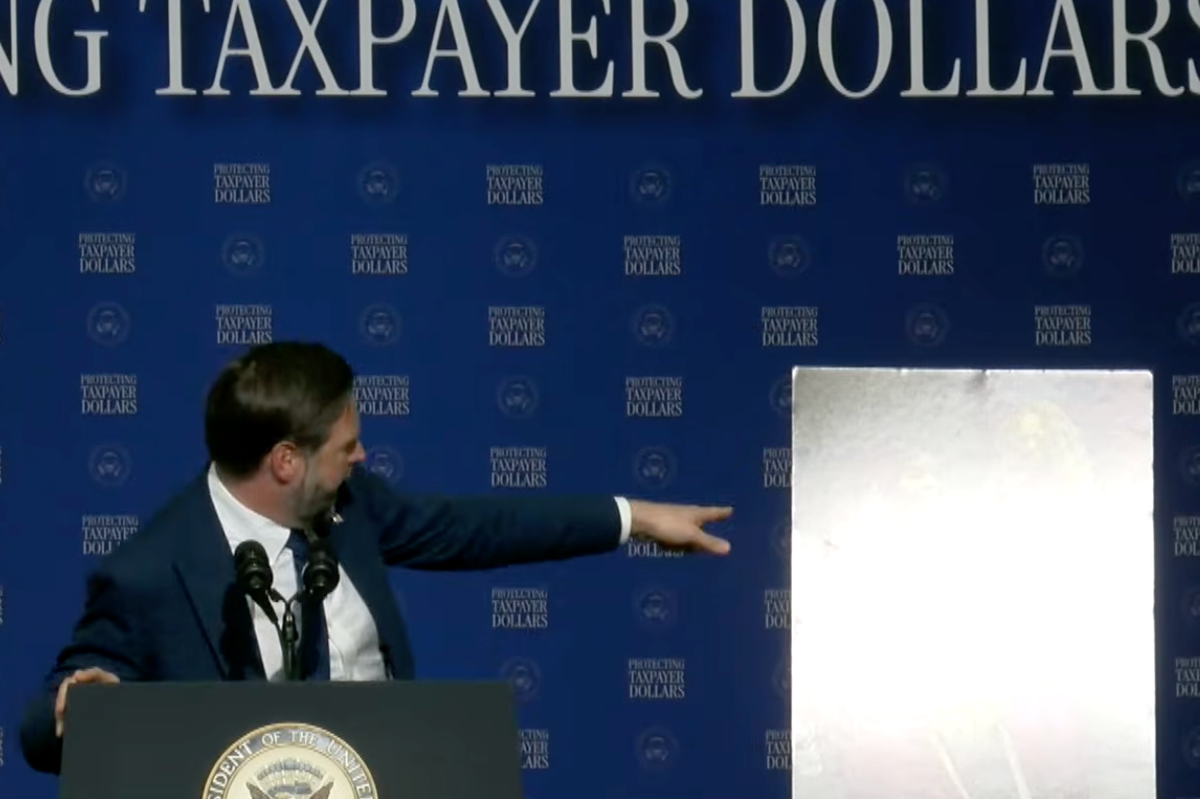
A photograph hung in the balance. More specifically, the truth behind a photograph used during a high-stakes speech by Vice President JD Vance was being called into question.
From the podium, the official narrative came down like a hammer. The White House, bristling with an defensive energy that has become its signature hallmark, leveled a staggering accusation. A prominent editor, they claimed, was deliberately suppressing facts, acting as a gatekeeper of misinformation by hiding crucial visual details from the public eye. The language was sharp, unyielding, and carried the full, terrifying weight of the executive branch. To the uninitiated, it looked like a major scandal breaking in real time—a definitive exposé of media manipulation.
But the reality of what actually happened tells a far different, deeply human story about the friction between perception and reality in modern Washington.
Consider what happens next when the dust settles and the technicians step in to examine the evidence. The explosive allegation did not uncover a deep-state conspiracy or a rogue journalist doctoring the narrative. Instead, it unraveled into a deeply embarrassing logistical gaffe born within the Trump administration's own team.
The image in question—the very one the White House claimed had been deceptively obscured—had been subjected to a much simpler, far less insidious enemy.
Lighting.
During the Vice President's address, the staging crew had positioned the physical display directly beneath the unforgiving intensity of the event's overhead production lights. To anyone standing at a specific angle in the room, or looking at the raw media feed, the critical portion of the photograph was completely washed out. It was a massive glare. A blinding reflection. The information wasn't missing because an editor's mouse had cropped it out; it was missing because a technician's light bulb had erased it from view.
It is easy to look at an incident like this and see only a comedy of errors. A press team, eager to go on the offensive, fires a salvo before checking their own setup. They mistook a physical reflection for a political conspiracy.
But the real problem lies elsewhere, rooted deeply in the psychological environment of contemporary governance. When every interaction between the press and the presidency is treated as an existential battle, the capacity for basic observation erodes. The impulse to blame an adversary becomes so instantaneous that it overrides the simple act of looking up at the ceiling to see where the light is coming from.
Imagine being the staffer tasked with drafting that furious condemnation. You are working under immense pressure, operating in an ecosystem where speed and aggression are prized above almost everything else. You see a flawed image. You assume malice. You press send.
The institutional embarrassment that follows is the direct tax paid for a culture that chooses outrage over investigation.
For the journalists sitting in those cramped briefing chairs, the incident is a stark reminder of the invisible stakes they navigate daily. Trust is a fragile currency, easily damaged by a single headline but even more easily eroded by the casual weaponization of institutional power. When a gaffe of this magnitude occurs, it forces a moment of collective pause. It lays bare the reality that behind the grand columns and the authoritative statements, the apparatus of power is still run by humans who are prone to panic, susceptible to confirmation bias, and entirely capable of being blinded by their own spotlights.
The briefing ended, the cameras clicked off, and the glare on the stage eventually dimmed. But the echo of the accusation remained in the room, a quiet testament to a day when the White House fought a war against a shadow, only to find out they were the ones casting it.



