Two millimeters of tempered automotive glass. That is the only barrier separating a rideshare driver from the stranger sitting eighteen inches behind their skull.
When you drive the graveyard shift in an American city, you learn to read the rearview mirror the way a sailor reads the horizon before a squall. You watch the angle of a passenger's shoulders. You listen to the cadence of their breathing. You calculate the weight of their silence. For immigrants—particularly Black, Muslim, and East African drivers who form the nocturnal backbone of the gig economy—that narrow strip of reflective glass is not merely a safety feature. It is an early warning system.
Consider what happens when that system fails.
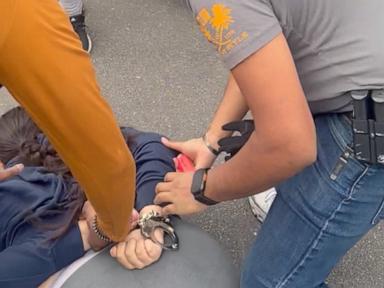
In a brutally violent assault that left a Somali Uber driver clinging to life, the physical damage was immediate, catastrophic, and undeniable. Bones fractured. Blood soaked into the upholstery of a vehicle purchased to build an American future. Yet, in the sterile language of initial police reports and preliminary charging documents, the violence was reduced to an ordinary street crime—an aggravated assault, a random eruption of urban chaos. To the driver's family, sitting beneath the harsh fluorescent hum of an intensive care waiting room, that legal classification felt like a second, quieter blow. They didn't just want the attacker prosecuted for the broken bones. They wanted the state to name the poison that fueled the fists. They demanded a hate crime charge.
Why does a label matter when a man is already fighting to breathe?
Because in the American legal system, how we name a crime determines what we are willing to admit about ourselves.
The Architecture of Vulnerability
To understand the quiet terror of the night shift, you have to sit in the driver's seat at 2:00 AM.
Imagine, as a composite portrait drawn from dozens of real testimonies across Minneapolis, Seattle, and Columbus, a driver we will call Abdi. He left Mogadishu decades ago, surviving civil collapse only to find himself navigating a different kind of precarity on snowy Midwestern highways. During the day, he studies or works a second job. At night, he turns on the app. The green glow of the smartphone mounted to his dashboard illuminates his face, making his Black skin, his accent, and often his Islamic faith instantly legible to anyone who opens the rear door.
Rideshare platforms sell an illusion of frictionless modernity. Tap a screen, step into a warm car, arrive at your destination. What the algorithm hides is the profound asymmetry of risk. The passenger knows the driver's name, face, license plate, and vehicle make before stepping off the curb. The driver, pressured by acceptance-rate penalties and the relentless math of paying off a car note, gets a first name and a star rating.
When a passenger enters that space harboring racial or religious animus, the car ceases to be a vehicle. It becomes a locked box.
Federal data consistently shows that bias-motivated incidents against Black and Muslim Americans remain stubbornly high, yet rideshare drivers occupy a statistical blind spot. Because they are classified as independent contractors rather than employees, they fall through the cracks of traditional workplace safety reporting. When an attack occurs, corporate safety teams often treat it as an isolated user-policy violation—deactivating an account—while local prosecutors default to the easiest criminal statute to prove in court.
And proving intent is hard.
The Legal Burden of Proof
Here is where the family’s demand collides with the cold machinery of criminal law.
In most jurisdictions across the United States, charging someone with a hate crime—legally termed a bias-motivated offense or ethnic intimidation—requires prosecutors to prove beyond a reasonable doubt not just that the defendant committed a violent act, but that the victim was selected because of their actual or perceived race, color, religion, or national origin.
Think of the difference between a standard assault charge and a hate crime enhancement as the difference between proving a house burned down and proving who struck the match and why. A broken jaw is visible on an X-ray. A bruised brain shows up on a CT scan. Hatred, unless shouted at the top of one's lungs in front of witnesses or captured on a dashboard camera, leaves no forensic fingerprint.
Prosecutors are pragmatic creatures. Faced with crowded dockets and cautious juries, a district attorney will often pursue the charge with the cleanest evidentiary path. A standard felony assault conviction carries serious prison time without requiring twelve jurors to agree on the inner workings of a defendant's soul. If a defense attorney can argue the attack stemmed from drunkenness, a dispute over the route, or sudden road rage, the bias enhancement can collapse, taking the broader case down with it.
To a grieving or terrified family, however, that legal caution looks indistinguishable from erasure.
When an attacker targets a Somali driver—mocking an accent, invoking anti-immigrant tropes, or erupting with unprovoked fury the moment they see who is behind the wheel—calling it a "random assault" strips the violence of its political and social reality. It tells an entire community that the target painted on their backs is invisible to the law.
The Ripple Effect in the Diaspora
News of a near-fatal attack does not stay confined to a police blotter. Within hours, it travels through WhatsApp voice notes, reverberates across community mosques, and settles like frost over kitchen tables from Cedar-Riverside to Rainier Valley.
I remember speaking with East African drivers after similar assaults in recent years, watching the way fear alters a person's posture. It is a specific, heavy exhaustion. You see it in the way men check the locks at red lights, the way they install aftermarket Plexiglas dividers that rattle over potholes, the way they keep a quiet tally of which neighborhoods to avoid after midnight—even though declining those rides directly slashes their income.
The invisible stakes of this case extend far beyond one hospital room.
First, there is the economic toll. For many Somali immigrants, driving for Uber or Lyft is the primary engine of upward mobility—the bridge that pays for children's tuition, sends remittances to relatives abroad, and builds credit in a new country. When drivers are forced off the night shift out of fear for their lives, families lose their most lucrative hours. Surge pricing happens when the bars close, which is precisely when the danger peaks.
Second, there is the psychological tax of hypervigilance. Trauma experts recognize that surviving or witnessing targeted violence induces a chronic state of threat readiness. Every slam of a car door becomes a potential ambush. Every slurred word from the backseat triggers an adrenaline spike. Over months and years, that stress corrodes the body, leading to hypertension, insomnia, and quiet despair.
Third, and perhaps most corrosive, is the erosion of civic trust. When immigrant communities watch brutal attacks on their neighbors downgraded to routine offenses, a dangerous cynicism takes root. Why report harassment? Why cooperate with investigators? Why believe the promise of equal protection under the law if the law refuses to acknowledge why you were bled on the pavement?
What Accountability Actually Requires
Securing a hate crime charge in a case like this is not about vengeance. It is about accuracy.
Law exists not merely to punish individuals, but to establish public truth. Hate crime statutes were enacted precisely because lawmakers recognized that bias-motivated violence inflicts a dual injury: it harms the immediate victim, and it terrorizes an entire class of people who share that victim's identity. A mugging says, I want your wallet. A hate crime says, You do not belong here, and anyone who looks like you is next.
When families push prosecutors to file bias charges, they are forcing the justice system to confront uncomfortable questions that extend well past the courtroom:
- Where is the corporate accountability? Rideshare giants collect billions in commissions while offloading physical danger onto drivers. Mandatory, subsidised dual-facing dashcams, emergency audio recording linked directly to dispatch, and rigorous passenger identity verification are not futuristic luxuries—they are basic survival tools that companies have been slow to standardize.
- How are police trained to investigate bias? Too often, officers arriving at a chaotic scene focus solely on physical injuries and immediate witness statements, failing to ask the foundational questions about slurs, demeanor, or context that establish bias from the very first minute of an investigation.
- What happens to the survivor after the headlines fade? A near-fatal attack destroys a gig worker's livelihood overnight. Without traditional workers' compensation, medical bills mount while income drops to zero, leaving families dependent on community fundraisers to survive.
Consider what happens next if the family succeeds, and what happens if they fail.
If prosecutors listen—if they dig into the digital trail, interview witnesses thoroughly, and bring the weight of a hate crime charge to bear—it sends an unmistakable signal across the city. It tells drivers working the lonely hours before dawn that their lives carry full value, and that targeting someone because of where they were born or how they pray will be met with the fiercest response the law allows.
If they do not, the silence will be heard just as clearly.
The Shift Continues
Tonight, across hundreds of cities, thousands of drivers will wipe down their backseats, adjust their rearview mirrors, and tap a button that turns their screens from white to dark mode. They will unlock their doors for strangers stepping out of the shadows of bars, airports, and apartment buildings.
They will rely on faith, sharp instincts, and a thin sheet of glass to see them through until sunrise.
And in a hospital bed, a man who survived the unthinkable will wake up to a world deciding whether his suffering counts for what it truly was—or whether it will be filed away, forgotten, as just another bad night on the job.