The coffee in the porcelain cup had gone cold hours ago, forming a greasy, dark film at the rim. In the dim office overlooking the glittering waterfront of Doha, Tariq stared at the monitor. Outside, the skyline of steel and glass rose majestically into the night sky, a monument to human ambition carved out of desert sand and oil wealth. Inside, the digital ticker tape spelled out a message that made the air in the room feel thin.
Distance means nothing when the wind carries fire.
We live on the edge of massive gears, turning in rooms we will never enter. To the average commuter driving down Sheikh Zayed Road in Dubai, or the engineer checking pressure gauges on an offshore platform near the Qatari coast, the sky is just blue. The morning papers are just paper. But words spoken thousands of miles away—in the echoes of Washington corridors or the tense briefings of Tehran—have a way of shrinking the earth overnight.
Consider what happens next: a warning is issued.
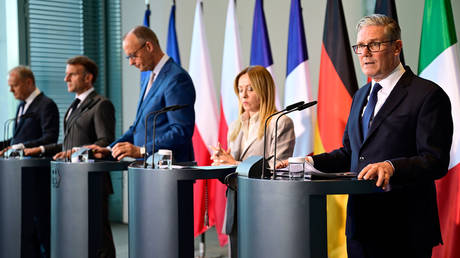
When reports surfaced that Iranian officials designated regional energy infrastructure—pointing directly at Saudi, Emirati, Qatari, and Israeli facilities—as legitimate targets should a renewed U.S. military campaign materialize under Donald Trump, the shockwaves did not start with explosions. They started with silence. They started in the quiet calculations of risk analysts whose hands trembled slightly over their keyboards.
I remember sitting in a control room during a previous escalation, watching senior operators stare at blinking red lights that represented millions of barrels of oil and billions of dollars of liquefied natural gas. The atmosphere was thick with a strange, heavy fatigue. Nobody panicked. Panic is for amateurs. Professionals simply calculate the probability of ruin.
To understand why a statement about energy sites carries such seismic weight, we have to look past the political posturing and stare straight at the mechanics of modern survival. Energy is the oxygen of the global economy.
Imagine a single valve. It is thirty feet long, painted industrial yellow, buried beneath layers of reinforced concrete and desert dust. It regulates the flow of gas that keeps power plants humming from Berlin to Tokyo. If that valve stops turning, factories grow cold. Shipping lanes stall. Power grids flicker and die. When state actors trade threats involving these nodes, they are not merely threatening buildings or steel structures. They are threatening the baseline stability of ordinary human life.
The strategy behind naming these specific targets is as old as warfare itself. It is deterrence by vulnerability. By pointing an arrow at the economic jugular of America’s closest regional partners and adversaries, the message from Tehran is calculated and stark. If the pressure mounts, everyone bleeds.
Yet, numbers on a screen fail to capture the human cost of this chessboard.
Let us introduce a hypothetical worker named Waleed. Waleed is a shift supervisor at a massive processing plant on the Persian Gulf. He has three daughters, a mortgage, and a quiet pride in his work. He does not care about geopolitical strategy meetings. He cares about turbine temperatures, safety protocols, and getting home in time to help his middle child with her math homework.
When Waleed reads that his workplace has been casually factored into a potential retaliatory matrix, his reality shifts. The steel walls of the plant do not feel quite as thick anymore. The desert air feels heavier. He goes to work because the world demands it, but every shift now carries the silent, invisible weight of a question he cannot answer: Is this the day the abstract becomes flesh?
This is the hidden cost of geopolitical brinkmanship. It transfers the anxiety of the powerful onto the shoulders of the powerless.
For decades, the Gulf states have tried to brand themselves as oases of tranquility in a volatile region. They built towering hotels, established global aviation hubs, and poured fortunes into artificial islands and futuristic cities. They sold the world a dream of perpetual motion and safety. But geography is an unforgiving jailer. You can pave the desert, you can air-condition the outdoors, but you cannot move your coastline away from your neighbors.
When Donald Trump weighs new strikes, the ripple effect reaches deep into the boardrooms of Riyadh and Abu Dhabi. Leaders there face an impossible dilemma. Align too closely with external pressure, and risk becoming the primary absorbing ground for kinetic retaliation. Distance themselves too much, and risk fracturing strategic alliances that have held for generations.
This is where the logic breaks down. Deterrence is supposed to prevent war, but when it relies on threatening the lifeblood of the global energy supply, it creates a hair-trigger environment where a single miscalculation by a junior commander can ignite a continent.
We have seen this script before. History is littered with moments where leaders thought they were just playing a game of chicken, only to discover too late that the brakes had been cut.
The markets react instantly. Crude prices dance upward. Shipping insurance rates skyrocket. Tankers alter their routes, adding days and millions of dollars to their voyages. Every headline is a tax on the global consumer, paid quietly at the petrol pump and on utility bills from London to Seoul.
And yet, life goes on. That is the most unsettling part of it all.
Traffic still crawls along the highways of Doha. Families still gather for evening tea. The glass skyscrapers still catch the dying light of the desert sun, burning orange and gold against the dusk. We possess an almost terrifying capacity to normalize the abnormal, to sip our coffee while sitting directly over a fault line.
Tariq closed his laptop. The digital ticker continued to spin, feeding a relentless stream of anxiety into the void. He walked to the window, pressing his palm against the cool glass, looking out over the quiet water where tankers sat anchored in the dark, silent and heavy with the fuel of a restless world.