The fiber-optic cable on the floor of the Pacific Ocean is thinner than a garden hose, yet it carries the waking thoughts of billions. Inside that black armor of polyethylene and steel runs a core of glass so pure that if you looked through a window of it five miles thick, you could still see the other side.
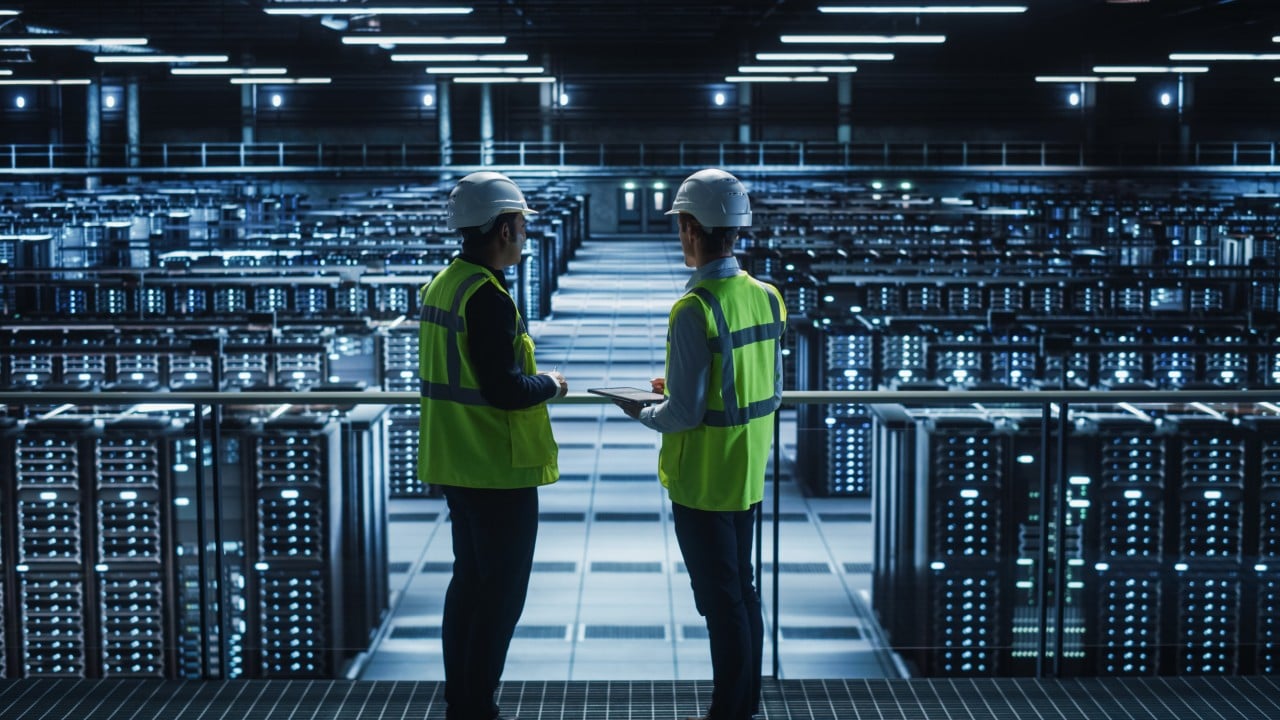
For years, I sat in sterile server rooms watching the amber lights blink, listening to the monotonous hum of industrial cooling fans. That hum is the sound of modern civilization thinking. But behind those walls of blinking glass and silicon, a quieter panic has taken root. It lives in the boardrooms of Shenzhen and the legislative chambers of Washington. It is the sudden, terrifying realization that the infrastructure of tomorrow is built on a very fragile foundation.
When word broke that Washington was weighing new trade restrictions on advanced artificial intelligence hardware, the stock tickers in Asian markets didn't just flicker; they seized. Analysts called the proposed rules "mild." Wall Street analysts always use soothing adjectives when they are standing outside a burning building. They look at a regulatory draft, measure the temperature of the bureaucratic language, and declare the fire manageable.
They do not see the glass.
The Weight of Light
To understand why a few typed sentences in a trade memo can send shockwaves through Shenzhen’s optical-module manufacturing floors, you have to look at what an optical module actually is.
Imagine trying to pour a swimming pool through a straw. That is the fundamental problem of modern computing. Graphics processing units crunch data at speeds that defy human comprehension, spitting out petabytes of calculation. But those processors are trapped in their own silicon islands. If they cannot talk to one another instantly, they are just expensive paperweights.
Optical modules are the translators. They take torrents of electrical data, convert them into pulses of laser light, shoot them through glass fibers, and translate them back on the other side. Without them, large-scale artificial intelligence does not exist. You cannot train a massive neural network on a single chip. You need tens of thousands of them, locked in a digital embrace, whispering to each other at the speed of light through millions of tiny glass threads.
And a staggering share of those threads, and the modules that drive them, are forged in China.
When the news hit that the United States might tighten the screws on these components, the market reaction was swift. Traders panicked. Prices plunged. Then, just as quickly, analysts stepped in with their reassuring whispers. The curbs would be narrow. The definitions would be loose. The loopholes would be wide enough to drive a container ship through.
The stocks rebounded. The market went back to sleep.
The Mirage of Mild Regulation
I remember talking to an engineer in a manufacturing hub outside Shenzhen a few years ago. He held an optical transceiver in his palm, no larger than a deck of cards, turning it over to show the microscopic gold wire bonds inside. His hands were steady, but his words were heavy.
"People think hardware is like a car part," he told me, gesturing toward the sterile assembly lines behind the glass. "If one supplier gets blocked, you just buy from another. But precision manufacturing does not work that way. It is a cathedral. You take out one stone from the arch, and the whole roof does not fall today. It shifts. It cracks. And three years from now, in the middle of a storm, it collapses."
This is what the "mild curbs" narrative misses. Bureaucrats in Washington operate on legal definitions. Supply chain architects operate on survival.
When a government signals that a technology is a national security risk, the rules do not have to be absolute to be lethal. Uncertainty is a poison pill. Venture capitalists hesitate. Procurement officers look for domestic alternatives that do not yet exist. Engineers spend precious months redesigning circuit boards to avoid components that might be banned tomorrow.
The rebound in optical-module stocks was real. The money flowed back into the ledgers of companies like InnoLight and Eoptolink. Order books remained full for the current generation of hardware. But the human reality beneath those green numbers is one of permanent anxiety. Every executive in the sector knows that the rules of the game can change with a single signature on a Friday afternoon.
The Invisible Architecture
We live in an era that worships software. We talk about algorithms as if they dropped from the sky, pure and disembodied. We praise the brilliance of the code, the cleverness of the prompt, the magic of the generative model that writes poetry or diagnoses disease.
We forget the dirt.
We forget the silicon mines in remote provinces. We forget the cleanrooms where workers wear bunny suits to keep a stray speck of dust from ruining a microchip. We forget the heavy machinery laying cable across ocean beds, enduring crushing pressures and tectonic shifts.
Artificial intelligence is not a cloud. It is an industrial machine. And like any machine, it requires physical inputs, physical factories, and physical peace to keep turning.
When the United States proposes restrictions on AI hardware, it is trying to choke off the oxygen supply to a rival superpower's technological ambitions. When Chinese optical-module makers bounce back from those threats, they are proving something resilient about global commerce: water finds a crack, and capital finds a route.
Yet, the friction is mounting. Every restriction, mild or severe, carves a deeper trench between two halves of the technological world. We are slowly building a fractured internet, a splintered hardware ecosystem where redundancy replaces efficiency, and paranoia replaces partnership.
The Coming Split
Consider what happens next when every nation decides it must manufacture its own glass, its own chips, its own light-transmitters. The duplication is staggering. Billions of dollars spent not on innovation, but on duplication. Not on curing diseases or solving climate change, but on building redundant fortresses of supply chain security.
The market can shrug off a mild regulatory proposal today. Analysts can publish their soothing notes and collect their fees. But the underlying pressure does not disappear. It builds, quietly, like tectonic plates sliding past one another beneath a quiet city.
The stock chart goes up and down. The traders cheer the rebound.
Meanwhile, deep in the cleanrooms, the lasers keep firing, turning electricity into light, carrying the digital dreams of a divided planet across fragile threads of glass, waiting for the next tremor.