Silence.
That is the first thing you notice when a family outing turns into an emergency, long before the sirens begin to wail or the paramedics rush through the turnstiles, because shock has a way of sucking all the oxygen out of a crowded public park.
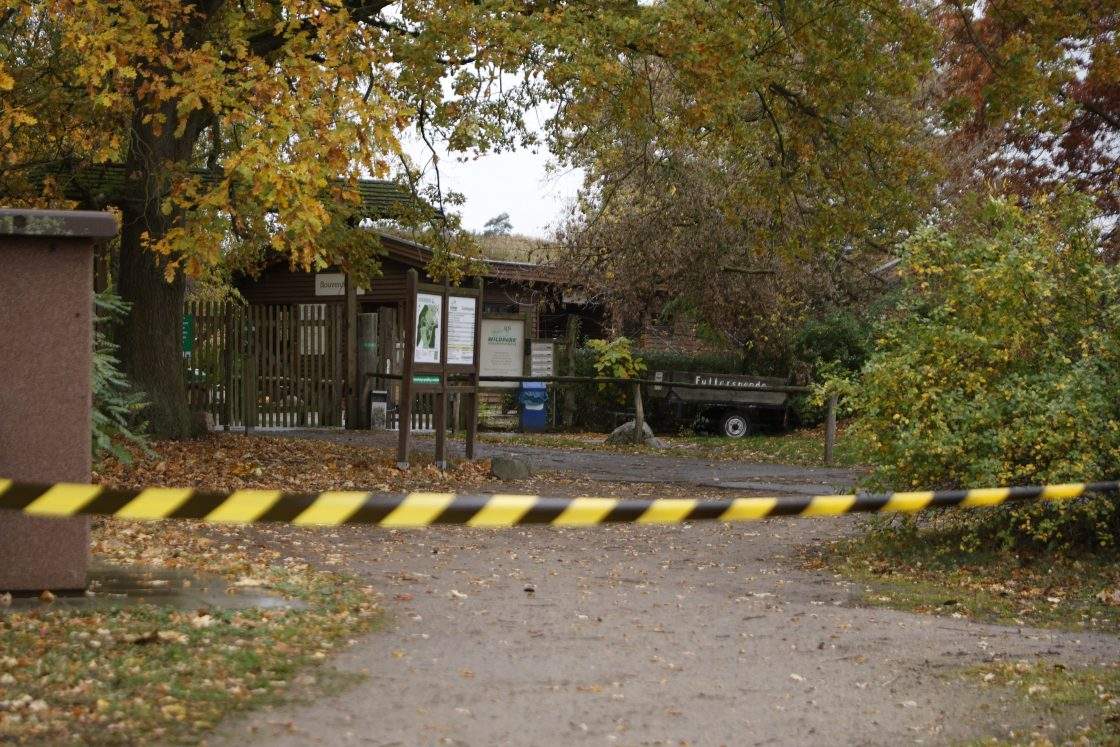
Consider a hypothetical Saturday afternoon at a regional wildlife park in Germany. Let us call the boy Lukas, though in reality, an eight-year-old child recently suffered severe, life-altering injuries after entering a wolf enclosure at a German zoo. Picture the crisp autumn air, the smell of roasted almonds near the entrance, and the low, rhythmic hum of parents pushing strollers along gravel paths. Lukas is eight—old enough to feel the intoxicating pull of independence, yet far too young to comprehend the evolutionary machinery humming behind the eyes of an apex predator. He wanders ahead while his parents check a map or tend to a younger sibling. He sees a fence, a gap, or a low wall designed to blend into the natural scenery, and in a heartbeat, the invisible contract that keeps modern humans safe from the ancient world snaps.
We build zoos to look like sanctuaries, disguising steel and concrete beneath moss, timber, and clever landscaping so we can pretend we are walking through an untouched forest. Yet that very illusion carries a hidden price. When we erase the visual reminders of captivity to make ourselves feel better about keeping wild things in boxes, we accidentally erase the warning signs that tell a child where safety ends and mortal danger begins.
The Architecture of Illusion
Modern zoological design has spent the last fifty years running away from the iron bars of the Victorian era. Nobody wants to see a pacing predator behind thick black grates anymore; it feels cruel, outdated, and uncomfortable. So architects invented "immersion exhibits," using dry moats, recessed fencing, subtle sightlines, and low timber barriers to create the sensation that visitors and animals share the same unbroken earth.
It works brilliantly on the adult brain. We admire the cleverness of the moat, snap a photograph where no wires ruin the shot, and walk away feeling connected to nature.
A child's brain does not read architectural subtext. To an eight-year-old, a low wooden rail looks like a park bench, and a patch of tall grass on the other side looks like a place to retrieve a dropped toy or get a closer look at what appears to be a large, sleepy dog. I remember standing at the edge of an open-air bear pit as a kid in the nineties, leaning my chest against a waist-high stone wall while my mother gripped the back of my jacket so tightly the collar choked me. At the time, I thought she was being dramatic; looking down at the bears below, they looked plush, slow, and almost cartoonish. I could not see the muscle density beneath the fur, nor could I fathom the explosive speed with which a four-hundred-pound animal can clear a twelve-foot gap.
When news broke of the eight-year-old boy severely injured inside a German wolf enclosure, the public reaction followed a familiar, exhausting script. Comment sections immediately split into two angry camps: those blaming negligent parents for taking their eyes off a child for ten seconds, and those demanding to know how a zoo could leave a perimeter vulnerable enough for a small boy to breach.
Both arguments miss the deeper truth. Human attention is inherently flawed, and even the most vigilant parent will blink, tie a shoe, or reach into a backpack for a juice box. Safety engineering exists precisely for those ten seconds of human fallibility. If a physical barrier relies entirely on an eight-year-old exercising adult judgment, the barrier has already failed before anyone steps through the gate.
What the Wolf Actually Sees
To understand what happened inside that German enclosure, we have to strip away centuries of bedtime stories and modern romanticism about wolves. We love wolves right now. We put them on t-shirts, celebrate their return to European forests, and watch documentaries that highlight their fierce loyalty to their packs and tender care for their pups. All of that is true, and none of it makes a captive wolf safe.
Think of a captive wolf pack not as a group of misunderstood pets, but as a coiled spring held under constant tension. In the wild, a wolf's territory spans dozens or even hundreds of square miles, and its days are consumed by the grueling, calorie-burning work of tracking, testing, and chasing prey. Inside a zoo, even a spacious, well-funded German wildlife park, that territory shrinks to a fraction of an acre. Food arrives on a schedule. The perimeter never changes. Every day, hundreds of noisy, brightly colored humans press up against the glass or lean over the rails, staring directly into the animals' eyes—a gesture that, in canine body language, is an unambiguous challenge.
Now imagine the pack's sensory reality when a small figure suddenly drops inside their territory.
To the wolves, this is not a lost child who needs help. It is an unprecedented intrusion into the only space they control. A small human moves erratically, cries out in a high pitch, and triggers an ancient, hardwired sequence of prey drive and territorial defense that thousands of years of evolution have sharpened to a razor's edge. There is no malice in the bite. There is no villainy in the pack's response. A wolf attacking an intruder inside its enclosure is simply being a wolf, executing the exact biological programming that allowed its ancestors to survive the Ice Age.
That is what makes these tragedies so uniquely horrifying for everyone involved. The child is a victim of curiosity and flawed boundaries. The parents are shattered by a single moment of distraction that will haunt every waking hour for the rest of their lives. And the animals—creatures that never asked to be placed on display for weekend entertainment—suddenly become lethal liabilities through no fault of their own.
The Anatomy of a Ten-Second Breach
How does a child actually get past a modern zoo perimeter? People often picture someone scaling a ten-foot chain-link fence topped with razor wire, which makes it easy to dismiss the victim as reckless. In reality, breaches almost always happen through mundane gaps in layered defense systems.
Zoos typically rely on a "stand-off barrier"—the low fence or hedge that keeps visitors a few feet back from the primary containment wall or glass. The space between the stand-off barrier and the main enclosure is a buffer zone, meant to stop people from poking fingers through mesh or dropping trash into the habitat. When a child slips under or climbs over that first low rail, they are suddenly in a blind spot, concealed by decorative bushes or boulders placed there to make the exhibit look natural. From there, a service gate left unlatched by an exhausted keeper, a gap beneath a rusted mesh panel, or a low wall designed for unobstructed photography becomes an open door.
German zoos are generally among the most strictly regulated in the world, bound by rigorous federal safety standards and regular municipal inspections. That fact makes this incident even more sobering. If a severe breach can occur within a regulatory system known for precision and oversight, it proves that compliance on paper is not the same thing as real-world resilience.
Consider what happens next in the aftermath of an attack:
- The immediate medical trauma: Wolf bites do not merely puncture; they tear and crush, exerting hundreds of pounds of pressure per square inch that can sever nerves, shatter bone, and introduce virulent bacteria deep into tissue.
- The emergency response dilemma: Zookeepers and paramedics must enter an active predator habitat without triggering further aggression, often forced to make split-second decisions between tranquilizers—which take precious minutes to work—and lethal force to save a child's life.
- The psychological fallout: First responders, bystanders, and siblings who witness an animal attack carry secondary trauma that lingers for years, turning a symbol of childhood wonder into a permanent trigger of panic.
I will admit something uncomfortable here: whenever I take my own family to a wildlife park now, I no longer look at the animals first. I look at the bolts on the gates. I look at the height of the hedges, the distance between the wooden posts, and the blind spots where a toddler could duck out of sight in two strides. Some might call that paranoia, yet once you realize how thin the line really is between observation and contact, you cannot unsee it.
The Invisible Contract We Sign at the Gate
Every time we buy a ticket to see wild animals up close, we participate in a quiet, collective bargain. We trade away our healthy, ancestral fear of predators in exchange for proximity, convenience, and a curated brush with the untamed world.
For millennia, human survival depended on respecting distance. Our ancestors knew exactly what lived in the dark beyond the firelight, and they taught their children to fear the treeline long before they taught them to read. Modern life has dismantled that instinct. We live in climate-controlled boxes, drive steel machines down paved corridors, and encounter nature mostly through high-definition screens or manicured city parks. Without realizing it, we have domesticated our own expectations, assuming that any space open to the public has been thoroughly childproofed against catastrophe.
Zoos lean into that assumption because fear is bad for ticket sales. Nobody wants to read a plaque at the entrance of the wolf exhibit detailing bite force mechanics or the exact number of seconds it takes a gray wolf to cross thirty yards of gravel. Instead, we get heartwarming stories about conservation breeding programs and cute nicknames for the pack's alpha pair.
Conservation matters. Education matters. Seeing a living, breathing wolf move across rocky terrain teaches a child something no textbook or tablet ever could, sparking a reverence for the natural world that might one day inspire them to protect it. Yet reverence without respect for danger is just sentimentality, and sentimentality cannot stop a predator when a fence fails.
Rebuilding the Boundary
If we are going to keep inviting families into close quarters with animals capable of killing them, the burden of safety cannot rest on the impulse control of eight-year-olds or the superhuman perfection of tired parents.
It demands an honest reckoning with how we design public spaces around dangerous wildlife. Aesthetic minimalism should never outrank physical containment. If a stand-off barrier needs to be high enough and solid enough that a child cannot slip beneath it without tools, then let it look like a barrier. Let visitors see the steel, the height, and the deliberate separation, not as an eyesore, but as an honest visual reminder that the creatures on the other side are not characters in a storybook.
Zookeepers and facility directors across Europe and North America already know the vulnerabilities in their older exhibits; budget constraints and heritage preservation rules simply push those upgrades to the bottom of the list until an ambulance pulls up to the service gate. Audits cannot be annual paperwork exercises. They require walking the perimeter at eye level—three feet off the ground—looking for every gap, foothold, and concealed corner through the eyes of a curious kid who has not yet learned that the world can bite back.
Think back to that quiet moment after the ambulance doors close and the park gates are locked for the night. The gravel paths are empty. Inside the enclosure, the pack settles back into the shadows beneath the pines, pacing the same familiar perimeter they have walked a thousand times before, utterly indifferent to the headlines that will be written about them by morning. Outside the fence, a small shoe lies forgotten near a trampled patch of grass, right beside a wooden rail barely high enough to reach a child's chest.