The air in Victoria Harbour carries a particular kind of humidity in September, thick enough to taste, heavy with the ghosts of a thousand old Cantopop melodies drifting from open-air dai pai dongs.
Walk down Nathan Road tonight and you will smell it before you see it. Burning incense mingling with the sharp scent of damp asphalt. Crowds gathered not for a political rally or a blockbuster film premiere, but for a memory wrapped in silk and velvet.
Seventy years.
Leslie Cheung would have turned seventy years old this month.
To anyone who only knows him from the flickering frames of Happy Together or Farewell My Concubine, time is a neat mathematical equation: born in 1956, departed in 2003, frozen forever at the height of his powers. But numbers fail when applied to an icon who taught an entire generation how to look defiance straight in the eye and smile.
Step into the heart of Causeway Bay right now. Look closely at the window displays. You will spot it immediately. A replica of the gleaming gold jacket and the sweeping purple trousers he wore during his legendary Passionate Tour in the year 2000. Jean-Paul Gaultier designed those garments with a theatrical audacity that shocked conservative executives at the time. Sequins catching the neon glare. Feathers trembling in the stage draft. A visual middle finger to convention wrapped in haute couture.
Fans do not simply look at that outfit. They touch the glass. They weep.
Consider what it takes to remain this alive two decades after stepping off the mortal stage. Pop stars come and go like summer storms in the South China Sea. They release an album, dominate the charts for three quarters, sign a lucrative endorsement deal, and fade into the background noise of algorithm-driven feeds. Leslie did not just record tracks; he mapped out the emotional geography of an anxious city on the edge of monumental change.
Picture a cramped apartment in Sham Shui Po back in 1989. A teenager with cheap cassette headphones presses play on Silence is Golden. Outside, construction cranes tear down another piece of old colonial architecture. Inside, a voice cuts through the urban static, offering a strange, melancholic comfort. Leslie sang about heartbreak, about queer longing before mainstream society had words for it, about the crushing weight of public expectation, and most importantly, about owning one's own skin.
He was fragile and fierce all at once. An impossible contradiction.
When he returned to the stage for his final concert series, long hair sweeping past his shoulders, clad in a pure white kimono before transitioning into glittering androgyny, he was not just performing. He was baring his soul to millions who felt equally alienated.
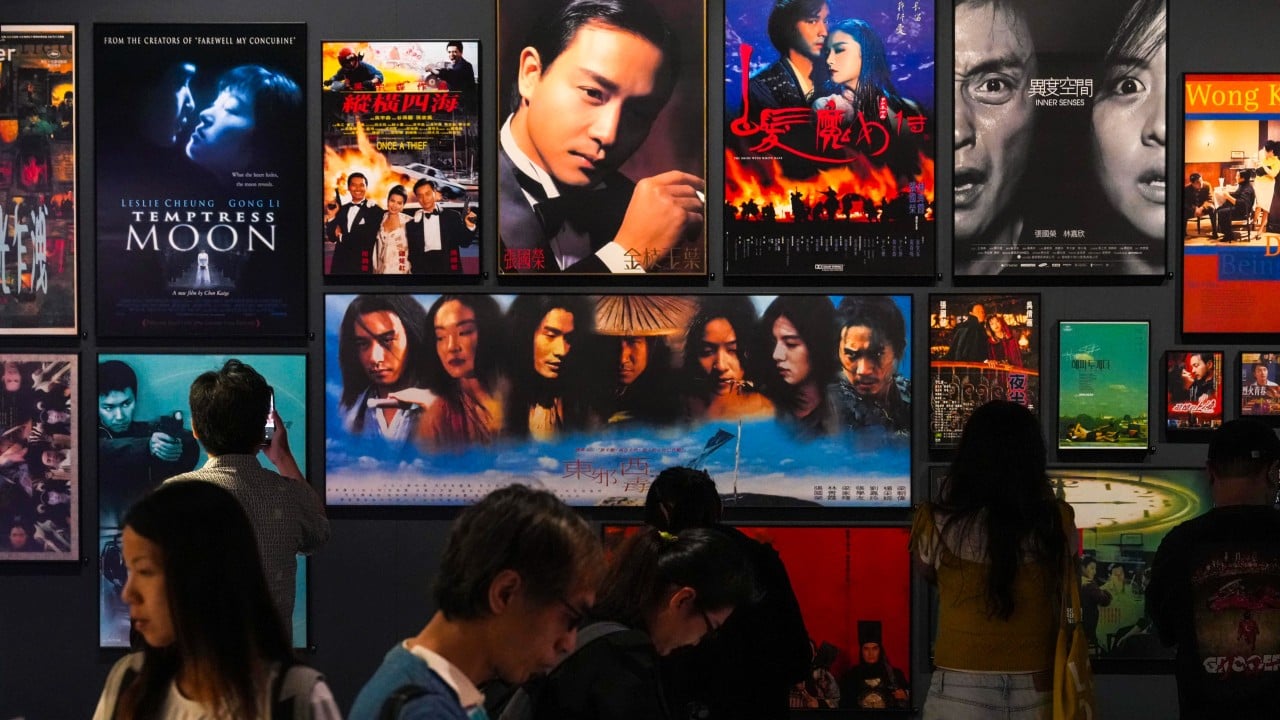
Now, look at the streets of Hong Kong today. Thousands of visitors from mainland China, Taiwan, Japan, and Western Europe have descended upon the city for this milestone anniversary. They are not touring the Peak for the view. They are flocking to exhibition halls filled with his old stage costumes, handwritten lyric sheets, and film reels.
A young woman in her twenties stands before a display case containing his microphone. She was born years after he passed. She never saw him live at the Hong Kong Coliseum. Yet, her eyes are red.
"My mother played his cassettes every single morning while making breakfast," she whispers, adjusting her collar. "When I feel like the world is too loud, too demanding, I put on Monica. It feels like someone whispering that it is okay to just be yourself, even if the world wants you to fit in a box."
That is the hidden power of true art. It outlives the artist. It outlives the political shifts, the economic crashes, the shifting tides of media.
Critics often try to reduce Leslie Cheung to a tragic headline, a cautionary tale about the dark side of celebrity culture. They miss the entire point. The tragedy of April 1, 2003, is real, and the grief it left behind has never fully evaporated. But focusing solely on the end is like reading only the final sentence of a breathtaking novel and pretending you understand the narrative arc.
The story is not about how he left. The story is about how brightly he burned while he was here.
He took Cantonese pop music and elevated it into high art. He took cinema and gave it an aching vulnerability that resonated from Cannes to Broadway. He lived his truth out loud during an era when doing so required staggering courage.
Tonight, fans will gather by the harbor. They will hold up battery-operated candles, casting a warm amber glow against the towering skyscrapers of Central. Someone will press play on a boombox. The opening notes of Wind Continues to Blow will drift across the water, swallowed by the gentle night breeze.
The gold jacket in the shop window catches a stray flash from a tourist's camera. For a split second, in the reflection of the glass, the city looks just as it did in the golden age of cinema. Vibrant. Defiant. Unstoppable.
The music never actually stopped. We were just listening for the echo.