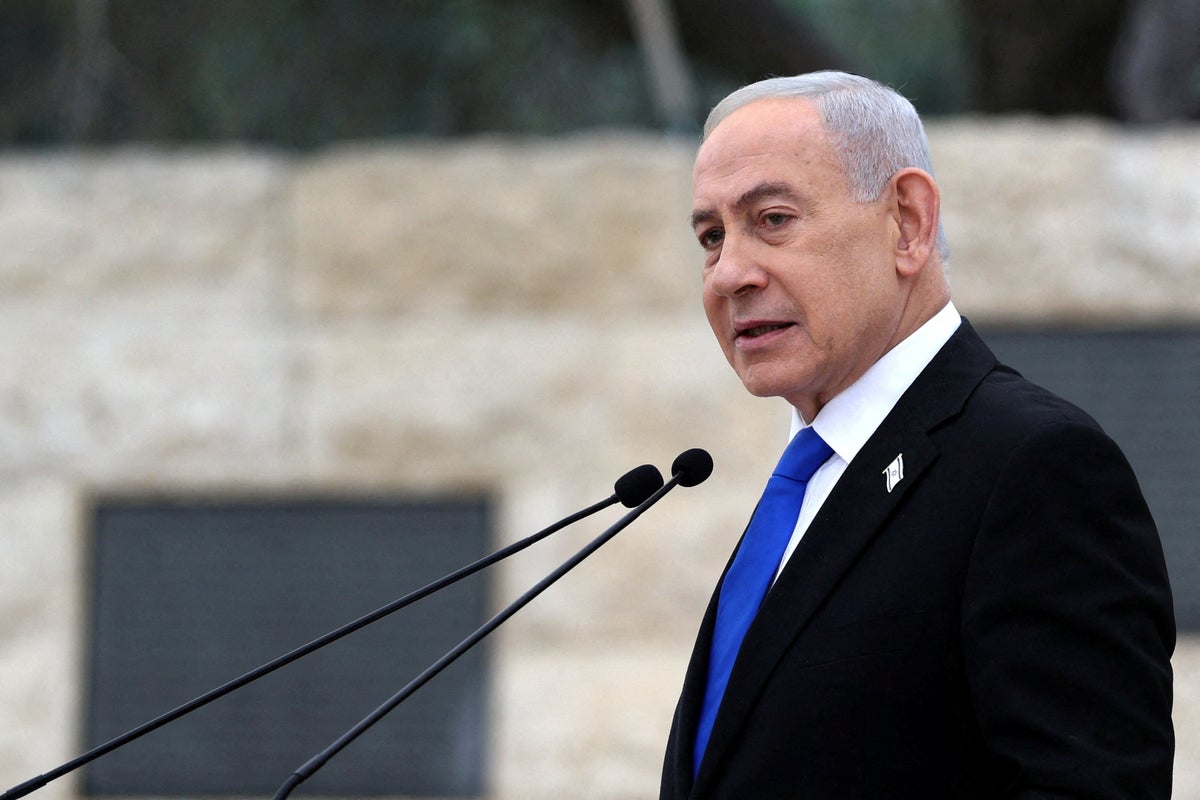
In the quiet, climate-controlled rooms of the Israeli Defense Ministry, the air doesn't smell like gunpowder. It smells like ozone and expensive espresso. Here, generals and engineers track the trajectory of incoming missiles with the clinical detachment of day traders. But beneath the hum of servers, a realization has been festering for years. It is a realization that Benjamin Netanyahu finally gave voice to: the billions of dollars flowing from Washington D.C. are no longer just a lifeline. They are a weight.
To understand why a nation would want to walk away from free money, you have to look at the shop floor of a mid-sized aerospace firm in Tel Aviv. Let’s call the lead engineer there Ari. Ari doesn’t exist as a single person, but he represents a thousand frustrated innovators. For decades, Ari’s team has had the brilliance to build the world’s most advanced drone sensors. They have the math. They have the grit. But they often don't have the permission.
When American aid pays for Israeli defense, that money comes with a "Buy American" clause. It’s a logical requirement from the U.S. perspective—if we give you the money, you spend it with our factories. But for Ari, it means he can't buy the specialized components from the startup down the street in Haifa. He has to buy them from a conglomerate in Ohio. Slowly, the local Israeli supply chain withers. The muscle memory of domestic manufacturing atrophies.
Israel is finding itself in the "middle-income trap" of geopolitics. It has become so reliant on the subsidized high-end hardware of its greatest ally that it is losing the ability to sustain its own industrial heartbeat.
The Cost of the Subsidy
The numbers are staggering. Since the late 1940s, the United States has funneled over $150 billion in bilateral assistance to Israel, most of it in the form of military grants. Currently, the Memorandum of Understanding provides roughly $3.8 billion annually. On paper, this is a triumph of diplomacy. In reality, it creates a distorted economy.
Imagine a world-class chef who is given all his ingredients for free, provided he only uses frozen vegetables from a specific warehouse. His skills remain sharp, but his connection to the local soil is severed. Eventually, he forgets how to garden.
Netanyahu’s push to "wean off" this support isn't an act of ingratitude. It is a cold-blooded calculation of sovereignty. When you pay for your own dinner, you choose the menu. When someone else pays, you eat what is served. In the world of high-stakes defense, "eating what is served" means Israel’s military strategy is often tethered to American export controls, political whims, and the slow-moving bureaucracy of the Pentagon.
If Israel wants to pivot its tech sector to address the hyper-specific threats of the 2020s—like swarms of low-cost, expendable suicide drones—it needs the agility to fail fast and build locally. It cannot wait for a three-year procurement cycle dictated by a committee in Virginia.
A Shift in the Tech Winds
The timing of this pivot isn't accidental. We are witnessing the democratization of lethality. In the past, being a regional power required massive, expensive platforms: F-35 fighter jets, heavy tanks, and sprawling naval destroyers. These are the things America builds better than anyone else. They are also the things that require a "big brother" to finance.
But the battlefield is changing. The most effective weapons in recent conflicts haven't always been the billion-dollar jets. They’ve been AI-driven software, autonomous sea-drones, and cyber-warfare suites. This is where Israel shines.
By shifting toward self-reliance, Israel isn't just seeking independence; it is seeking a competitive edge. The Israeli tech sector is the engine of the country's GDP. By reintegrating defense spending into the local economy, the government effectively subsidizes its own R&D, creating a feedback loop of innovation that spills over into the civilian world. It’s a move from being a consumer of security to a primary producer.
The Invisible Strings of Diplomacy
There is a psychological toll to being the world’s largest recipient of foreign aid. It creates a perceived debt that colors every diplomatic interaction. Every time a new administration takes office in Washington, the anxiety in Jerusalem spikes. Will the "tap" be turned off? Will the conditions for the aid change?
For a nation that prides itself on "Sabra" toughness—the prickly pear, tough on the outside and sweet on the inside—the reliance on a foreign treasury feels like a fundamental contradiction.
Consider the "Lavi" project of the 1980s. Israel attempted to build its own world-class fighter jet. It was a masterpiece of engineering. But under immense pressure from the U.S., which feared competition for its own F-16, the project was scrapped. The heartbreak of that cancellation still echoes in the halls of the Israeli defense establishment. It was the moment they realized that as long as they were on the payroll, they would never be the boss.
Netanyahu is betting that the Israeli economy is now mature enough to take the hit. The country's gas fields in the Mediterranean are pumping out wealth. Its cyber-security firms are dominant globally. The "Start-up Nation" is no longer a scrappy underdog; it is a regional titan.
The Risk of the Great Decoupling
Walking away from $3.8 billion a year is a terrifying prospect. It requires a level of fiscal discipline that few governments possess. It means higher taxes or lower spending elsewhere. It means telling the Israeli public that the safety net is being woven with local thread, which is more expensive and harder to come by.
But there is a deeper risk: the erosion of the "special relationship." For years, the aid has been the glue of the U.S.-Israel alliance. It gives American lawmakers a tangible stake in Israel’s survival. If the money stops, does the political cover in the UN stop too? Does the intelligence sharing degrade?
Netanyahu’s gamble is that the relationship has evolved beyond a transaction. He believes the two nations are bound by shared values and shared enemies, not just a line item in the federal budget.
There is a certain irony in a conservative leader, often criticized for his reliance on American political support, calling for an end to American financial support. But it fits the narrative of a man who views himself as the architect of a "Strong Israel." A strong Israel, in his view, doesn't hold out a tin cup.
The New Reality
Transitioning away from aid won't happen overnight. It will be a decade-long exercise in weaning, characterized by "tapering" and redirected investments. But the conversation itself changes the power dynamic.
When Israel stops being a client state, it starts being a peer.
Think back to Ari on the shop floor. In a post-aid world, Ari’s boss can walk across the street and fund a local startup to build a specific, niche component. That startup hires ten more engineers. Those engineers develop a patent that they later sell to the medical industry. The money stays in the ecosystem. The expertise stays in the country. The sovereignty stays in the hands of the people who have to live with the consequences of the defense systems they build.
The sun sets over the Mediterranean, casting long shadows across the skyscrapers of Tel Aviv. In the distance, the Iron Dome batteries stand silent, watchful. They are a miracle of engineering, partly funded by American taxpayers. But the next generation of those batteries might just be built, funded, and owned entirely by the people they protect.
It is the difference between living in a rented house and owning the land. One offers shelter; the other offers a future. Israel is deciding it is finally time to buy the house.
The golden handcuffs are being unlocked, one link at a time, and the world is about to find out exactly what a fully unshackled Israel looks like.