Sarah leaned in until her forehead nearly touched the cold glass. The harsh fluorescent light of her bathroom didn’t do favors, but it did provide truth. There it was. A faint, webbed cartography of time mapping itself around her eyes. It wasn't a crisis. It was just the quiet realization that her skin was no longer operating under the effortless contract of her twenties.
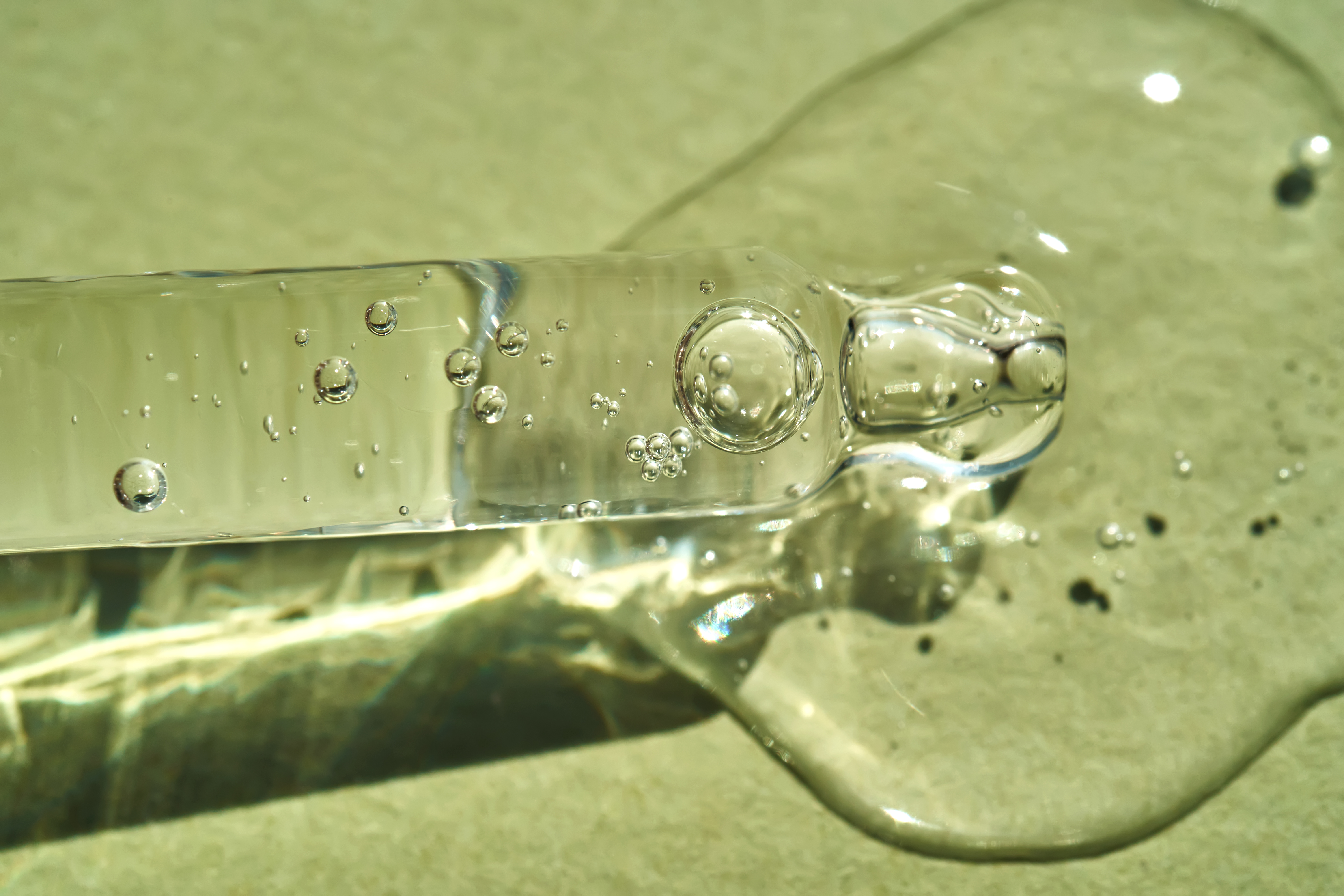
Most people come to retinol at exactly this moment. It usually starts with a late-night search session, fueled by a sudden vulnerability and guided by algorithms promising eternal youth in a dropper bottle. We look at the tiny amber vials like they contain alchemy.
We have been sold a story about magic. But skin care is not magic. It is chemistry, biology, and a bit of a psychological battlefield.
To understand why this single molecule dominates a multi-billion-dollar industry, we have to look past the pristine packaging and look at what is actually happening beneath the surface of Sarah’s face. Your skin is a conveyor belt. At the bottom layer, new cells are constantly born. They mature, flatten, and slowly migrate upward to the surface, where they eventually die and flake off. When you are eighteen, this entire cycle takes about twenty-eight days.
By the time Sarah hits thirty-five, that conveyor belt has slowed down significantly. It can take forty-five to sixty days. The dead cells pile up on top like old autumn leaves, trapping oil, dulling the complexion, and making those fine lines look deeper than they actually are.
Enter the molecule. Retinol belongs to the retinoid family, all of which are derivatives of Vitamin A. Discovered in the early twentieth century, Vitamin A was initially studied for its role in vision and immune function. By the 1970s, dermatologists realized that a potent form called tretinoin could clear severe acne by aggressively forcing skin cells to shed. But patients using it noticed an unexpected side effect. Their skin looked smoother, firmer, and remarkably younger.
The cosmetic industry took note, but they faced a massive hurdle. Pure retinoic acid is incredibly irritating. It requires a prescription for a reason. To put it on drugstore shelves, scientists had to use weaker over-the-counter versions, mainly retinol.
Here is the catch that the glossy advertisements omit: retinol does nothing when you first apply it to your skin. It is biologically inactive.
When Sarah smooths that expensive cream over her cheeks, her skin cells have to do the heavy lifting. They must secrete specific enzymes to convert retinol into retinaldehyde, and then convert that into retinoic acid. Only then can the molecule bind to the receptors in her cell nuclei. It is a biological translation game. Think of it like trying to use a foreign currency. You have to go to the exchange booth first, and you lose a little bit of value with every transaction.
Because of this conversion process, over-the-counter retinol is gentler, but it takes time. Weeks. Months. It requires patience in an era of instant gratification.
The Purge and the Counterfeit Glow
Three weeks into her new routine, Sarah wanted to throw the amber vial into the trash.
Her face was flaky. Her chin was breaking out in angry, red blemishes she hadn't seen since high school. Her skin felt tight, dry, and distinctly uncomfortable. She felt deceived. The influencer on her screen had promised a glass-like radiance, not this patchy, irritated mess.
This is the exact point where most people quit. They assume they are having an allergic reaction or that the product is defective.
In reality, Sarah was experiencing what dermatologists call retinoid dermatitis, or more colloquially, "purging." Because retinol accelerates cellular turnover, it forces everything that was already cooking under the surface to rise to the top all at once. Every clogged pore and microcomedone gets fast-tracked to the surface.
At the same time, the rapid shedding thins out the outermost layer of the skin, the stratum corneum. This temporary thinning compromises the skin barrier, allowing moisture to escape more easily. It is a structural renovation. You cannot remodel a house without creating a massive amount of dust and debris.
Consider the metaphor of a messy closet. If you want to organize it, you cannot simply shove more things inside. You have to pull everything out onto the floor. The room looks significantly worse before it looks better.
The tragedy of modern skincare is that we have mistaken irritation for efficacy. We live in a culture that believes if a product burns, it must be working. But chronic inflammation actually accelerates aging. It breaks down collagen, the very protein we are trying to protect.
Sarah’s mistake wasn't using retinol; it was how she introduced it. She applied a dime-sized amount every single night, thinking more product equaled faster results.
The skin demands a slower negotiation. Experts often recommend the "sandwich method" for beginners. You apply a layer of basic moisturizer, wait for it to dry, apply a pea-sized drop of retinol, and then layer more moisturizer on top. This buffers the absorption rate, slowing down the molecule’s entry into the skin without rendering it useless. It gives the cellular machinery time to adapt to the new workload.
The Light That Breaks the Molecule
There is another invisible rule to this game, one written into the physics of the universe.
Retinol is notoriously unstable. It is highly sensitive to both oxygen and ultraviolet light. If you expose a molecule of standard retinol to sunlight, the bonds break down, rendering it completely useless. This is why these products are almost always housed in dark, opaque glass or aluminum tubes.
Applying retinol in the morning is essentially pouring money down the drain. It belongs strictly to the nighttime hours, working under the cover of darkness while your body is already in repair mode.
But the relationship with light goes deeper. Because retinol thins that protective top layer of dead skin cells, it leaves the fresh, new cells underneath incredibly vulnerable to sun damage. If Sarah uses retinol at night but skips sunscreen the following morning, she is taking one step forward and two steps back. The UV rays will degrade her collagen faster than the retinol can stimulate its production.
It is a binding contract. If you commit to the molecule, you must commit to the shield.
The Varieties of the Vials
As Sarah grew more educated, she realized the skincare aisle was a semantic minefield. Labels used words like "retinoid," "retinol," "granactive retinoid," and "bakuchiol" interchangeably.
The terminology matters because the concentration and form dictate the entire experience.
- Retinyl Palmitate: The gentlest, weakest cousin. It requires three steps to convert into retinoic acid. Great for ultra-sensitive skin, but requires immense patience to see structural changes.
- Retinol: The standard middle ground. Requires two conversion steps. Highly effective but carries a moderate risk of irritation.
- Retinaldehyde (Retinal): The closest relative to prescription strength. It sits just one conversion step away from active retinoic acid. It works up to eleven times faster than traditional retinol, making it the choice for seasoned users.
- Hydroxypopinacolone Retinoate (Granactive Retinoid): A newer, synthetic derivative that directly binds to skin receptors without needing conversion, promising the results of retinoids with almost none of the irritation.
Then there is the plant-based alternative, bakuchiol. It shares no chemical lineage with Vitamin A, but studies show it targets the same genetic pathways in the skin. For pregnant individuals or those with severe eczema, it offers a safe harbor from the harshness of traditional retinoids.
The Long Game
Six months later, Sarah looked in the mirror again. The transformation wasn't dramatic in the way a surgical facelift is. It was subtle.
The texture of her skin looked more uniform. The light hit her cheekbones differently because the surface was smooth enough to reflect it evenly rather than scattering it into shadows. The fine lines around her eyes hadn't vanished, but they looked softer, like a well-loved piece of linen rather than cracked paper.
She had survived the purge. She had learned to read the subtle language of her skin barrier, backing off the product when redness appeared and stepping up her hydration.
We look at our faces every day, watching for the slow erosion of time. It is easy to feel powerless against the biology of aging. Retinol offers a small, scientifically verified lever to slow that clock down just a fraction. It doesn't perform miracles, and it won't return anyone to their teenage years.
But for those who understand the chemistry, who accept the temporary discomfort, and who commit to the daily discipline, it provides something better than a illusion. It offers a tangible partnership with your own biology, played out one quiet evening at a time, right there in the reflection of the glass.