The courtroom in Delaware was silent, save for the hum of an HVAC system that seemed indifferent to the power dynamics of billionaires. In that room, authority wears a black robe and speaks in the measured cadence of the law. Outside those doors, authority looks like a private jet idling on a tarmac, ready to puncture the atmosphere and bridge the gap between two superpowers.
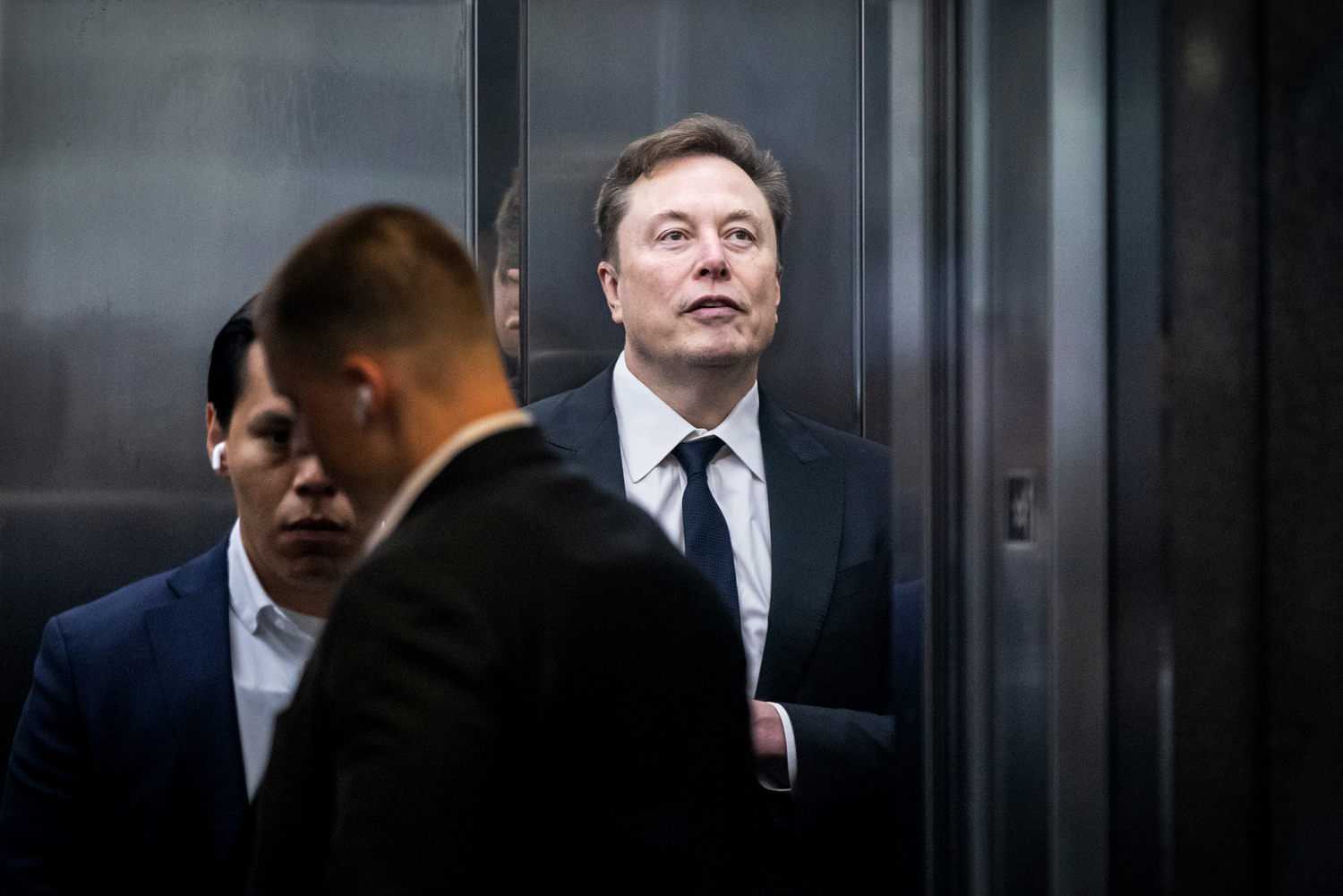
Elon Musk was supposed to be in that room. He had been ordered to sit for a deposition, a mandatory reckoning regarding his $44 billion acquisition of the platform formerly known as Twitter. To the legal system, Musk is a citizen subject to the same procedural gravity as anyone else. But to Musk, the world is a chessboard where the squares are continents and the rules of engagement are written in real-time.
A judge’s order is a tether. It is a physical and legal anchor designed to hold a person in place so the gears of justice can turn. Musk, however, has spent a lifetime snapping tethers. While the court expected a presence in a mahogany-paneled room, the flight trackers told a different story. The Gulfstream G650ER wasn’t heading for Wilmington. It was slicing through the stratosphere toward Beijing.
The Friction of Two Worlds
Imagine a local baker summoned for jury duty. If that baker decides to skip the summons to go help a friend move across the state, the consequences are immediate and bureaucratic. Fines. Perhaps a warrant. The system functions because the cost of defiance is higher than the cost of compliance.
For the richest man on earth, that math is inverted.
When Musk boarded that plane to accompany Donald Trump on a high-stakes diplomatic foray into Chinese markets, he wasn't just choosing a meeting over a deposition. He was asserting a philosophy. In his worldview, the "invisible stakes"—the future of global EV dominance, the delicate dance with Chinese manufacturing hubs, and the political alignment of a potential future American administration—outweigh the procedural requirements of a Delaware chancellor.
The judge had been explicit: there was no excuse. The request for a delay had been denied. Yet, there is a specific kind of audacity required to look at a direct judicial mandate and decide that a photo op at the Great Hall of the People is more pressing. It is the audacity of a man who views himself not as a resident of a country, but as a stakeholder in the future of the species.
The High-Altitude Tightrope
The stakes in China are not abstract. Tesla’s Gigafactory Shanghai is the heartbeat of his automotive empire. Without it, the company’s margins collapse. But China is a mercurial partner. It demands fealty and presence. By appearing alongside Trump, Musk was threading a needle that would make a master tailor dizzy. He was signaling to the Chinese leadership that he remains the primary conduit between American innovation and Chinese industrial might, regardless of which way the political winds blow in Washington.
Consider the optics from the ground in Beijing. While American headlines focused on the "snub" of the court, the Chinese state saw a titan who prioritizes the tangible reality of trade over the "frivolous" distractions of Western litigation. It is a performance of power.
But back in Delaware, the silence of an empty chair carries its own weight.
Law thrives on the concept of "contempt." It is a word that suggests a lack of respect, but in a legal sense, it is about the breakdown of the social contract. If one man can decide which orders are suggestions and which are mandates, the entire architecture of the law begins to feel like a facade. The invisible stakes here aren't just about a social media company’s stock price; they are about whether the law is a universal constant or a variable that changes based on your net worth.
The Human Cost of Hyper-Mobility
We often view these titans as marble statues, but there is a frantic, human desperation in this level of movement. To be in China with a former president while being legally required to be in a Delaware deposition is to live in a state of permanent fragmentation.
It is the life of a man who treats time as a resource to be exploited rather than experienced. Every hour spent answering questions about bot counts and contract clauses is an hour not spent negotiating the future of autonomous transit or planetary colonization. In his mind, the court is a parasite on his productivity.
Yet, there is a cost to being untouchable. When you move fast enough to escape the pull of the law, you also escape the guardrails that keep a person grounded in the shared reality of the public. You begin to believe that the horizon is the only thing that matters, and the people standing in the courtroom behind you are just silhouettes fading into the distance.
The Verdict of the Tarmac
The court will eventually have its say. There will be sanctions, likely financial, which to a man of Musk’s resources feel like a rounding error on a Tuesday. There might be harsher rebukes, but the physical reality remains: he went. He chose the world stage over the witness stand.
This isn't just a story about a missed appointment. It is a story about the emerging class of "sovereign individuals" who operate above the geography of traditional governance. When the jet wheels touched down in Beijing, it wasn't just a landing. It was a statement.
The law requires presence. It requires a body in a seat. But when that body is fueled by the ambition to move the entire world, a courtroom starts to look very small. The real trial isn't happening in Delaware; it’s happening in the public consciousness, where we are all forced to ask: what happens to the truth when the person who holds it is already thirty thousand feet above the consequences?
The engines cooled on the Beijing runway, the cabin door hissed open, and the world moved forward, leaving the empty chair in Delaware to wait for a man who had already decided he was somewhere else entirely.