The tarmac at the Nancy-Essey airfield in northeastern France is rarely quiet on a June weekend. Summer breathes a specific kind of kinetic life into small civilian airports. You hear the high-pitched drone of single-engine props, the rustle of nylon parachutes being packed tight on gravel floors, and the nervous, high-frequency laughter of people about to step out of a perfectly good aircraft into nothingness.
It was 11:00 AM on Sunday. The sky above Tomblaine was wide, bright, and unsuspecting.
On the ground, a small group of families and friends stood near the grass, squinting upward, shielding their eyes from the mid-morning sun. They had gathered to watch five local self-employed nurses—people who spent their workdays tethered to the heavy, predictable realities of medicine, blood pressure cuffs, and home healthcare—take a rare leap into pure freedom. It was their first skydiving experience. A celebration of air, adrenaline, and trust.
They were buckled into a German-registered Pilatus aircraft, a rugged, single-engine workhorse revered in the parachuting community for its steep climb rate and predictable handling. Five students. Five veteran instructors. One pilot. Eleven heartbeats.
The plane took off, clearing the tree line, lifting its nose into its third flight of the morning.
Then, the engine stopped.
The Weight of Eleven Seconds
A local resident named John Curaku was sitting in his garden just beyond the airfield perimeter when the auditory rhythm of the morning snapped. First came the sudden, hollow silence of a mechanical failure—the distinct sound of an aircraft engine quitting at an altitude where gravity immediately becomes the only absolute law. Then, a sharp, catastrophic bang.
Witnesses driving along the nearby roads, on their way to Sunday morning grocery runs at the local Auchan, looked up to see a sequence that defied the normal geometry of flight. The Pilatus did not glide. It did not hunt for a pasture or wing toward a highway for an emergency landing. It stalled, tilted, and plunged almost vertically into a grassy patch on Salvador Allende Street.
It took only seconds.
[Takeoff: 11:00 AM] ---> [Engine Failure] ---> [Vertical Stall] ---> [Impact: Tomblaine Field]
When an aircraft drops vertically from the sky, the physics are absolute and unforgiving. The impact occurred mere dozens of meters from a row of suburban homes, close enough to knock out the local electrical grid and plunge the immediate neighborhood into a sudden, quiet darkness.
Curaku ran toward the wreckage. There were no sirens yet. Just the smell of aviation fuel, the quiet hiss of a shattered fuselage, and two bodies thrown clear into the grass. There were no signs of life.
The Unseen Witnesses
The tragedy of an aviation accident is usually reported through a ledger of cold metrics: tail numbers, airframe hours, and official press releases from regional prefects. But the true weight of what happened near Nancy sits heavily with the people who stayed behind on the tarmac.
For the families who had spent the morning taking photos, joking about the oversized jumpsuits, and watching the plane lift off, the airfield went from a place of weekend recreation to a site of sudden, permanent grief in the span of a single heartbeat. They did not read about the crash on a news feed; they watched the vertical descent with their own eyes.
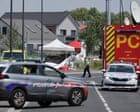
Yves Séguy, the prefect of the Meurthe-et-Moselle region, arrived at the scene as emergency medical teams, fire services, and police cordoned off Salvador Allende Street.
"Had it occurred just a few dozen meters away, the accident could have caused collateral casualties," Séguy noted, his voice carrying the exhaustion of a man measuring a tragedy by what else it might have destroyed.
Instead, the ground casualties were zero. The internal casualties were absolute. The pilot, the five instructors who had dedicated their lives to making the sky feel safe for amateurs, and the five independent nurses who had stepped away from their patients for one morning of adventure, were gone.
The Demanding Machine
In the aftermath of a fatal light aircraft crash, public anxiety often fixes on the machinery. The Pilatus is a common sight at European drop zones, known among aviation mechanics as a highly capable but deeply demanding aircraft.
According to Pierre-Yves Eugène, president of the National Parachutists’ Union, these machines operate under rigorous parameters, requiring exhaustive technical overviews every two years to remain certified for parachute operations. They are designed to withstand the repetitive stress of rapid ascents and short, hard landings on turf runways.
The aviation transport gendarmerie and forensic identification services have begun digging through the wreckage to find the precise mechanical link that failed. Was it fuel starvation? A catastrophic structural failure? A sudden loss of control at a critical airspeed?
The answers will take months to formalize, hidden within the bent metal and data logs. But for the independent nursing community of Nancy, the loss is immediate, intimate, and decoupled from engineering reports. These were professionals who navigated the quiet, vulnerable spaces of people's homes every day, suddenly lost to an element that felt entirely out of reach.
As evening fell over Tomblaine, the flashing blue lights of the emergency vehicles cast long shadows across the grass. The wreckage remained where it fell, a dark silhouette against the residential backdrop, waiting for the investigators to finish their inventory of the sky's latest debt.